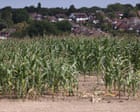
Prime Minister Andy Burnham has unveiled a 65 million pound emergency funding package aimed at supporting English farmers through a crippling national drought, following the driest July on record. With nearly three-quarters of England officially classified as being in drought conditions, the intervention attempts to balance immediate agricultural survival with long-term climate adaptation. However, digging past the political rhetoric reveals a more complex financial shell game that leaves structural vulnerabilities unaddressed.
The Arithmetic of Reallocation
Money rarely appears from thin air in Whitehall. Downing Street confirmed that the 65 million pound rescue package is entirely reprioritised from within the existing Department for Environment, Food and Rural Affairs (Defra) farming budget. No new Treasury injection backs these measures.
Instead, the administration has carved out an extra 50 million pounds for the Sustainable Farming Incentive (SFI), driving its 2026 allocation to 290 million pounds, alongside 15 million pounds earmarked specifically for on-farm water reservoirs.
For an industry facing shrivelled crop yields and exhausted feed supplies after the third drought in five years, any immediate liquidity matters. Yet, taking money from one pocket of an already tight agricultural envelope to fill another is a temporary patch on a structural wound.
Farmers watching their earliest harvests on record bring in drastically reduced yields are asking a hard question. Where exactly within the existing Defra ledger are these funds being stripped from? Rural stakeholders have received zero clarity on which environmental or developmental programs will face budget cuts to finance this emergency pivot.
Regulatory Gridlock and Water Realities
Water abstraction sits at the heart of the crisis. The Environment Agency enforced more than 1,500 license restrictions by mid-August, including strict Section 57 spray irrigation bans hitting scores of holdings across East Anglia.
Burnham’s administration has promised to accelerate license variations and ease water-sharing agreements between neighboring agricultural holdings.
"Hands-off flow limits remain legally binding to protect fragile river ecosystems from total collapse, meaning regulatory paperwork speedups cannot manufacture water that simply is not there."
💡 You might also like: The India Vietnam Alliance is a Paper Tiger Designed to Fail
Building resilience through private storage remains intensely difficult. The 15 million pound reservoir fund sounds substantial on a press release, but industry bodies like the Country Land and Business Association point out that construction costs overwhelmingly fall onto individual producers.
Permitted development rights and planning hurdles continue to stall major infrastructure projects. While the government points to nine new regional reservoirs crawling through the planning pipeline, bureaucratic delays mean those facilities will offer zero comfort to crops withering in the fields today.
Environmental Mandates Versus Animal Welfare
For months, thousands of farmers bound by environmental stewardship agreements faced an impossible dilemma. Rules governing schemes like the SFI and Countryside Stewardship legally bar livestock grazing or grass cutting on protected habitat land until late autumn.
With pastures burnt brown and winter feed reserves exhausted months ahead of schedule, producers faced a brutal choice. They could break scheme rules to keep their animals alive and forfeit their public payments, or watch their livestock starve.
The government's new flexibility framework allows farmers to graze or cut these protected areas without financial penalty, provided soil structural integrity is maintained. This mirrors emergency easements deployed during the 2022 drought.
It is a pragmatic retreat from bureaucratic rigidity. Yet, environmental watchdogs worry that emergency grazing during hyper-arid conditions could inflict lasting damage on fragile chalk streams and lowland peat soils, trading short-term animal survival for long-term ecological degradation.
The National Security Gamble
Labeling food production as a matter of national security carries heavy political weight. Prime Minister Burnham leaned into this narrative during visits to the South West, framing climate shocks as an existential threat that farming communities should not shoulder alone.
Yet, rhetoric fails to protect tenant farmers already squeezed by tightening margins, animal diseases like bluetongue, and volatile global commodity pricing.
When emergency funds are recycled rather than expanded, and when water scarcity is managed through paperwork adjustments instead of capital-intensive infrastructure overhaul, the baseline risk profile for primary producers remains entirely unchanged.
The next dry summer will test these exact same brittle margins, long after the political dust from this emergency announcement settles across the parched English countryside.