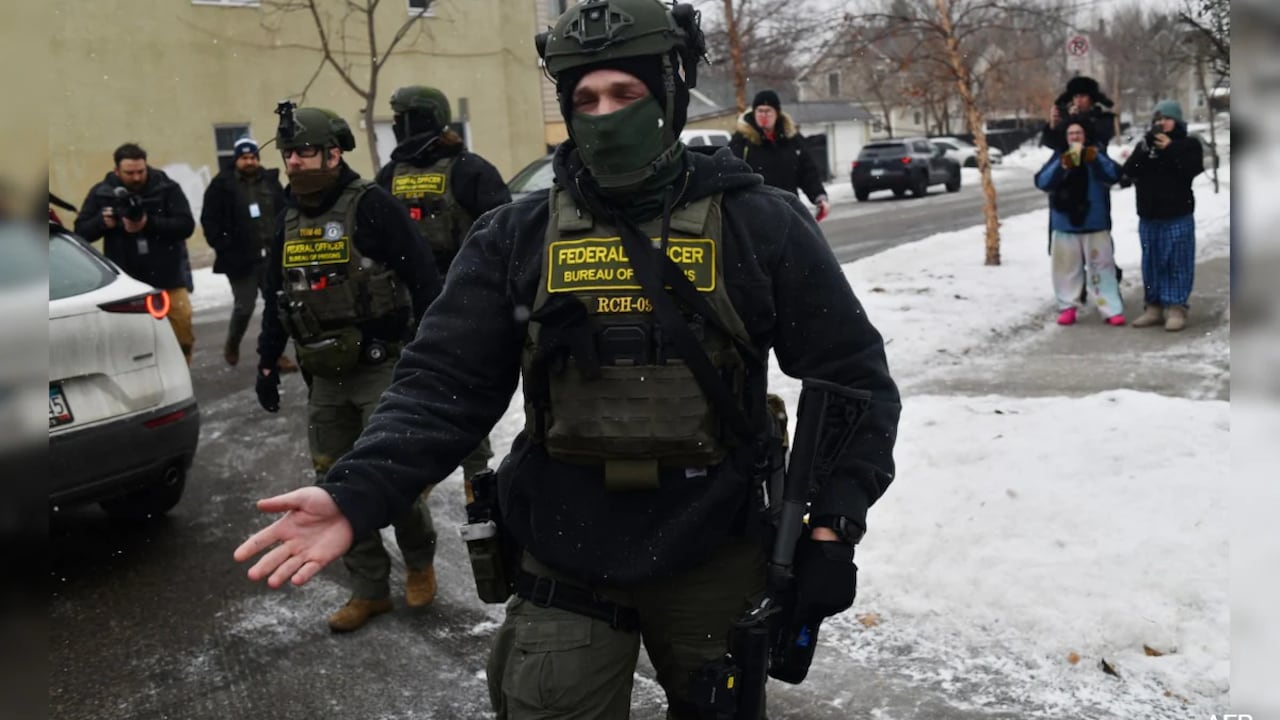
Immigration and Customs Enforcement has operated without a Senate-confirmed director since January 2017, a nine-year administrative vacuum that underscores a deeper governance failure inside the American security apparatus. When the White House abruptly rescinded the nomination of Richard "Lance" Schroyer, an Oklahoma state trooper and close adviser to Department of Homeland Security leadership, it did more than just kill another personnel file on Capitol Hill. It exposed a systemic breakdown where powerful federal agencies function indefinitely under a revolving door of acting heads, bypassing the constitutional check of Senate oversight entirely.
The collapse of Schroyer’s nomination was swift. Senator Rand Paul, a Kentucky Republican wielding leverage on the Senate Homeland Security and Governmental Affairs Committee, stalled the advancement. His blockade centered on a demand for transparency regarding federal investigations into agent-involved shootings in Minnesota. Rather than subject an internal pick to rigorous public testimony and committee grilling, the administration pulled the plug. Schroyer retreated, leaving David Venturella to manage the agency as an acting director.
This pattern is not an accident of partisan gridlock. It is a calculated evasion of accountability.
The Convenience of the Acting Title
For successive executive administrations, an unconfirmed agency is an unhindered agency. Senate confirmation hearings provide a public forum for lawmakers to subpoena records, question operational directives, and demand internal oversight. When an agency head lacks permanent status, those statutory levers weaken. Acting directors serve at the direct pleasure of the executive branch, answering to political appointees rather than answering to a public congressional record.
Consider the historical trajectory. The last time Immigration and Customs Enforcement had a Senate-confirmed director was during the final days of the Obama administration, under Sarah Saldaña. Throughout the first Trump administration, a succession of seven different acting directors cycled through the fourth-floor office at ICE headquarters without ever facing a successful confirmation vote. The Biden administration followed a similar trajectory, relying on interim leadership before handing the reins back to temporary chiefs.
By dodging the confirmation process, the executive branch avoids answering uncomfortable questions about detention bed capacities, procurement contracts with private prison operators, and use-of-force protocols.
The Cost of Provisional Authority
Operational stagnation follows administrative instability. Career civil servants inside ICE report severe institutional whiplash as temporary leaders arrive with shifting priorities, temporary staff, and little incentive to implement long-term structural reforms. Morale flags. Institutional memory evaporates.
When policy is dictated by officials who know their tenure may end via a tweet or a committee memo, risk aversion replaces strategic planning. Field agents executing large-scale enforcement actions find themselves caught between ambitious political rhetoric from the podium and the legal chaos of operating under temporary leadership whose authority is constantly challenged in federal courts.
A permanent director requires political capital to push through the Senate gauntlet. It requires an administration willing to trade short-term operational speed for long-term legal legitimacy. By repeatedly withdrawing nominees or refusing to put forward candidates capable of surviving bipartisan scrutiny, the White House signals that operational convenience supersedes constitutional order.
The vacancy at the top of ICE is no longer a temporary personnel glitch. It has become the permanent operating model of modern American immigration policy. As long as provisional leaders can wield billions of dollars in federal enforcement funds without ever testifying under oath before Congress, the incentive to fix the nomination process remains zero.
The door to the director's office stays open, but nobody ever unpacks their boxes.


