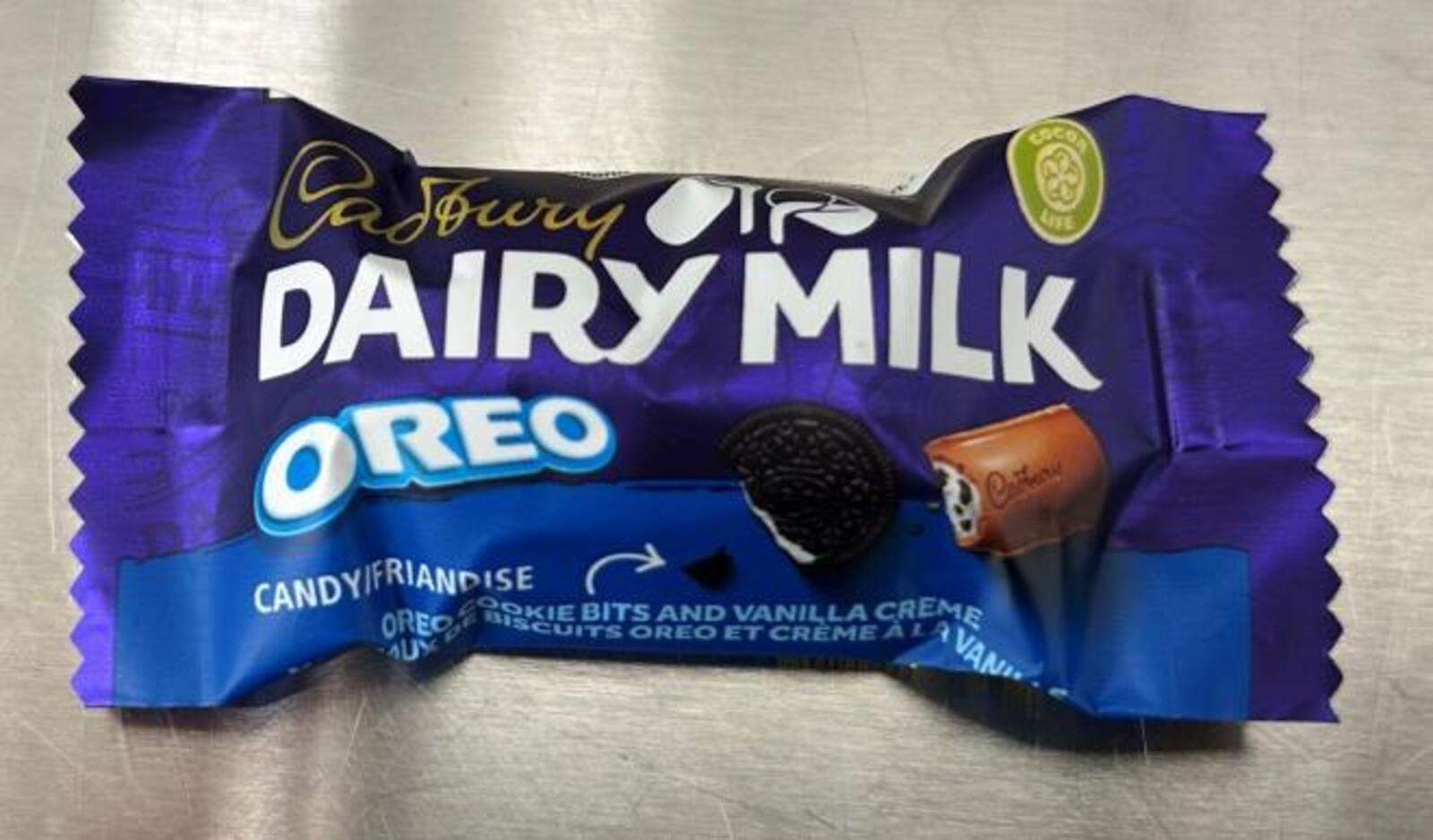
Food safety authorities and retail chains have pulled specific batches of Cadbury Dairy Milk Oreo treats from store shelves due to undeclared allergens and manufacturing contamination risks, forcing parent company Mondelēz International into another round of defensive logistics. Consumers holding affected packs face immediate health risks if they carry sensitivities to unlisted ingredients—primarily tree nuts, wheat, or soy cross-contact—or physical foreign-matter hazards introduced during high-speed line changeovers. Check the best-before dates and batch codes stamped on the back wrapper immediately, stop consumption if your package matches the current regulatory notice, and return the product to the point of purchase for a full refund without needing a receipt.
That is the immediate consumer reality. Yet if you have spent twenty years tracking fast-moving consumer goods, food safety enforcement, and global supply chains, a recall notice on a flagship co-branded candy bar reads less like a sudden accident and more like an inevitable mechanical failure.
Recalls happen every week. Most pass quietly through supermarket backrooms while shoppers barely glance at the laminated paper taped near the customer service desk. When a heritage brand like Cadbury collides with a global powerhouse like Oreo under the same corporate roof, however, the stakes change. You are no longer looking at a simple regional bakery error. You are looking at the friction points of ultra-consolidated, hyper-automated confectionery manufacturing.
The Anatomy of a Modern Confectionery Recall
To understand why Cadbury Dairy Milk Oreo treats keep landing on regulatory watchlists, you have to stop picturing a chocolate factory as a quiet kitchen and start seeing it as a continuous, high-velocity chemical and mechanical assembly line.
Standard milk chocolate is relatively straightforward to run. Tempered chocolate goes into molds, cools, wraps, and ships. Introduce Oreo cookie pieces—baked biscuit crumbs, vanilla-flavored creme filling, distinct flour and oil profiles—and the engineering complexity multiplies overnight. You are merging two entirely different food matrices on shared industrial equipment.
Cross-Contact on Shared Production Lines
In modern confectionery plants, downtime is the enemy. Every minute a line sits idle for sanitation costs thousands of dollars in lost margin. Facilities routinely run multiple SKU variations across the same depositor heads, cooling tunnels, and wrapping machines within a single twenty-four-hour cycle.
Suppose a plant runs a hazelnut or almond Dairy Milk variant at 6:00 AM, conducts a standard washdown, and switches to Cadbury Dairy Milk Oreo by 10:00 AM. If a single pocket in a rotary depositor retains trace nut paste, or if an automated clean-in-place cycle misses a dead leg in a pipe, allergen proteins migrate into the Oreo batch. Worse, packaging film errors frequently trigger recalls when a roll of wrappers printed for one market or ingredient profile gets loaded onto a line running a slightly modified recipe. Under food safety statutes in the UK, the European Union, North America, and Australia, an undeclared allergen is classified as an acute, life-threatening hazard. Regulators do not wait for hospital admissions to force a pull.
Physical Contamination and High-Speed Friction
Beyond allergens, co-branded inclusions introduce mechanical wear. Biscuit crumbs are abrasive. Over millions of cycles, hard cookie particulates grind against stainless steel augers, scraper blades, and conveyor guides.
Metal detectors and X-ray inspection systems sit at the end of every reputable line, calibrated to catch fragments down to the millimeter. Sometimes, however, a plastic gasket shreds, a tiny piece of blue conveyor belting shears off, or a metal detector drifts out of calibration during a humid shift change. By the time quality assurance catches the variance during a routine hourly check, forty pallets of Cadbury Dairy Milk Oreo bars are already sitting in regional distribution trailers.
Why Co-Branded Treats Carry Higher Operational Risk
Marketing executives love brand mashups. Putting Oreo inside Cadbury Dairy Milk was one of Mondelēz International's most lucrative portfolio plays following Kraft's controversial 2010 takeover of the British chocolate maker. The logic was undeniable: combine two billion-dollar trademarks, capture shelf space across multiple aisles, and drive impulse purchases through novelty.
Operations directors view those same mashups with quiet dread.
Every co-branded product is a supply chain compromise. The biscuit components are often baked at one specialized facility, crushed to a specific sieve size, packed in bulk totes, and trucked across borders to a chocolate molding plant. Every handoff creates a new vulnerability window.
Consider a hypothetical example of how a multi-plant supply chain fractures under routine pressure. Imagine a biscuit bakery in continental Europe experiences a minor supplier shift in its soy lecithin or wheat flour sourcing. The bakery updates its internal spec sheet, assuming the receiving chocolate plant will catch the change. Meanwhile, the chocolate plant continues printing wrappers using legacy artwork plates approved six months earlier. Neither facility experienced a dramatic breakdown. Both followed their local workflows. Yet the final bar sitting on a supermarket shelf now contains an ingredient protein that the wrapper explicitly fails to declare.
The Economics Behind Reactive Food Safety
Critics often assume food giants cut corners out of sheer negligence. The reality is subtler and far more systemic. Major manufacturers operate inside a razor-thin calculus balancing preventative sanitation costs against the statistical probability of a recall.
Full allergen-dedicated lines require massive capital expenditure. Building separate facilities for nut-free, gluten-free, and dairy-heavy products destroys the economies of scale that allow a chocolate bar to retail for a couple of dollars. Instead, the industry relies on validated cleaning protocols and precautionary "may contain" advisory labeling.
That system works until human fatigue, labor shortages, or supply chain volatility enter the building.
The Packaging Bottleneck
Ask any veteran quality assurance manager what causes the highest number of Class I food recalls, and they will rarely point to spoiled milk or tainted cocoa beans. They will point to the packaging room.
Global brands localize products constantly. A Cadbury Dairy Milk Oreo bar sold in Dublin requires different regulatory font sizes, allergen bolding, and recycling symbols than the identical bar shipped to Sydney, Toronto, or Manila. High-speed flow-wrappers move at hundreds of units per minute. When an operator grabs the wrong film reel from a staging pallet—or when a supplier splices an outdated label roll onto a new core—hundreds of thousands of mislabeled units enter commerce before anyone notices.
| Recall Trigger | Operational Mechanism | Typical Regulatory Classification | Consumer Impact |
|---|---|---|---|
| Undeclared Allergens | Incomplete line washout or wrong wrapper film loaded during SKU changeover | Class I (High Risk) | Severe allergic reaction or anaphylaxis for sensitized individuals |
| Foreign Material | Wear on augers, belts, or biscuit crushers bypassing end-of-line X-ray checks | Class I or Class II | Dental injury, choking hazard, or internal laceration |
| Microbiological Contamination | Moisture ingress in cocoa butter or biscuit filling encouraging Salmonella growth | Class I (High Risk) | Acute gastrointestinal illness, particularly dangerous for children |
| Supply Chain Mislabeling | Upstream ingredient substitution at biscuit bakery not mirrored on chocolate wrapper | Class I or Class II | Unintended exposure to wheat, soy, milk, or tree nut derivatives |
What Shoppers Actually Need to Do When a Recall Hits
Press releases around food recalls are written by corporate lawyers to minimize panic and limit liability. They rarely explain how the retrieval system actually functions on the ground, leaving consumers confused about whether their specific bar is safe to eat.
First, ignore the front of the wrapper. Promotional graphics, seasonal sleeves, and multi-pack outer bags look identical across months of production. Flip the package over and locate the alphanumeric batch code and best-before date printed directly onto the crimped seal or white ink block.
Second, understand the scope of geographic distribution. A recall issued by the UK Food Standards Agency or the Food Safety Authority of Ireland applies specifically to stock manufactured for or distributed within those jurisdictions, though grey-market importers frequently move British Cadbury stock into specialty shops across North America, Asia, and the Middle East. If you bought your Cadbury Dairy Milk Oreo bar at an international import grocer rather than a mainstream domestic supermarket, check the country of origin text on the back label. Imported parallel stock often bypasses domestic recall alert networks entirely.
Third, do not throw the product away if you want a refund, and do not eat "around" the risk. With undeclared allergens, cross-contact is microscopic and invisible. With physical contamination, a single affected batch run means any unit stamped within that specific time window carries statistical exposure.
The Silent Strain on Legacy Brands
There is a wider commercial cost here that never shows up as a single line item on a quarterly earnings call. Trust in confectionery is built over decades of predictable sensory experience. People buy Dairy Milk because it tastes the exact same way it did when they were eight years old.
Each recall chips away at that subconscious guarantee. Retailers bear the brunt of the physical labor—pulling stock off shelves, quarantining pallets in warehouse cages, processing point-of-sale refunds, and fielding angry customer inquiries. When a manufacturer triggers repeated recalls across flagship lines, supermarket category buyers remember it during annual shelf-space negotiations. Shelf facings shrink. Promotional end-caps get handed to competitors with cleaner audit records.
At the same time, consumers face recall fatigue. When alerts fire off every few months across cereals, ice cream, chocolate, and frozen meals, shoppers stop reading the fine print. They toss the warning aside, assume it applies to someone else, and keep eating.
Why Automation Has Not Solved Human Error
The confectionery industry has spent hundreds of millions of dollars over the past decade installing optical scanners, automated barcode verifiers, and real-time enterprise resource planning software. On paper, a modern chocolate plant should be incapable of shipping a mislabeled bar. Every roll of packaging film carries a unique barcode. Every pallet tag syncs with warehouse management software.
Yet errors persist because automation only works as well as the override protocols built around it.
When a barcode scanner fails to read a glossy wrapper roll at 2:00 AM on a Sunday shift, a line supervisor faces a stark choice. Shut down the entire line, wait four hours for an IT technician, and miss the morning dispatch deadline—or manually bypass the scanner check using a supervisor override code to keep product moving. Too often, production targets win. The override gets entered, the wrong film runs for forty-five minutes, and six weeks later a regulatory agency issues an urgent public warning.
Until food conglomerates decouple plant manager bonuses from raw throughput volume and tie them directly to zero-defect compliance, these recalls will remain a recurring cost of doing business.
Check the ink stamp on your wrapper before you tear open the foil.