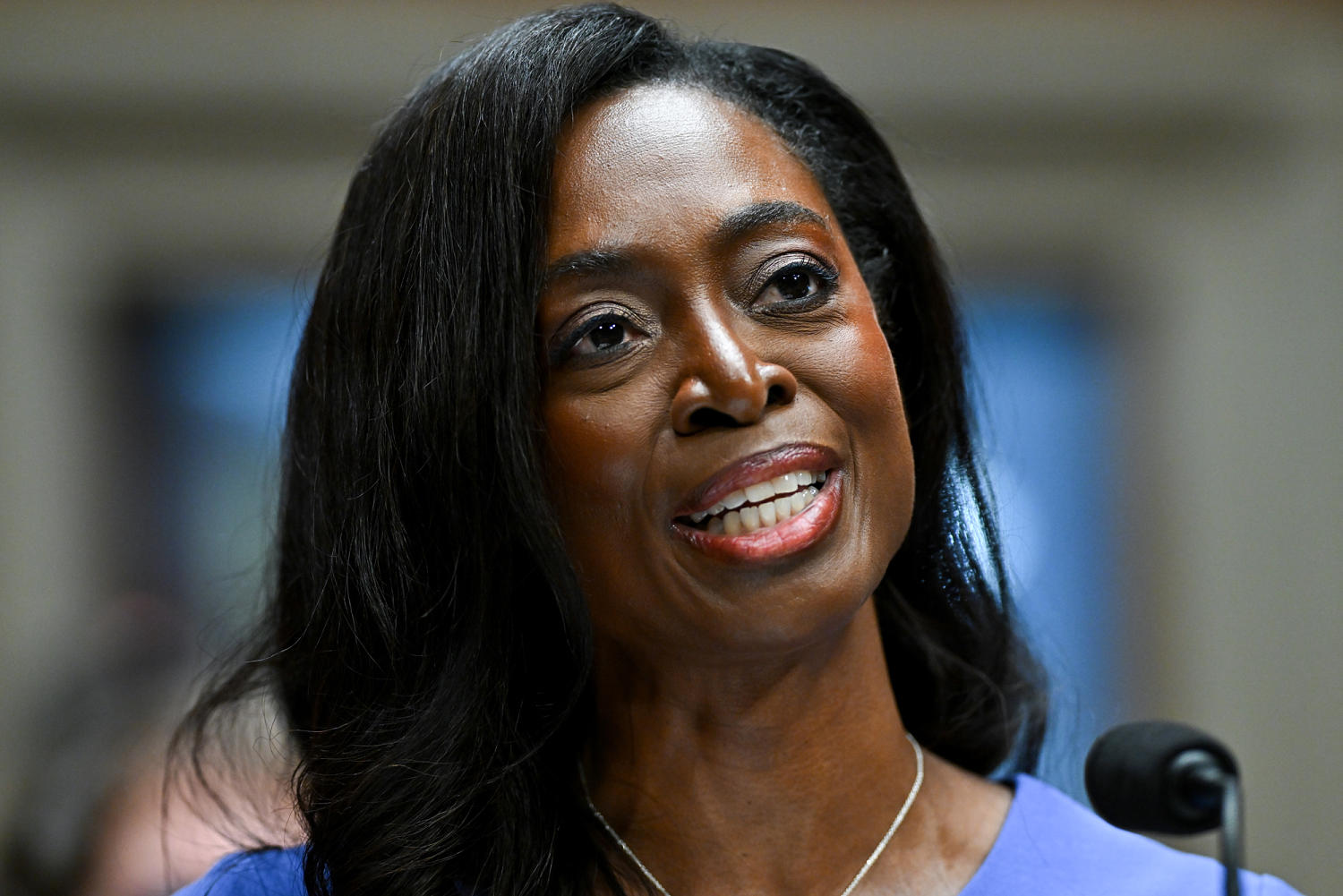
The newly confirmed director of the Centers for Disease Control and Prevention, Dr. Erica Schwartz, stood before a skeptical Senate committee and made a familiar pledge to follow the science and speak truth. In any other era, this routine administrative confirmation would pass as standard bureaucratic theater. But Washington in 2026 is an entirely different operational environment. Schwartz takes command of an Atlanta-based agency that has suffered nearly a year without permanent leadership, staggering budget cuts, and a devastating collapse in public confidence. Promising to tell the truth about medical data sounds noble on paper. Inside a fractured federal public health apparatus reporting directly to Health and Human Services Secretary Robert F. Kennedy Jr., a simple promise offers very little structural protection.
Public health analysts looking past the reassuring rhetoric understand the heavy administrative gravity pulling against the new director. The agency sits inside a cabinet department managed by a prominent vaccine skeptic who has previously dismantled federal research funding into mRNA platforms and questioned foundational immunization schedules. Schwartz brings an elite resume to the post, featuring medical and law degrees, a master's degree in public health, and a distinguished background as a retired rear admiral in the U.S. Public Health Service Commissioned Corps. Yet technical competence alone does not stop political directives. History shows that institutional loyalty and personal integrity collide violently when executive branch priorities flatly contradict epidemiological reality. Learn more on a connected issue: this related article.
The Structural Trap of Institutional Independence
Federal law grants the CDC director no statutory fixed term or formal shield against political termination. This absence of structural insulation creates a precarious balancing act for any scientist trying to manage outbreaks while satisfying political appointees. During her confirmation hearings, Schwartz faced pointed questions from senators regarding whether she would openly break with her superiors if directed to publish or enforce guidelines unsupported by peer-reviewed evidence. Her answers avoided direct confrontation, leaning instead on general commitments to personal integrity.
This diplomatic dodge highlights the core vulnerability of the position. When an agency leader refuses to draw a hard line during confirmation, they inherit a compromised posture before they even step foot in the building. Public trust in the CDC has plummeted from historical highs near eighty percent down to roughly fifty percent among American adults, according to recent polling data from the de Beaumont Foundation. Recovering that lost ground requires absolute clarity and visible independence from political interference. When the public suspects that health directives are being filtered through an ideological lens, compliance with basic preventative measures evaporates. Additional reporting by Medical News Today explores similar perspectives on this issue.
Operating Inside a Hollowed-Out Bureaucracy
Beyond political friction, Schwartz inherits an organization physically diminished by drastic workforce reductions. Data compiled from the Office of Personnel Management indicates that administrative cuts reduced the CDC workforce by nearly one-third between January 2025 and mid-2026. Experienced epidemiologists, data analysts, and field investigators left the agency in droves, exhausted by political volatility and shrinking budgets.
Consider a hypothetical outbreak response to a rapidly spreading foodborne pathogen or an emerging vector-borne disease. In previous decades, the agency could instantly deploy hundreds of specialized Epidemic Intelligence Service officers to trace transmission chains and assist local health departments. A hollowed-out workforce changes this equation entirely. With depleted staffing levels across key departments like injury prevention and infectious disease tracking, the agency struggles to maintain basic surveillance functions, let alone mount a complex multi-state intervention. Speaking truth requires data, and gathering reliable data requires boots on the ground that no longer exist in sufficient numbers.
The Collision Between Messaging and Mandate
The friction between political masters and scientific staff manifests most clearly in vaccine policy and preventative care. While Schwartz testified that modern vaccine technology remains safe and effective, her department answers to a leadership structure deeply hostile to conventional immunization frameworks. This ideological split turns routine bureaucratic sign-offs into ideological battlegrounds.
When federal guidance becomes ambiguous, state health departments and local hospital networks fill the vacuum with disparate, uncoordinated rules. Clinicians on the front lines need practical, real-world guidance that helps them treat patients without sorting through layers of political compromise. If the national public health authority loses its voice, decentralized confusion takes over. Outbreaks of preventable conditions like measles and localized parasitic infections continue to test the system while leadership spends political capital negotiating internal boundaries.
Pledging to speak truth about science makes for an encouraging headline, but professional survival inside a hostile bureaucracy demands structural power rather than good intentions. The new director holds the title, but the actual capacity to direct federal health policy remains entirely up for grabs.