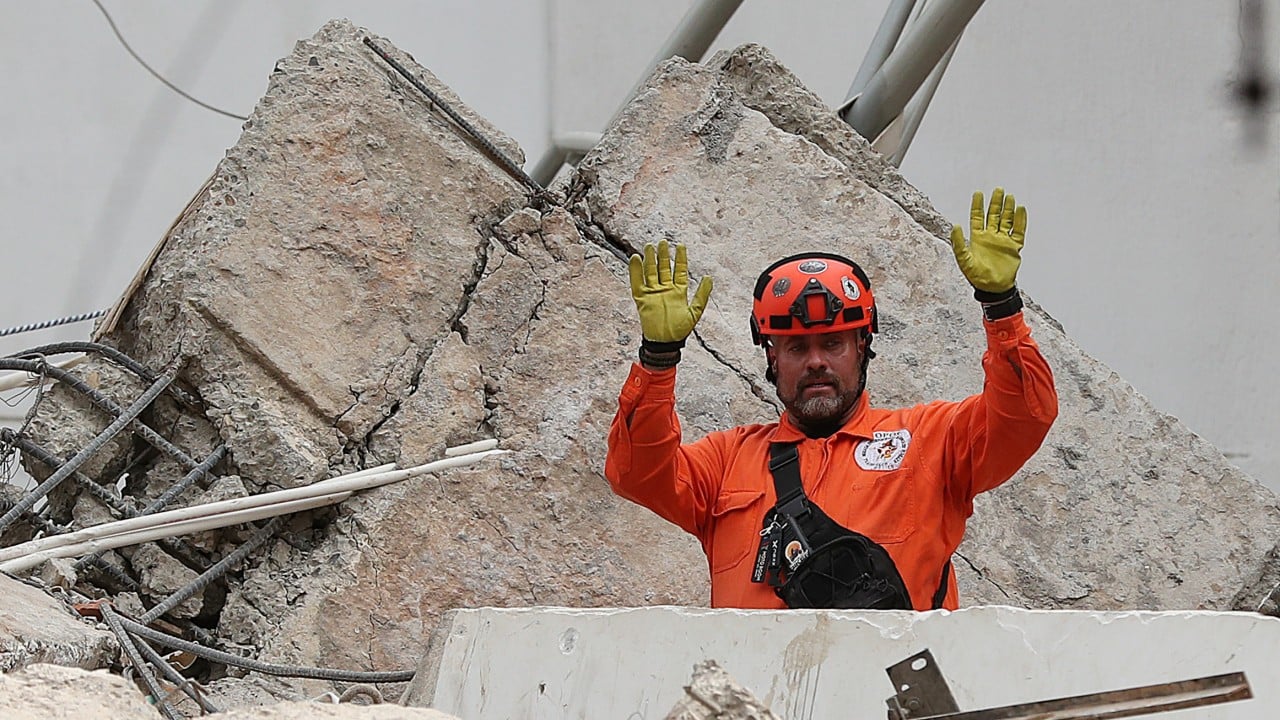
The death toll from the magnitude 7.4 earthquake that struck western Colombia has climbed to 265, with nearly 500 individuals still listed as missing. Emergency responders continue to claw through mountains of concrete in Cali, Pereira, and across the Chocó department, running low on the mathematical certainty of survival that dictates post-disaster operations.
When the earth fractured at a depth of over 100 kilometers on a Monday morning, it did not just rattle nerves; it exposed the deep-seated structural vulnerabilities plaguing urban centers across the Andean region. While international headlines focus entirely on the grim rising tally of casualties, the structural autopsy of this disaster reveals systemic failures that reach far beyond tectonic activity.
The Anatomy of a High-Depth Tremor
Geologically, the event unfolded in a notoriously complex tectonic zone where the Nazca and Malpelo plates interact with the South American plate. Yet, standard seismological models failed to fully predict the localized amplification experienced in departmental capitals like Cali and Pereira.
Earthquakes originating at intermediate depths, roughly 107 kilometers down, behave differently than shallow crustal ruptures. Energy waves travel upward, refracting through varying densities of soil and rock before hitting urban foundations.
- Frequency Matching: The dominant wave frequencies matched the resonant frequency of mid-rise concrete frame buildings constructed decades ago.
- Basin Effects: Valleys filled with alluvial sediment trapped and amplified the seismic energy, turning soft soil into a whip.
- Secondary Hazards: More than 100 aftershocks destabilized structures that had merely suffered micro-fractures during the initial jolt.
In neighborhoods built on steep slopes or river basins, the ground simply gave way. Landslides severed critical supply lines into the epicentral zone near San José del Palmar, leaving mountain hamlets completely isolated for days while national authorities scrambled to coordinate logistics from Bogotá.
The Cost of Legacy Infrastructure
Years of rapid, unmonitored urbanization have left Colombian cities vulnerable to natural hazards. In downtown Cali and Pereira, scores of buildings pancaked because their ground floors were engineered with open commercial spaces, creating a classic soft-story vulnerability.
When horizontal shear forces hit these structures, the rigid upper floors crushed the flexible lower levels. Municipal building codes had theoretically mandated seismic retrofitting for decades, but enforcement remained notoriously weak. Property owners routinely bypassed permits, and municipal inspection offices lacked the staffing to audit thousands of aging commercial and residential blocks.
President Abelardo de la Espriella declared an economic emergency to bypass bureaucratic delays and funnel cash directly into rebuilding schools, hospitals, and infrastructure. Pouring capital into immediate relief is mandatory, but throwing money at the symptoms ignores the underlying disease. Without a mandatory, rigorous audit of every commercial building older than thirty years in the Andean corridor, the country risks repeating this exact tragedy during the next major seismic cycle.
Logistics Bottlenecks on the Ground
Rescue operations faced immediate gridlock. Major transport hubs, including over ten regional airports, suffered runway damage or structural failures in their control towers. Air ambulances and heavy logistics cargo planes could not land safely in the hardest-hit zones during the crucial first twelve hours.
Ground transportation fared no better. Major highways connecting the interior to the Pacific coast experienced multiple blockages from massive slope failures. Heavy equipment had to be routed through alternate mountain passes, burning precious hours while citizen bucket brigades attempted to move tons of rubble manually.
The centralization of emergency response units in Bogotá created an inevitable delay. Local civil defense groups in Chocó and Valle del Cauca possessed local knowledge but lacked heavy extraction tools, hydraulic cutters, and thermal imaging cameras. By the time federal assets arrived via military transport, the survival curve had already begun its steep, unforgiving decline.
As national flags fly at half-mast and families crowd outside hospitals awaiting news of missing relatives, the political fallout is beginning to match the scale of the physical destruction. Declarations of state emergencies offer immediate financial relief, but accountability requires looking honestly at why so many concrete structures collapsed under predictable geological pressures.


