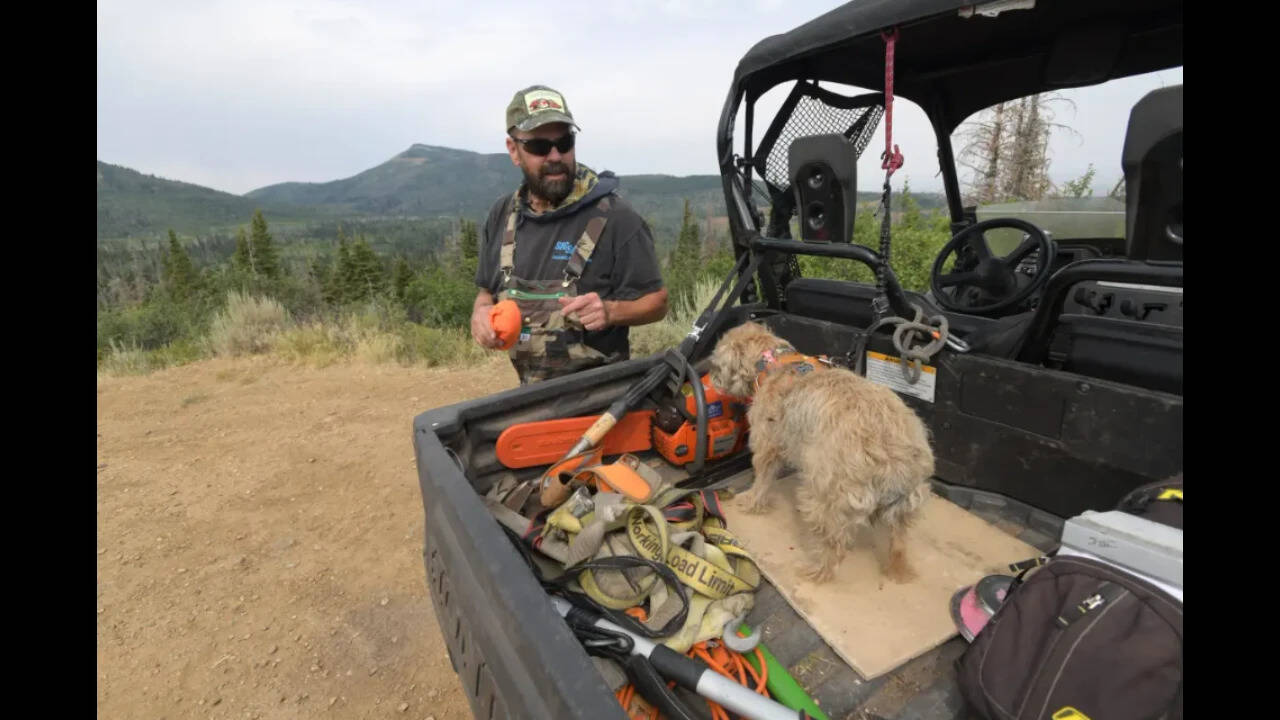
The split estate doctrine is an administrative ghost story that usually stays buried in county clerk archives until a bulldozer shows up at sunrise. In the high terrain of Moffat County, Colorado, that fiction recently collided with physical geography. A veteran and local motorcycle instructor found himself challenging federal oil and gas drilling rights slated directly beneath his mountain property, confronting a bureaucratic apparatus sliding hundreds of thousands of public acres toward competitive auction blocks.
This standoff is not an isolated flash point. It marks the friction point of an aggressive federal leasing blitz pushing more than 400,000 acres of Colorado terrain toward energy development. For decades, landowners bought mountain parcels operating under the comforting assumption that high-altitude topography, migration corridors, and rugged isolation provided natural immunity from heavy industry. That era of complacency has expired. As federal agencies accelerate quarterly lease sales under statutory mandates, private property owners and public land advocates are scrambling to counter an industrial push that treats intricate ecosystems as standard line items on an energy spreadsheet.
The Mechanics of the Split Estate Trap
To understand how a mountain homeowner can face heavy extraction beneath their foundation, you must examine how American real property law fractures the earth. Surface ownership and mineral ownership are distinct legal bundles of sticks. You can hold the deed to a scenic alpine ridge, plant an orchard, and build a timber-frame home while an entirely separate entity—private, corporate, or federal—owns the subsurface mineral estate.
Under historic common law and subsequent federal statutes like the Stock Raising Homestead Act of 1916, the mineral estate is dominant. This means the subsurface owner possesses an implied right of reasonable access to extract what lies below. If an energy company acquires a federal lease for the minerals beneath a privately owned mountain, they hold broad latitude to construct well pads, lay gathering lines, and run heavy transport vehicles across the surface, subject to regulatory mitigation but rarely to a flat veto from the surface owner.
For a long time, the physical realities of high-altitude drilling kept this conflict dormant. Companies focused their capital on the flat, accessible expanses of the Denver-Julesburg Basin or the Piceance Basin. Steep slopes, lack of water infrastructure, and severe winter weather made mountain extraction economically unviable. Modern horizontal drilling and hydraulic fracturing changed the calculus. Operators can now drill miles out and miles down from a single pad placed miles away, or target structural formations once considered completely out of reach.
The Policy Driver Behind the Acreage Surge
The current acceleration of lease sales is fueled by a combination of statutory pressure and shifting executive priorities. Federal law requires the Bureau of Land Management to hold quarterly oil and gas lease sales. Following periods of slowed activity or policy pauses, legislative requirements such as the One Big Beautiful Bill Act implemented strict rules forcing agencies to offer massive percentages of nominated parcels within tight windows.
When a federal agency faces directives to move inventory quickly, vetting quality yields to processing quantity. Conservation groups and local stakeholders point out that this administrative rush sweeps up sensitive ecological zones that past administrations routinely screened out. Roadless tracts, pristine wilderness-quality landscapes, and critical big game migration corridors for elk, mule deer, and moose are landing on auction manifests.
Take, for instance, the concurrent battles playing out closer to municipal infrastructure. Recent lease proposals near the Aurora Reservoir have pitted urban water security against industrial expansion. Even with state-mandated technological mitigations—such as electric drilling rigs, closed-loop fluid systems, and full-wrap sound walls—the fundamental dispute remains unaddressed. Location matters. Putting heavy industrial extraction upstream from municipal drinking water or atop high-priority wildlife habitat creates a permanent baseline risk that engineering controls can mitigate but never completely erase.
Legal Pushback and the Limits of Protest
Individual protests, such as the formal filings submitted by Moffat County property owners, highlight the David-versus-Goliath nature of modern land use disputes. A lone resident armed with local ecological observations faces an administrative apparatus backed by extensive statutory carve-outs for energy development. While protesters can point to elk calving grounds and fragile watersheds, the legal framework governing federal leasing heavily favors production unless an endangered species or an explicit statutory violation halts the process.
Recognizing the limits of individual appeals, major conservation organizations have escalated the fight to the federal courts. Legal challenges filed by coalitions including Earthjustice and the Wilderness Workshop argue that rushing hundreds of thousands of acres to lease without adequate regard for wildlife impacts violates core tenets of the Federal Land Policy and Management Act. These lawsuits target internal agency directives that bypass traditional preference criteria, which were originally designed to steer industrial development away from sensitive ecological zones.
Yet litigation moves slowly while auctions move fast. By the time a federal judge hears arguments regarding cumulative impact statements or migratory bottlenecks, the leases have often changed hands, locking in financial obligations and triggering secondary permitting phases at the state level.
The Financial Reality for Taxpayers
The rush to lease public lands also carries a hidden economic cost that extends far beyond environmental degradation. Critics from non-partisan fiscal watchdog groups note that a significant portion of federal acreage is frequently auctioned off at minimum statutory bids, locking in outdated royalty rates that fail to capture fair market value for public resources.
When thousands of acres clear at the legal baseline of ten dollars per acre, the public surrenders potential millions in lost revenue that would otherwise support public education and local infrastructure. The systemic pressure to clear inventory creates a buyer's market for speculative leasing, where energy portfolios expand not out of immediate operational necessity, but to bank long-term subterranean assets on the cheap.
The Fragile Intermediary State
Back on the remote slopes of Colorado, the immediate future remains tense. Landowners who thought their deeds granted them sanctuary from the industrial grid are realizing that property boundaries stop at the soil line. As the federal machinery grinds forward with its multi-hundred-thousand-acre sales schedule, the legal fiction of the split estate continues to cast a long shadow over the western landscape. Every administrative clearance signed in a distant regional office sends shockwaves down to the individual ridge line, testing whether local stewardship can hold its ground against an unyielding momentum of resource extraction.