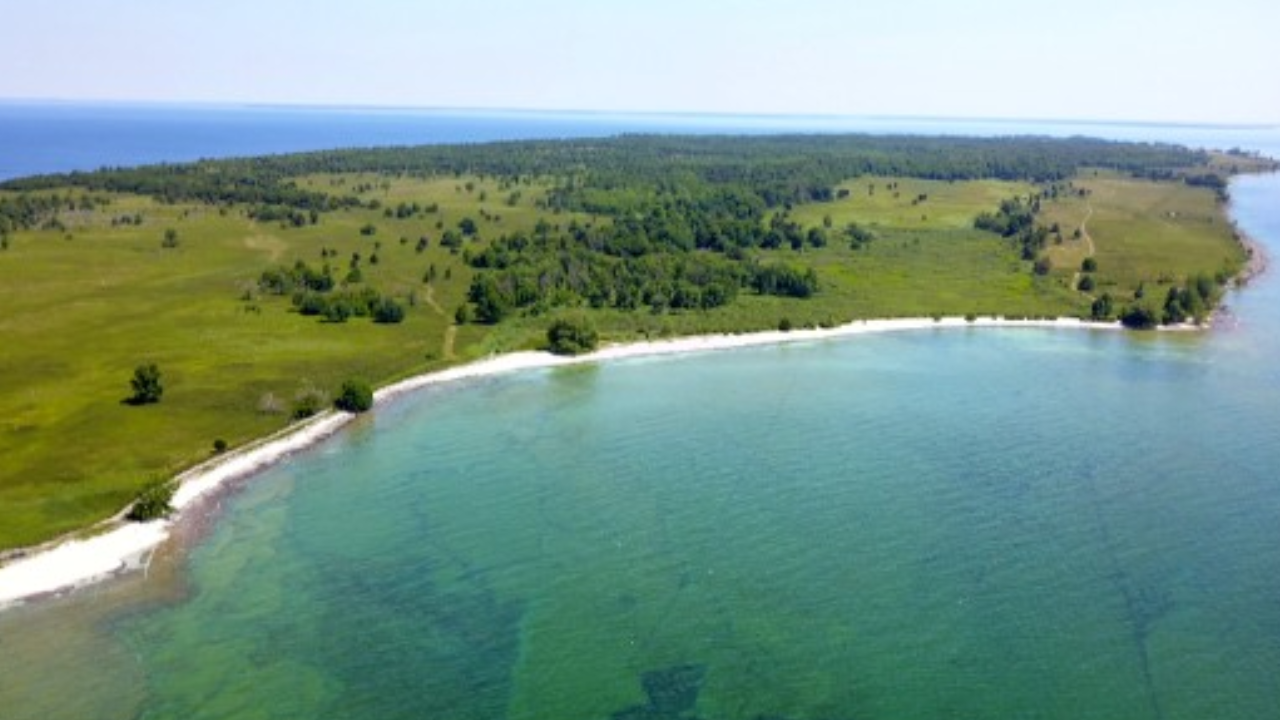
The Thousand Islands Land Trust (TILT) has permanently protected 1,410 acres on Galloo Island in eastern Lake Ontario through a conservation easement, while the Patten family retains full private ownership of the property. This arrangement legally strips future commercial, industrial, and residential development rights from the majority of the island's landmass in perpetuity. By utilizing a conservation easement rather than a fee-simple land purchase, the land trust secured critical migratory bird habitat and shoreline ecology without raising the capital required to buy the island outright, and without removing the acreage from local municipal tax rolls.
It looks like a standard conservation press release on the surface. A wealthy family donates or sells development rights. A regional land trust claims a massive acreage victory. Everyone shakes hands for the cameras.
Look closer at the geography and the history of Lake Ontario's eastern basin, and the Galloo Island conservation easement becomes something far more calculated. Galloo Island is not a quiet inland woodlot. Spanning roughly 1,950 acres in total, this remote limestone outpost sits about six miles off the New York shoreline in the town of Hounsfield, Jefferson County. For decades, its isolation, steady prevailing winds, and strategic position along the Atlantic Flyway made it a high-stakes battleground between industrial energy developers, state regulators, and fierce local preservationists.
When you lock down 1,410 acres on an island of that size, you effectively dictate the future of the entire landmass.
Why Galloo Island Was Always on the Radar
To understand why this specific easement matters, you have to understand what Galloo Island actually is. Rising out of the deep waters of eastern Lake Ontario, the island is characterized by flat limestone bedrock, shallow soils, dense scrub-shrub thickets, inland wetlands, and miles of exposed, cobble-strewn shoreline. Because it sits several miles offshore from Stony Point and Henderson Harbor, human presence has remained minimal since the U.S. Coast Guard automated and eventually decommissioned the historic Galloo Island Light Station on its southwestern tip.
Nature thrives in that kind of vacuum.
During spring and fall migrations, the island acts as an essential refueling station for exhausted songbirds, raptors, and waterfowl crossing the open expanse of Lake Ontario. Colonial waterbirds, including Caspian terns, double-crested cormorants, and ring-billed gulls, rely on its isolated shoals and beaches for nesting. Off its rocky reefs, smallmouth bass, lake trout, and walleye spawn in some of the cleanest, deepest freshwater habitat in the Northeast.
That same isolation and exposure to unobstructed lake winds also made Galloo Island an irresistible target for industrial development. In the 2010s, the island was at the center of a bitter, multi-year regulatory war over a proposed utility-scale wind energy project. Developers planned to erect dozens of massive turbines across the island's interior, accompanied by a substation, miles of access roads, barge landing facilities, and an underwater transmission cable running to the mainland.
The wind fight fractured the surrounding North Country communities. Proponents argued for clean energy jobs and host community payments. Opponents—led by avian biologists, regional conservation groups, and Lake Ontario residents—warned of catastrophic bird and bat mortality along a major migratory corridor, alongside the industrialization of one of the last untouched islands in the Great Lakes. The project eventually collapsed under the weight of regulatory scrutiny, litigation, and shifting economics.
The lesson from that battle was obvious to anyone paying attention. As long as Galloo Island remained unrestricted private real estate, another industrial proposal, luxury resort concept, or high-density subdivision was only one real estate transaction away.
How a Conservation Easement Actually Works
A lot of people misunderstand what happens when a land trust announces it has "protected" private land. TILT did not buy Galloo Island. The Patten family still holds the deed. They still pay property taxes. They still control who steps foot on their private acreage.
Think of property ownership as a bundle of sticks. Each stick represents a specific legal right: the right to build a house, the right to subdivide the land into smaller lots, the right to mine limestone, the right to clear-cut timber, the right to install commercial infrastructure, and the right to exclude trespassers.
In a conservation easement, the landowner voluntarily separates specific sticks from that bundle and permanently transfers them to a qualified conservation organization or government agency. In this case, the Patten family conveyed the development rights across 1,410 acres to the Thousand Islands Land Trust.
The legal mechanism is binding. It is recorded in the Jefferson County Clerk's office and runs with the land forever. If the Patten family sells the property ten years from now, or passes it down through three generations, the new owners are legally bound by the exact same restrictions.
What Gets Restricted and What Remains
Under standard TILT easement frameworks tailored for large island ecosystems, the restrictions target fragmentation and ecological disruption:
- No Subdivision: The 1,410 acres cannot be carved up into smaller waterfront parcels for vacation homes or speculative real estate flips.
- No Industrial or Commercial Energy Infrastructure: Utility-scale wind turbines, commercial solar arrays, and heavy industrial port facilities are permanently barred from the protected acreage.
- Shoreline and Wetland Buffers: Natural vegetative buffers along Lake Ontario and interior wetlands must remain intact, preventing erosion, agricultural runoff, and habitat destruction.
- Limits on Impervious Surfaces: Any new structures, if permitted at all within designated building envelopes, face strict square-footage caps.
Conversely, the Patten family retains substantial rights. They keep the right to private enjoyment, traditional low-impact recreation, hunting, fishing, and maintaining existing structures and trails. Crucially, a private conservation easement does not automatically grant public access. Unless an easement explicitly includes a public trail corridor—which is rare on remote, privately owned islands without ferry infrastructure—the land remains off-limits to the general public without landowner permission.
The Economics Behind Private Land Protection
Why would a family willingly give up the right to develop 1,410 acres of prime Great Lakes island property? And why would a land trust prefer this route over buying the island and turning it into a public nature preserve?
The answer comes down to cold, practical math.
Acquiring a massive Lake Ontario island outright requires millions of dollars in upfront capital. Even if a land trust raises the money to buy it, the expenses only begin at closing. Owning an offshore island means maintaining docks, managing invasive species, patrolling for trespassers, carrying liability insurance, and absorbing the ongoing administrative burden of public access. Worse yet, when a tax-exempt nonprofit or state agency buys land outright, that acreage often comes off the local municipal tax rolls, sparking predictable resentment from town boards and school districts in rural counties like Jefferson County.
A conservation easement sidesteps almost all of those friction points.
For the Thousand Islands Land Trust, the capital outlay is a fraction of a fee-simple purchase. The organization commits instead to a stewardship endowment—a dedicated pool of funds used to pay for annual aerial and ground monitoring to ensure the landowner complies with the easement terms forever.
For the Patten family, the financial incentives are equally clear, even if the exact terms of their transaction remain private. In New York State and under federal tax law, landowners who donate a conservation easement—or sell one at a steep discount, known as a bargain sale—can qualify for substantial benefits:
- Federal Income Tax Deductions: Under Internal Revenue Code Section 170(h), the value of a donated conservation easement (calculated by an independent appraiser as the difference between the land's fair market value before and after the development restrictions) can be deducted against up to 50% of the donor's adjusted gross income, with a 15-year carryforward period.
- Estate Tax Relief: By stripping away speculative development value, the assessed market value of the property drops significantly. When the land passes to heirs, the estate tax burden is drastically reduced, preventing families from being forced to sell off ancestral land just to pay the IRS.
- New York State Conservation Easement Tax Credit: New York offers a unique refundable income tax credit equal to 25% of the school, county, and town property taxes paid on land restricted by a qualifying conservation easement, capped at $5,000 per year.
You do not need to be a cynical Wall Street tax attorney to see why these deals get done. The landowner preserves a cherished family holding and captures legitimate tax and estate relief. The land trust locks down critical acreage at a discount. The town of Hounsfield keeps a reliable, private taxpayer on the rolls without having to extend municipal services, roads, or emergency response across six miles of open water.
The Strategic Reality of the 1,410-Acre Footprint
Look at the numbers again. Galloo Island is roughly 1,950 acres. The TILT easement covers 1,410 acres. That leaves approximately 540 acres outside this specific agreement.
In conservation real estate, you do not need to own every square inch of an island to control its destiny. You just need to control the core.
By locking up more than 70% of the island's landmass in a single contiguous or near-contiguous block, TILT has effectively eliminated the economies of scale required for major commercial development. You cannot build a profitable wind farm on fragmented slivers of rock. You cannot justify the tens of millions of dollars needed to dredge a commercial harbor, build heavy-haul roads, or run high-voltage submarine cables to the mainland if three-quarters of the island is permanently off-limits to infrastructure.
This is landscape-scale conservation practiced with surgical precision. TILT has spent decades building a network of protected lands across the St. Lawrence River valley and eastern Lake Ontario—now totaling well over 12,000 acres across islands, coastal wetlands, and mainland grasslands. Securing the core of Galloo Island anchors the southwestern flank of their entire conservation corridor.
What Critics and Skeptics Point Out
No land conservation tool is flawless, and pretending conservation easements are an unalloyed good ignores real policy debates that have followed land trusts for years.
The loudest criticism involves public access versus public subsidy. When landowners claim millions of dollars in federal income tax deductions or receive state grant funding for a conservation easement, taxpayers are effectively underwriting the deal. Yet on properties like Galloo Island, the public cannot legally step ashore to hike the trails or walk the beaches. Critics argue that public tax dollars should buy public recreation rights, not subsidize private sanctuaries for wealthy families.
The counter-argument from ecologists is straightforward. Galloo Island's primary ecological value lies precisely in its lack of human disturbance. Ground-nesting birds like Caspian terns and sensitive migratory songbirds do not coexist well with weekend boaters, unleashed dogs, and backcountry campers. Public access on an island six miles offshore would also create an immediate safety nightmare; Lake Ontario is notorious for sudden, violent squalls that trap recreational boaters in open water. Keeping the island in private hands with strict ecological protections gives wildlife the isolation it needs while sparing taxpayers the cost of search-and-rescue operations and public dock maintenance.
There is also the perpetual enforcement challenge. A conservation easement is only as strong as the organization holding it. TILT is accredited by the Land Trust Accreditation Commission, meaning it maintains strict legal defense reserves and conducts mandatory annual compliance inspections. Still, over a timeline of 50 or 100 years, property ownership inevitably changes. Future buyers who did not negotiate the original easement sometimes view restrictions as an annoyance rather than a legacy, testing boundaries with unauthorized clearing, unpermitted docks, or incremental structural additions. TILT's stewardship team will have to monitor those 1,410 acres every single year from now until the end of time.
A Blueprint for Vulnerable Great Lakes Islands
Across the Great Lakes, undeveloped islands face relentless pressure. Climate migration, remote work flexibility, and speculative real estate capital have pushed buyers into once-overlooked corners of northern New York, Michigan, and Wisconsin. At the same time, aggressive state renewable energy mandates continue to drive developers toward large, sparsely populated tracts of land and offshore wind corridors.
The Galloo Island easement proves that land trusts do not have to outbid corporate developers or billionaire buyers at auction to win. By pairing private ownership continuity with permanent legal restrictions, TILT and the Patten family took one of Lake Ontario's most contested pieces of real estate off the speculative market permanently—leaving the limestone shores, coastal wetlands, and migratory flyways intact for the birds that actually need them.