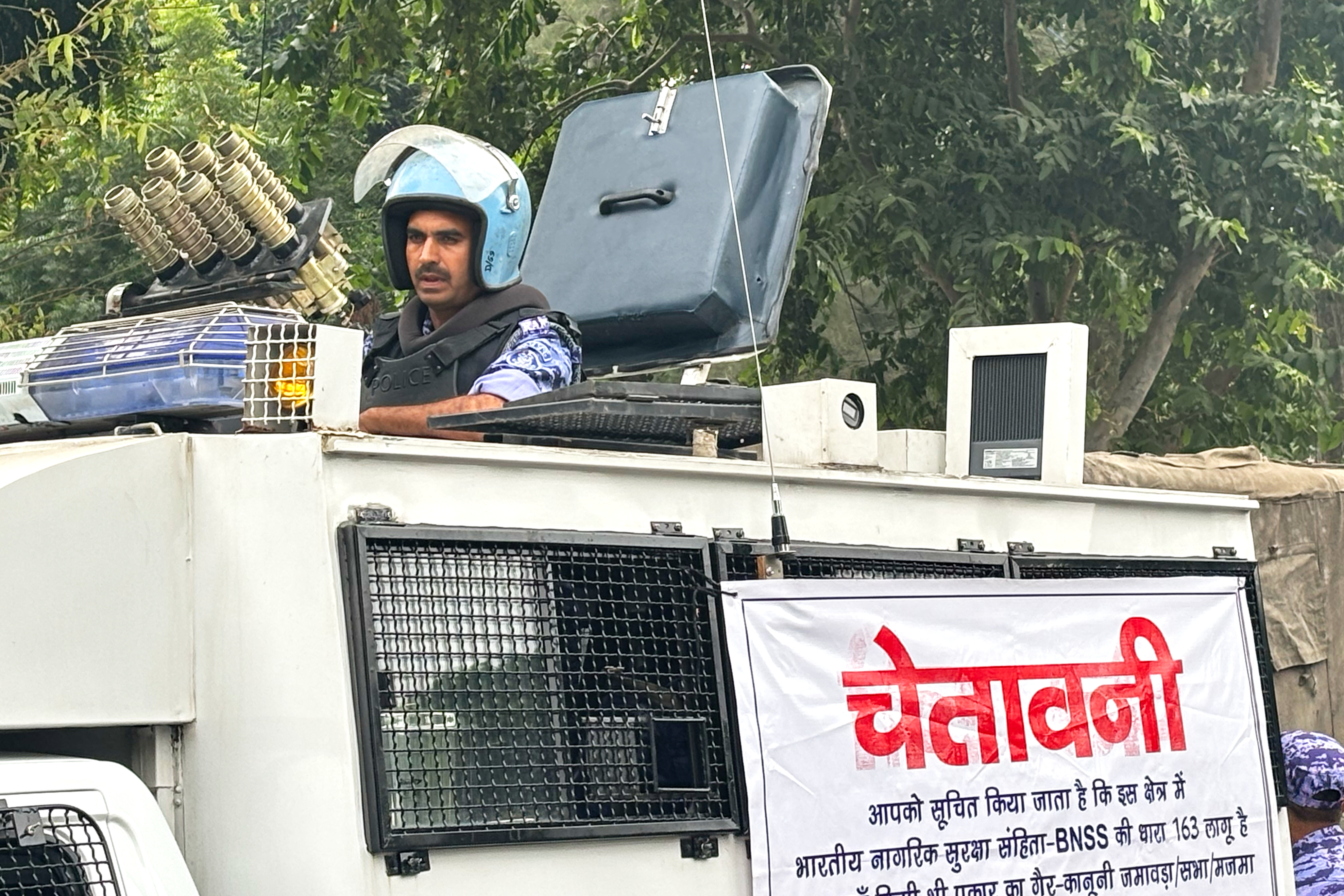
The capital of the world's largest democracy resembles an armed camp. When thousands of citizens poured onto the streets of New Delhi to demand the resignation of Chief Election Commissioner Gyanesh Kumar, the state response was swift and absolute. Transit hubs were choked by barricades, mobile internet connections went dark across commercial districts, and more than 2,000 people—including high-profile student organizers of the youth-led Cockroach Janta Party—were swept into preventative detention.
At the center of this firestorm lies a bureaucratic mechanism with explosive political consequences: the sudden purging of roughly 130 million names from national voter rolls. Prime Minister Narendra Modi’s administration insists these modifications are routine administrative housekeeping meant to scrub duplicate or outdated entries. Critics and opposition leaders view the rollbacks through a darker lens, pointing to internal dissent within the Election Commission itself as evidence that systemic disenfranchisement is actively reshaping the electorate ahead of high-stakes state polls.
The emergence of the Cockroach movement represents a profound shift in how modern Indian dissent operates. Organized under a deliberately provocative moniker meant to symbolize resilience against being crushed underfoot, these young activists have repeatedly outmaneuvered traditional political hierarchies. Rather than relying on established opposition parties that often move with institutional sluggishness, the movement utilizes decentralized flash mobilizations. When founder Abhijeet Dipke and core strategists Saurav Das and Ashutosh Ranka were intercepted and detained by police details right as their flights landed in the capital, the organization did not collapse. Instead, local chapters splintered into smaller, highly mobile groups that continued waving the national flag directly in front of riot police.
The legal and constitutional architecture governing public assembly in Delhi makes such confrontations inevitable. Unlike municipal police forces in other global capitals, the Delhi Police answer directly to the federal Home Ministry, creating a direct pipeline from central executive power to street-level enforcement. Historical protest sites like Jantar Mantar have been systematically stripped of their permits, categorized out of existence under vague public order pretexts. When the state closes every legal avenue for public grievance, citizens are left with a stark binary choice: accept silent erasure from the voter lists or risk immediate arrest under breach-of-peace statutes.
The economic and political fallout from these security clampdowns reaches far beyond the boundaries of New Delhi. Foreign investors monitoring South Asia are beginning to re-evaluate the stability premium traditionally assigned to the Modi government. While the ruling Bharatiya Janata Party maintains that street protests are simply weaponized tantrums thrown by sore losers after electoral setbacks, the persistence of youth-led resistance tells a different story. An administration that feels compelled to lock down a metropolis of twenty million people to stop unarmed citizens from questioning an election official is an administration operating out of acute vulnerability.
As courts grapple with habeas corpus petitions and demands for the release of detained civil rights defenders, the foundational social contract of Indian democracy continues to fray at the edges. The state can deploy anti-riot vehicles, suspend local data networks, and detain thousands in makeshift holding areas, but it cannot legislate away the fundamental question raised by millions of missing voters: how an election can remain free when the electorate is quietly rewritten from above.