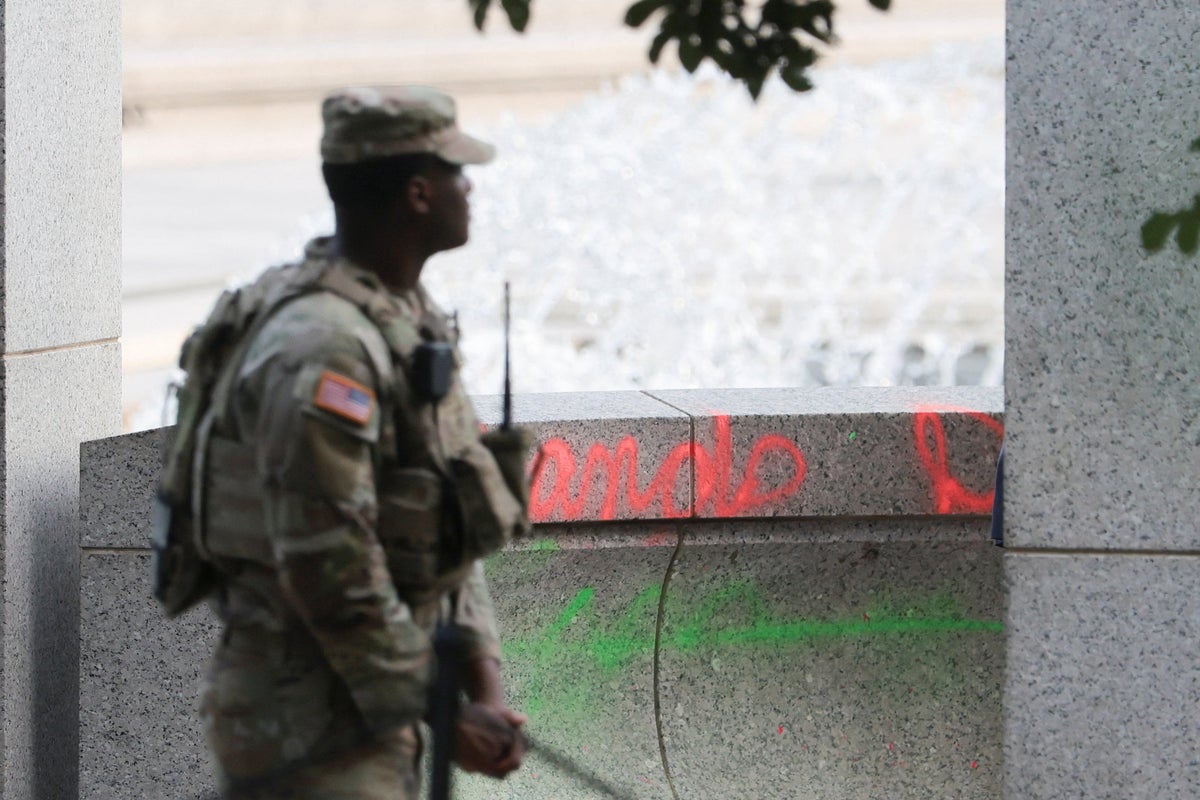
Melissa Farris sits under federal court supervision in Ohio, barred from returning to the nation's capital except for mandatory legal proceedings. A federal grand jury formally indicted the 41-year-old Elizabethtown, Kentucky resident on two felony counts—destruction of a veterans' memorial and destruction of government property—stemming from a mid-August incident at the World War II Memorial on the National Mall.
The case escalated instantly from local police blotter item to national controversy because of the venue, the method, and the immediate political amplification. On August 13, federal prosecutors state that Farris walked onto the Atlantic Theatre Pavilion of the World War II Memorial, sprayed multi-colored paint across the stone walls, dumped a foaming substance into the monument's fountain, and broadcasted her actions live across social media platforms.
What drives an individual to commit public property destruction while broadcasting the evidence in real time? For investigators and legal observers, the answer points to a collision between personal grievances, digital performance, and the unique vulnerability of open federal monuments.
The Anatomy of a Public Defacement
According to court documents filed by the United States Attorney's Office for the District of Columbia, the sequence of events unfolded rapidly in broad daylight. A United States Park Ranger responded to reports of a disorderly person at the memorial just after two o'clock in the afternoon. Tourists and bystanders had already gathered around the balcony structure, watching as a woman recorded herself defacing the stone.
Orange paint marred the wall, spelling out the phrase "Clean Hands Dirty $," accompanied by secondary green and pink applications and scattered splatter on the pavement. Meanwhile, soap or a similar surfactant introduced into the fountain's water circulation generated a thick bank of white foam across the basin.
Farris fled the immediate area upon realizing law enforcement had arrived, but the digital trail remained active. Investigators quickly tied the suspect to social media profiles under the alias "Melissa Lovewell". Prior to the physical vandalism, a recorded video surfaced in which the suspect explicitly previewed her intentions. On camera, she claimed full cognitive awareness of her choices, framing the planned criminal act as a desperate bid to force an unresolved whistleblower case into a public courtroom.
Such performance-driven offenses represent a distinct challenge for security agencies tasked with protecting open-air national spaces. The National Mall relies heavily on accessibility, welcoming millions of annual visitors without the checkpoint barriers common to federal office buildings or judicial complexes. When a perpetrator decides that committing a high-visibility crime is an effective megaphone, prevention requires balancing public access against the constant threat of calculated vandalism.
Political Pressure and the Optics of Justice
The charges against Farris arrived amid heightened political sensitivity regarding the physical security of Washington monuments. President Donald Trump publicly drew attention to the incident on social media, writing on Truth Social to express outrage over the damage and connecting it to broader anxieties about public property upkeep in the capital.
The administration's focus on the case gained extra edge due to a recent public misstep involving another high-profile National Mall site. Just weeks prior, authorities had charged a former Olympian in connection with alleged vandalism at the nearby Lincoln Memorial Reflecting Pool, only for the Justice Department to subsequently move for dismissal after discovering evidence that the damage stemmed from a botched maintenance renovation rather than malicious destruction.
That earlier reversal placed federal prosecutors under intense scrutiny regarding how they handle monument-related cases. In the Farris matter, however, the digital evidence left little room for ambiguity. With the suspect's own livestreamed admissions, eyewitness photographs, and rapid identification by a Park Police officer who had arrested her days earlier for unlawful camping nearby, the evidentiary foundation for an indictment was formidable.
U.S. Attorney Jeanine Pirro emphasized the gravity of the charges, categorizing the defacement as a direct insult to the millions of Americans who served in the armed forces and the hundreds of thousands who lost their lives in the twentieth-century conflict. The two felony counts carry a statutory maximum penalty of up to ten years in prison, a severe legal reckoning for an act executed as an unorthodox protest.
The Fallout of Protest by Vandalism
Farris's defense strategy, should her public statements translate into legal arguments, will likely confront a strict federal judiciary that draws a sharp line between protected speech and the destruction of federal assets. Courts have consistently rejected the notion that personal administrative grievances or whistleblower claims justify the physical degradation of public property, particularly veterans' memorials protected by specific statutory provisions.
Following her initial arrest and subsequent release under court supervision, the case moves toward a formal arraignment and trial scheduling. The financial toll, with initial cleanup estimates surpassing one thousand dollars, is secondary to the symbolic cost of securing spaces that were built to endure. As the legal process moves forward, the focus shifts away from the digital noise of the livestream and into the structured environment of the federal courtroom, where the consequences of the August afternoon will be definitively adjudicated.

