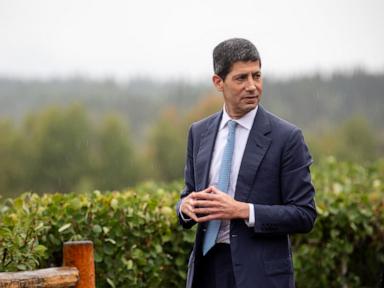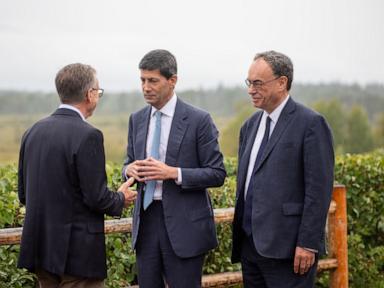
Sticky inflation refuses to vanish, and the Federal Reserve is running out of comfortable options. Federal Reserve Chair Kevin Warsh used his inaugural keynote address at the Jackson Hole economic symposium to deliver an unmistakable warning. If price pressures do not cool rapidly, the central bank will raise interest rates from their current range of 3.5% to 3.75%. Wall Street panicked instantly. Futures markets repriced the probability of a September rate hike from roughly one-third to nearly sixty percent within hours of the speech.
The primary driver behind this abrupt policy shift is not a sudden collapse in employment or an unexpected contraction in gross domestic product. Quite the opposite. The American economy is running hot, propelled by aggressive capital expenditures in artificial intelligence infrastructure, robust consumer spending, and persistent fiscal deficits. Yet, this growth comes at a steep price. The Personal Consumption Expenditures price index—the central bank's preferred inflation gauge—ran at an annual rate of 3.7% in July, with a six-month annualized pace pushing past 4%. Recently making headlines lately: The Invisible Engine Behind the Drive Thru Window.
The Anatomy of Stubborn Prices
For years, central bankers relied on the comforting narrative that pandemic-era supply chain bottlenecks were transient anomalies destined to fade into history. That narrative expired. Over fifty percent of the goods and services tracked within the government's PCE basket continue to record annual price increases exceeding 3%. In a normal economic regime anchored by a strict 2% target, that proportion sits closer to thirty percent.
Warsh made it explicitly clear that recent summer cooling trends are an illusion. More details regarding the matter are covered by CNBC.
"We must be confident that underlying inflation is moving to our objective, clearly and at sufficient speed," Warsh told the audience of central bankers and economists. "Otherwise, we have work to do."
💡 You might also like: Stop Obsessing Over Employment Data The Fed Is Flying Blind And Rates Are Staying Put
This language strips away the comforting ambiguity that defined the previous administration's communication style. The era of predictable forward guidance, born out of necessity during the 2008 financial crisis, is officially dead. Warsh explicitly rejected the practice, arguing that binding the central bank to explicit future paths handcuffs its ability to react to incoming data. A quieter central bank that speaks only when data demands it is his stated objective.
Political Friction and Market Realities
The political implications of a potential rate hike are explosive. Appointed by the White House, Warsh finds himself sitting on a collision course with an administration that has openly and aggressively demanded lower borrowing costs. Political pressure on monetary policy has rarely been so nakedly expressed. Yet Warsh's speech was designed to reassert institutional independence. By framing inflation as a regressive tax that harms hardworking households rather than financial elites, he is intentionally aligning his mandate with Main Street populism while pursuing a fundamentally orthodox, hawkish monetary solution.
Bond markets felt the shockwave immediately. Two-year Treasury yields, which are exceptionally sensitive to near-term monetary policy expectations, climbed to 4.34% following the remarks. Longer-term yields have similarly remained elevated, driven by a combination of outsized federal borrowing and corporate debt issuance to fund massive technological expansions. When Treasury Secretary Scott Bessent was forced to orchestrate bond buy-back schemes to stabilize the debt market earlier in the month, it revealed structural stress beneath the surface of American sovereign debt.
The Cost of Inaction
If the Federal Reserve chooses to pause indefinitely at the upcoming September policy meeting, it risks institutional credibility. Markets have spent years doubting the central bank's resolve to drive inflation all the way back to the 2% floor. Permitting inflation to plateau in the upper threes institutionalizes higher costs of living and embeds inflationary psychology into wage negotiations and corporate pricing models.
Conversely, raising rates into an economy that is already wrestling with high long-term borrowing costs risks tipping capital-intensive sectors into a credit squeeze. Housing markets remain locked in a state of suspended animation, commercial real estate is undergoing a painful valuation reset, and regional banks carry unrealized portfolio losses that react poorly to higher-for-longer rate environments.
The Federal Reserve painted itself into a corner by waiting too long to acknowledge structural price pressures years ago. Now, Kevin Warsh must decide whether to inflict short-term economic pain to preserve the long-term integrity of the currency, or risk an inflationary spiral that will prove exponentially harder to unwind later. The next move belongs to the committee, and the margin for error has evaporated entirely.