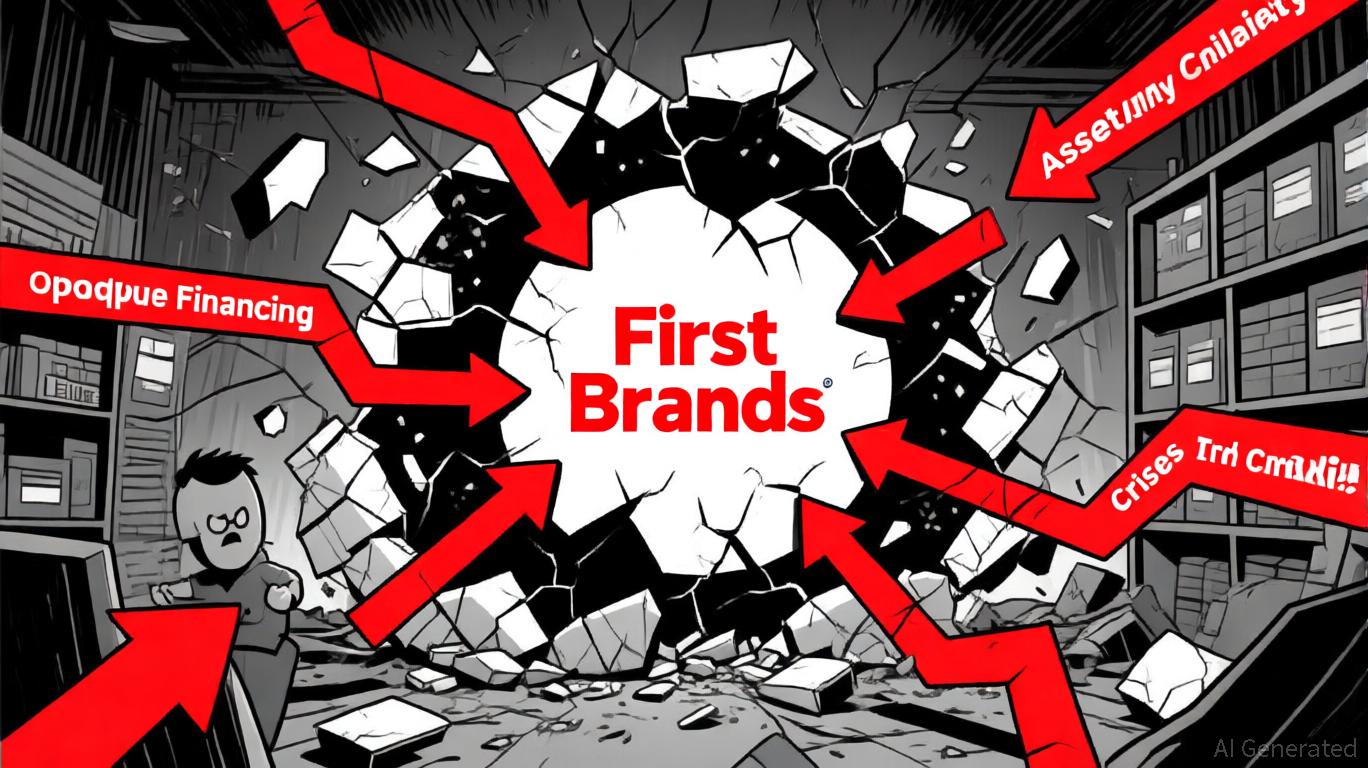
The automotive aftermarket seemed like an impenetrable fortress of steady cash flow until First Brands Group imploded under a mountain of fabricated invoices and double-pledged collateral, wiping out a $1.1 billion rescue loan and dragging the entire enterprise into a Chapter 7 liquidation. When elite credit funds poured capital into the auto-parts manufacturer to keep its lights on, they assumed traditional corporate distress principles would apply. They were wrong. Instead of a standard operational turnaround, lenders walked straight into a multi-billion-dollar accounting labyrinth that exposed severe vulnerabilities in modern private credit underwriting.
The Anatomy of a Miscalculated Rescue
First Brands entered Chapter 11 bankruptcy protection carrying more than $9 billion in liabilities against roughly $14 million in actual cash. Famous institutional lenders stepped up immediately, deploying a $1.1 billion debtor-in-possession financing package designed to stabilize operations, secure supply chains, and preserve recognizable brand names like Trico and Fram. On paper, the thesis looked defensible. Cars require replacement parts regardless of economic cycles.
However, the underlying assets were a mirage. Federal investigations and court filings later revealed a sprawling web of financial misconduct. Company executives allegedly engaged in sophisticated schemes involving double-pledged collateral and inflated receivables to extract billions from institutional backers before the collapse. By the time independent monitors uncovered the discrepancies, the cash had evaporated, and the rescue financing was severely underwater.
Lenders relied on historical balance sheets that failed to reflect hidden liabilities and off-balance-sheet financing arrangements. When a company's revenue architecture rests on manufactured data, senior credit status provides zero protection. The collateral simply does not exist.
When Courts Reject the Recovery Blueprint
The final blow to creditors arrived when a federal bankruptcy court rejected the company's ambitious reorganization plan. Advisors had pinned their hopes on multi-year litigation trusts, projecting that clawing back roughly $2 billion through lawsuits against insiders and business partners would eventually make creditors whole.
The presiding judge dismantled that strategy as unfeasible. Under statutory guidelines, administrative claims accumulated during the bankruptcy process hold top priority and must be paid in full before ordinary creditors see a dime. Waiting years for speculative litigation outcomes failed to guarantee those mandatory disbursements.
Consequently, the court ordered the case converted from a controlled reorganization into a brutal Chapter 7 liquidation managed by an independent trustee. The $1.1 billion rescue loan, initially quoted at fractions of its face value, plummeted toward complete annihilation, trading for pennies as the market digested the reality of the wipeout.
The Broader Fallout for Private Credit
The failure of this rescue operation transcends a single troubled manufacturer. Over the past decade, private credit expanded into a multi-trillion-dollar engine of corporate finance, absorbing capital from pension funds, insurance portfolios, and institutional endowments.
When multi-billion-dollar commitments evaporate entirely, institutional allocators take notice. Underwriters are forced to reassess how they evaluate collateral integrity, especially in deals involving complex inventory factoring and supply chain financing. The margin for error in private credit underwriting has narrowed to zero, and the appetite for backing distressed industrial assets with opaque governance has vanished.
In the wake of this liquidation, lenders across the market are learning an unforgiving lesson about modern corporate rescue operations. If the foundation is built on fraud, no amount of rescue capital can prevent the final crash.
First Brands Investors Wiped Out - Private Credit Cracks
This video breaks down how the First Brands bankruptcy and subsequent collateral disputes exposed systemic risks across the broader private credit market.
http://googleusercontent.com/youtube_content/1