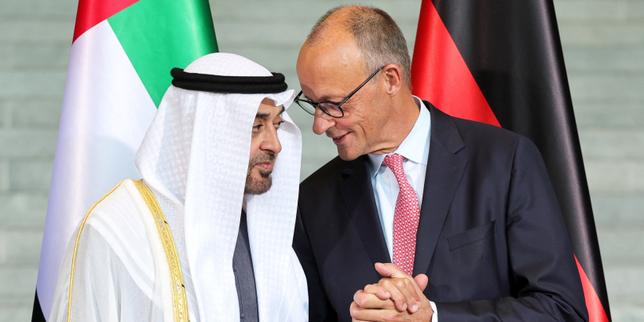
The United Arab Emirates is injecting an additional forty billion euros directly into the German industrial machine, supercharging an existing thirty-four-billion-euro stake to buy a permanent seat at the table of Europe's largest economy. Announced amid high-stakes state visits in Berlin, this capital injection targets advanced manufacturing, artificial intelligence, data infrastructure, and clean energy. Ten billion of that total is earmarked exclusively for Bavaria, bypassing slow-moving federal bureaucracies to target direct regional manufacturing powerhouses.
Berlin is desperate. Abu Dhabi has liquidity. This transaction maps out the exact blueprint for how resource-rich sovereign wealth finds a soft landing inside an aging, capital-starved European Union.
We have watched this play out for decades. Gulf state capital was once treated like speculative oil money, parked quietly in high-yield bonds or spent on glamorous real estate acquisitions in London and Paris. Those days are gone. Today’s sovereign balance sheets operate with ruthless industrial logic. They are buying technological know-how, grid stabilization assets, and secure supply chains. Germany provides the engineering pedigree, the patented machinery, and the factory floor expertise. The Emirates provide the hard cash required to keep those lights burning while energy costs remain structurally uncompetitive across central Europe.
Look at the mechanics of the deal. Sultan Ahmed Al Jaber, orchestrating this strategy through the overlapping lenses of industrial policy and foreign diplomacy, understands the vulnerability of European manufacturing. German industry has been bleeding under the weight of high electricity prices, choked gas supplies since the severing of Russian pipelines, and an over-reliance on traditional automotive models that are struggling to adapt to global software shifts.
When a foreign sovereign writes a check worth forty billion euros, it buys more than factories. It buys leverage.
The Regional Reality Behind the Headlines
Federal capitals love grand announcements. Real economic transformation happens in the provinces. By carving out ten billion euros specifically for Bavaria, the Emirati strategy targets Germany's industrial heartland directly. This region houses automotive suppliers, hidden champions of precision engineering, and specialized software developers who cannot secure domestic venture capital at scale.
German banks remain notoriously conservative. Their risk aversion is legendary, often demanding layers of collateral that strangle young technology firms before they scale. Emirati sovereign funds operate on a completely different risk curve. They view these investments as long-term portfolio diversification away from hydrocarbons. They are trading crude oil for silicon, hydrogen infrastructure, and automated manufacturing lines.
Yet, this influx of foreign capital carries hidden friction. Munich and Berlin are welcoming the liquidity, but the political undercurrents are complicated. European policymakers have spent years warning against foreign dominance in critical infrastructure. Now, out of pure economic necessity, they are throwing open the doors to Gulf capital to fund the digital and green transitions they could not afford on their own.
Energy, Data, and the New Geopolitical Alignment
You cannot talk about advanced manufacturing without talking about power. Modern artificial intelligence models, massive data centers, and automated assembly plants eat electricity at an unprecedented scale. Germany’s hasty exit from nuclear power, combined with a stuttering transition to renewables, left its grid vulnerable.
Abu Dhabi knows energy markets inside and out. Their interest in German data infrastructure and clean tech is not philanthropic. It is a calculated move to secure a dominant position in the next generation of industrial technology infrastructure. If you control the data centers and the energy grids powering them, you dictate the terms of trade.
Consider a hypothetical example to illustrate this dynamic. Imagine a mid-sized robotics manufacturer in Stuttgart that holds world-class patents in automated welding. Without fresh capital to transition its factory floor to AI-driven quality control, it risks bankruptcy within five years under pressure from cheaper Asian competitors. An Emirati sovereign injection steps in, acquires a significant equity stake, funds the factory refit, and ties that Stuttgart plant directly into a global supply network stretching from the Gulf to Southeast Asia. The factory survives. The jobs remain in Germany. But the ownership ledger changes permanently.
That is the quiet structural shift happening across Europe right now. Sovereignty is being traded for survival.
The Cost of Structural Stagnation
Why did Germany need this rescue package in the first place? The answers are uncomfortable for Brussels and Berlin to admit. Years of underinvestment in public infrastructure, suffocating labor regulations, and a stubborn resistance to digital administrative reform turned the continent's economic engine sluggish.
While Washington subsidized green tech through massive legislative packages and Beijing poured state capital into electric vehicles and battery manufacturing, Europe debated regulations. It passed endless compliance frameworks while its industrial base watched power costs triple.
Forty billion euros is a massive sum, but in the grand scheme of the German economy, it is a band-aid on a systemic wound. It buys time. It funds the immediate modernization of key sectors. It keeps skilled engineers employed locally rather than driving them to emigration. However, it does not fix the root causes of German economic stagnation.
If structural tax reforms do not follow, if energy policy remains paralyzed by political compromise, and if the regulatory burden continues to suffocate medium-sized enterprises, even billions of euros from the Gulf will eventually be swallowed by the machine without generating sustainable self-driving growth.
The partnership is real, the funds are moving, and the geopolitical realignment is locked in. Europe is renting its industrial future to keep the lights on today. How that ledger balances a decade from now remains the defining question of the modern continental economy.