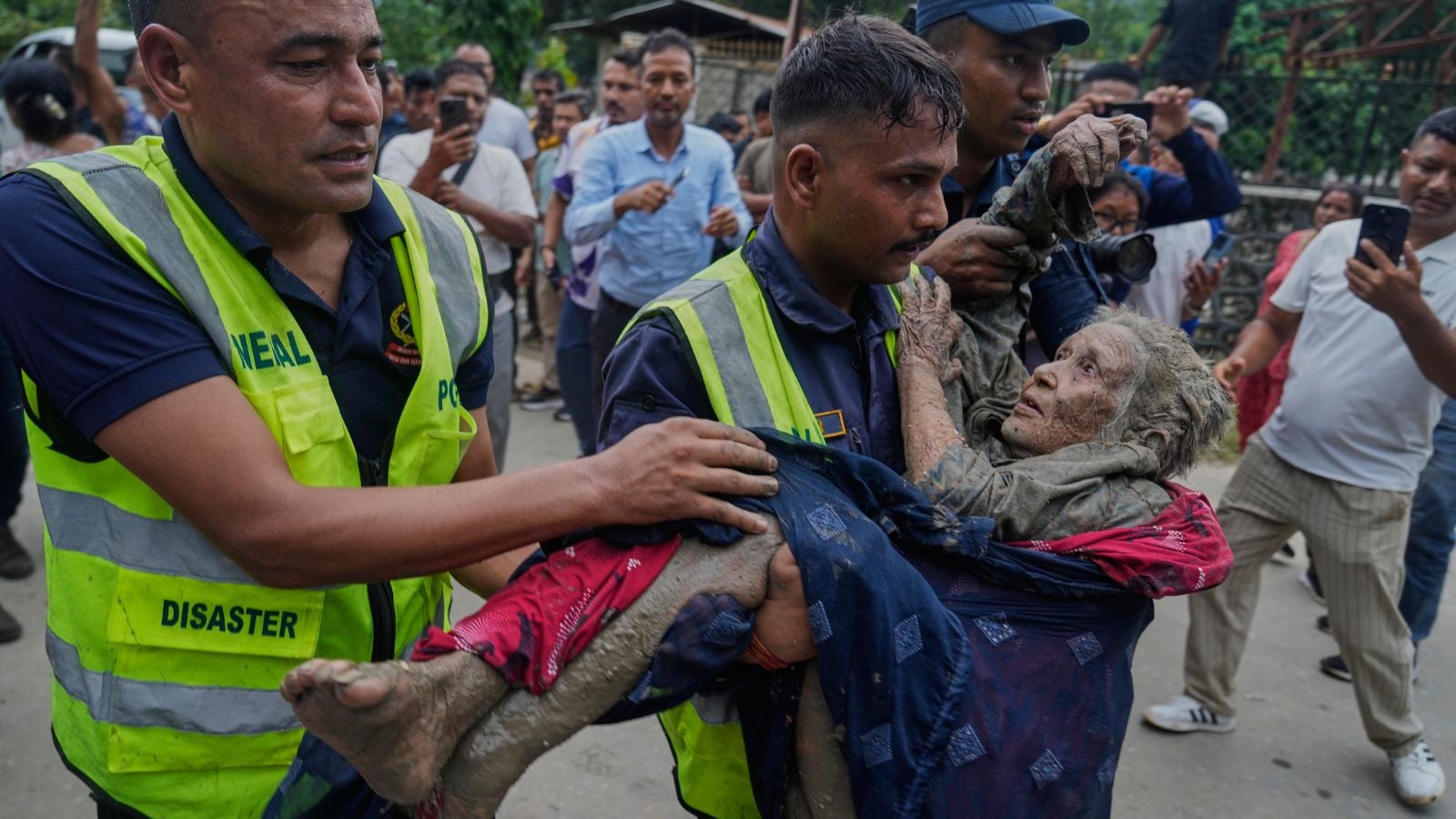
The official death toll from the catastrophic flash floods sweeping through northern Nepal has climbed to 165, with an alarming 823 people still unaccounted for. Among those missing in the debris-choked valleys are 579 tourists and foreign nationals, exposing deep vulnerabilities in how the region manages high-altitude transit, cross-border hydrology, and seasonal pilgrimages. Triggered by a massive glacial collapse near the Tibet border rather than a conventional seismic event, the sudden wall of water pulverized bridges, wiped out stretches of national highway, and trapped hundreds in remote river gorges before emergency services could mobilize.
The Anatomy of a High-Altitude Disaster
Water does not care about international borders, but bureaucracy respects them intensely. The catastrophic surge originated across the Chinese frontier in Tibet, where satellite analysis and seismic monitoring later confirmed a massive glacial collapse rather than an earthquake. When tons of ice and debris sheared off into the upper watersheds, it formed a temporary barrier lake before breaching violently.
The resulting torrent tore down the Trishuli and Bhotekoshi river basins, carrying mud and boulders over six feet deep into densely populated settlements and critical infrastructure projects. By the time the wall of water crossed into Nepalese territory, early warning systems had mere minutes to relay alerts. In mountain terrain, minutes mean nothing. Entire villages along the riverbanks were washed away before residents could grab their identification papers, let alone climb to safety.
Why Tourists Form the Majority of the Missing
A striking and tragic feature of the current missing persons manifest is the high proportion of travelers, foreign trekkers, and religious pilgrims. While monsoon season typically dampens standard mountain tourism in Nepal, late August marks a critical window for specific high-altitude routes.
Thousands of pilgrims use this exact period to transit through the Rasuwa district toward sacred sites like Mount Kailash across the border. Concurrently, domestic travelers flock to alpine lakes such as Gosaikunda for seasonal festivals.
Infrastructure design creates a bottleneck. Roads hugging the Trishuli River are narrow, single-lane arteries carved into sheer rock faces. When the river swelled, these vital transport corridors vanished beneath raging brown water, trapping vehicles, tour buses, and trekking groups between collapsing slopes and uncrossable rapids. Foreign embassies in Kathmandu have been flooded with emergency requests as families from India, the United States, Australia, and European nations wait anxiously for news of loved ones whose last known check-ins were registered deep inside the restricted border valleys.
The Logistics of Impossible Rescues
Rescuers facing the ground reality in Nuwakot, Rasuwa, and downstream in Chitwan confront an unprecedented logistical nightmare. Nearly forty kilometers of primary roadways are completely destroyed, rendering ground vehicle deployment useless for the worst-hit zones.
The Nepalese Army has leaned heavily on rotary-wing aircraft, yet erratic weather patterns, lingering cloud cover, and ongoing secondary landslides continue to ground chopper flights for hours at a time. Even when pilots manage to land, communication lines remain severed across the upper valleys, forcing search teams to rely on satellite text units and visual sweeps of riverbanks where bodies have begun surfacing dozens of kilometers away from the primary impact zone.
Transboundary Blind Spots
For years, hydrologists and disaster management experts have warned about the cascading risks of glacial lake outbursts in the Hindu Kush Himalaya chain. Ice loss rates across the region have doubled over the past two decades, creating thousands of unstable high-altitude pools held back by loose moraine dams.
When these natural barriers fail, downstream nations bear the brunt of the kinetic energy without adequate warning time. Real-time hydro-meteorological data sharing between China and Nepal remains fragmented. Without automated, high-frequency sensor networks positioned directly above the glacial zones across the Tibetan plateau, downstream communities in Nepal are left completely blind to sudden upstream catastrophic events.
Moving Beyond Emergency Response
Emergency aid packages pledged by international partners will provide immediate relief for the estimated 1,200 displaced villagers now living in temporary camps. Yet the sheer scale of the missing persons list points to a deeper systemic failure in regional tourism management during high-risk weather windows.
As climate shifts accelerate the frequency of Himalayan flash floods, tracking transient populations in remote zones requires an overhaul. Until real-time digital registration for trekkers is mandatory and cross-border early warning infrastructure is unified, valleys like Rasuwa will remain vulnerable to sudden catastrophes that turn thriving travel routes into silent disaster zones.