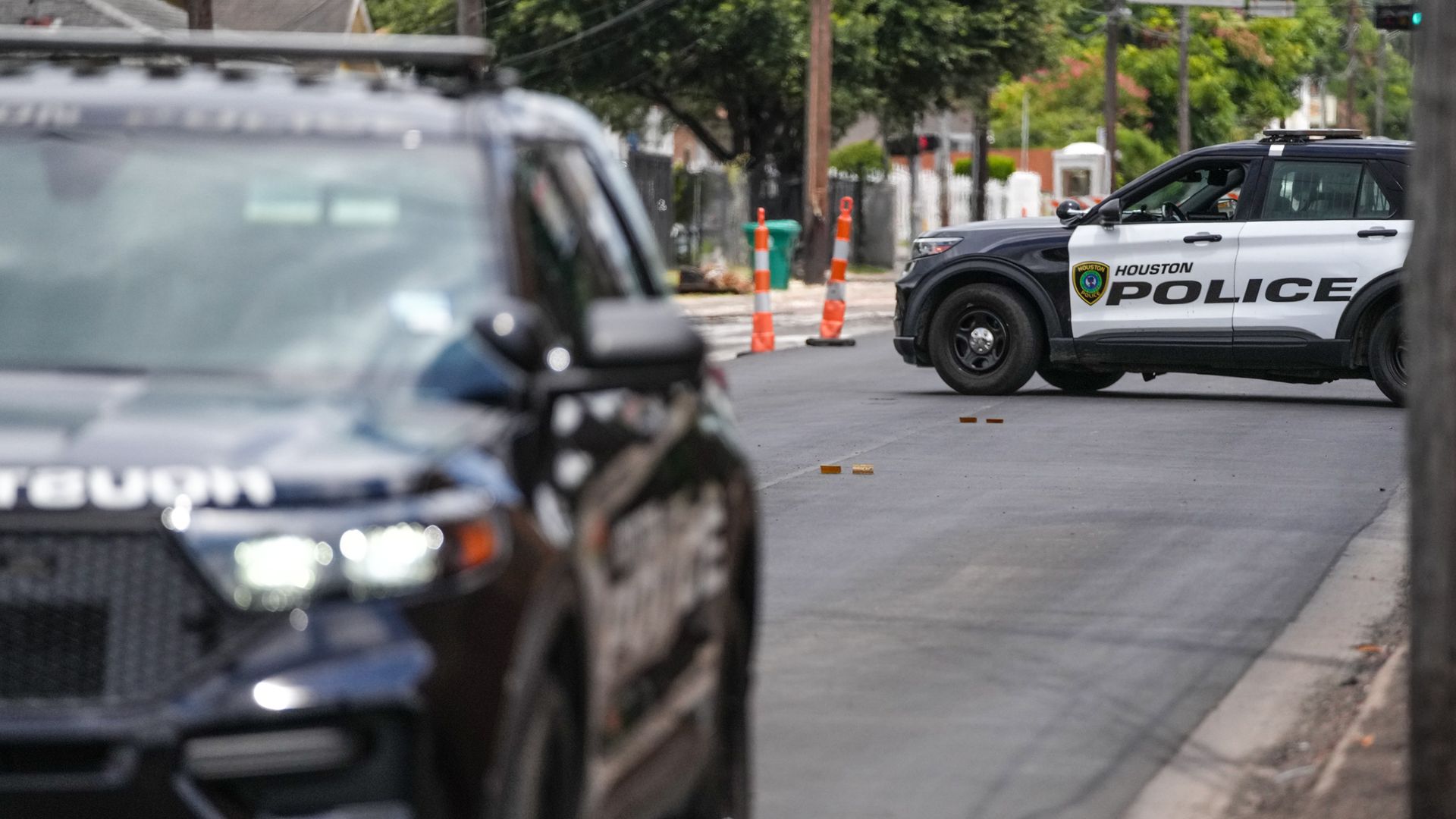
A quiet morning in Houston’s historic Magnolia Park neighborhood ended with a volley of gunfire on July 7, 2026, when an Immigration and Customs Enforcement officer shot and killed 55-year-old Lorenzo Salgado Araujo during a targeted traffic stop. Within hours of the shooting on Canal Street, federal authorities released a familiar narrative. They reported that Salgado Araujo, a Mexican national without legal status, refused commands, rammed a federal vehicle, and weaponized his car against an agent. This explanation is becoming standard procedure.
The federal script rarely changes. For veteran observers of domestic immigration operations, the immediate deployment of phrases like weaponized vehicle raises immediate red flags because it matches statements issued in multiple recent fatal encounters. This specific shooting marks the latest flashpoint in an aggressive federal enforcement campaign that has frequently resulted in bloodshed, community terror, and a severe deficit of public trust.
The official story broke down almost immediately as neighbors and family members stepped forward. Salgado Araujo was not a transient fugitive evading a dragnet. He was a 35-year resident of the United States, a construction worker, and a father. According to his son, Ronaldo Salgado, the older man left his home before dawn to pick up members of his work crew. He was also actively participating in the legal system to formalize his residency and obtain a work permit. The sudden escalation from a routine morning commute to a fatal shooting in a residential area underscores a systemic problem within federal field operations.
The Anatomy of a Repeated Script
Federal agencies operate under a different set of rules than local police departments when it comes to public accountability. When an incident like the Houston shooting occurs, the initial press release serves to establish a protective legal perimeter around the officers involved. The phrase weaponized his vehicle is particularly useful because it establishes immediate justification for the use of deadly force under federal self-defense guidelines.
But recent history demands skepticism.
Just six months ago, federal agents shot and killed 37-year-old Renee Good during a similar enforcement surge in Minneapolis. The initial Department of Homeland Security statement claimed Good attempted to run over an agent with her car. Local witnesses and subsequent investigations sharply disputed that claim, showing that she was merely attempting to drive away from unidentifiable, plainclothes officers who had swarmed her vehicle.
An even more striking breakdown of this narrative occurred in May 2026, when Minnesota prosecutors filed five criminal counts against ICE officer Christian Castro. Castro was arrested in Texas and charged with second-degree assault and filing a false police report after wounding a motorist during an operation. The official paperwork filed by the agency in that case initially mirrored the exact language used in Houston, claiming a suspect used a car as a weapon. Video evidence eventually proved otherwise.
The reliance on these boilerplate justifications reveals a structural pattern. Federal immigration enforcement operations are designed for rapid, high-pressure apprehension. Agents frequently utilize unmarked vehicles and tactical gear that lacks clear agency branding, creating immediate confusion for the individuals they target. When a motorist panics or attempts to maneuver away from an unexpected blockade, the movement of the vehicle is instantly interpreted as an act of lethal aggression. The result is almost always fatal.
The Contrast on Canal Street
Magnolia Park is a deeply rooted, predominantly Latino neighborhood in East Houston. It is an area defined by multi-generational families, small businesses, and a history of community organizing. On Tuesday morning, that community became a crime scene.
Local resident Paul Angel Diaz reported waking up around 6:30 a.m. to the sound of gunfire just outside his home. When he walked into his yard, he saw federal officers in green tactical uniforms surrounding a man lying face down on the pavement behind a parked white van. Motion-activated security footage from a nearby business captured the immediate aftermath. The video showed a man in a blue shirt, handcuffed and prone on the ground, while loud groans echoed down the street.
The use of handcuffs on a mortally wounded individual who had just been shot in the abdomen reveals the rigid, militaristic nature of these federal encounters. First aid is often secondary to containment. According to the Houston Fire Department, emergency responders arrived at 6:51 a.m. and found Salgado Araujo with a severe wound to his right flank. Paramedics performed CPR as they rushed him to Ben Taub Hospital, where he was pronounced dead.
The loss resonates far beyond a single family. Civil rights groups, including the League of United Latin American Citizens, quickly mobilized to challenge the federal narrative. The organization pointed out that Salgado Araujo represents a massive demographic of long-term undocumented residents who pose zero threat to public safety but bear the brunt of political enforcement surges. These individuals are construction workers, cleaners, and roofers who navigate their daily lives under the constant shadow of federal overreach.
The Structural Absence of Transparency
The biggest obstacle to uncovering the truth in the Houston shooting is the absolute lack of independent oversight governing federal law enforcement.
Municipal police departments in major cities like Houston operate under strict mandates regarding body-worn cameras. Local policies often require the public release of encounter footage within weeks of an officer-involved shooting to maintain civic stability. ICE and other Department of Homeland Security components operate in a parallel universe of bureaucratic opacity.
Federal agents are not subject to local sub-poenas, and their internal investigation mechanisms are notoriously slow. The investigation into Salgado Araujo’s death is currently divided between two federal entities. The Department of Homeland Security Office of Inspector General is reviewing the officer’s use of deadly force. Meanwhile, the FBI Houston field office is leading an inquiry into the potential assault on a federal officer.
This dual-track investigation creates a closed loop. The FBI focuses heavily on proving the agent was placed in danger, which effectively builds a defense for the shooting before the civil rights investigation can even determine if the stop was lawful. The agency can withhold dashcam footage, dispatch logs, and audio recordings for years by citing an ongoing federal investigation.
This lack of transparency leaves local representatives in the dark. US Representative Sylvia Garcia, whose district includes Magnolia Park, publicly demanded that all available footage and communications be preserved. She noted that the community deserves a transparent accounting of what occurred, recognizing that the initial federal press releases are rarely the final word on the matter.
Federal Escalation and Local Friction
The tension between federal enforcement strategies and local governance is reaching a breaking point in Texas. Major metropolitan areas rely heavily on immigrant labor to sustain their economic growth, particularly in the booming construction and infrastructure sectors. Aggressive federal raids conducted during morning carpools disrupt the fragile social fabric that local authorities work hard to maintain.
The Houston Police Department took immediate steps to distance itself from the Tuesday morning operation. Department spokespeople confirmed that local officers had no advanced knowledge of the raid and played no role in the tactical execution of the traffic stop. Local units arrived only after the shooting had occurred, serving effectively as traffic cops to block off roads while federal agents processed the scene.
This separation is intentional. Local police chiefs understand that when immigrant communities see police cars associated with fatal federal operations, cooperation with local law enforcement vanishes. Victims of domestic abuse stop calling for help. Witnesses to violent crimes refuse to speak to detectives. The safety of the entire city deteriorates when federal agencies treat residential neighborhoods as active combat zones.
The economic reality is equally stark. Salgado Araujo was an integral part of the local labor pool. His death leaves a family without a breadwinner and a local construction business short of a foreman. The systemic cost of these operations is borne entirely by the community, while the federal apparatus faces no financial or structural penalties for catastrophic failures in the field.
A Broken Mechanism for Accountability
The current federal strategy relies on an assumption that the public will accept the word of an armed agent over the reputation of an undocumented worker. That assumption is no longer valid. The growing archive of video evidence from similar encounters across the country has exposed a pattern of falsified reports, exaggerated threats, and unnecessary escalation.
The League of United Latin American Citizens has offered a reward for any bystander video that captures the moments leading up to the gunfire on Canal Street. They understand that a definitive resolution will not come from a federal inspector general's report. It will come from a doorbell camera, a dashcam, or a smartphone held by a terrified neighbor.
The underlying crisis is not just about a single traffic stop gone wrong in Houston. It is about a federal enforcement system that lacks the basic checks and balances required of any modern law enforcement agency. Until federal agents are held to the same standards of immediate transparency and local accountability as the police officers who patrol the same streets, the cycle of predictable scripts and preventable deaths will continue. The confrontation on Canal Street was the predictable outcome of an institutional culture that views compliance as something to be extracted by any means necessary, regardless of the human cost.


