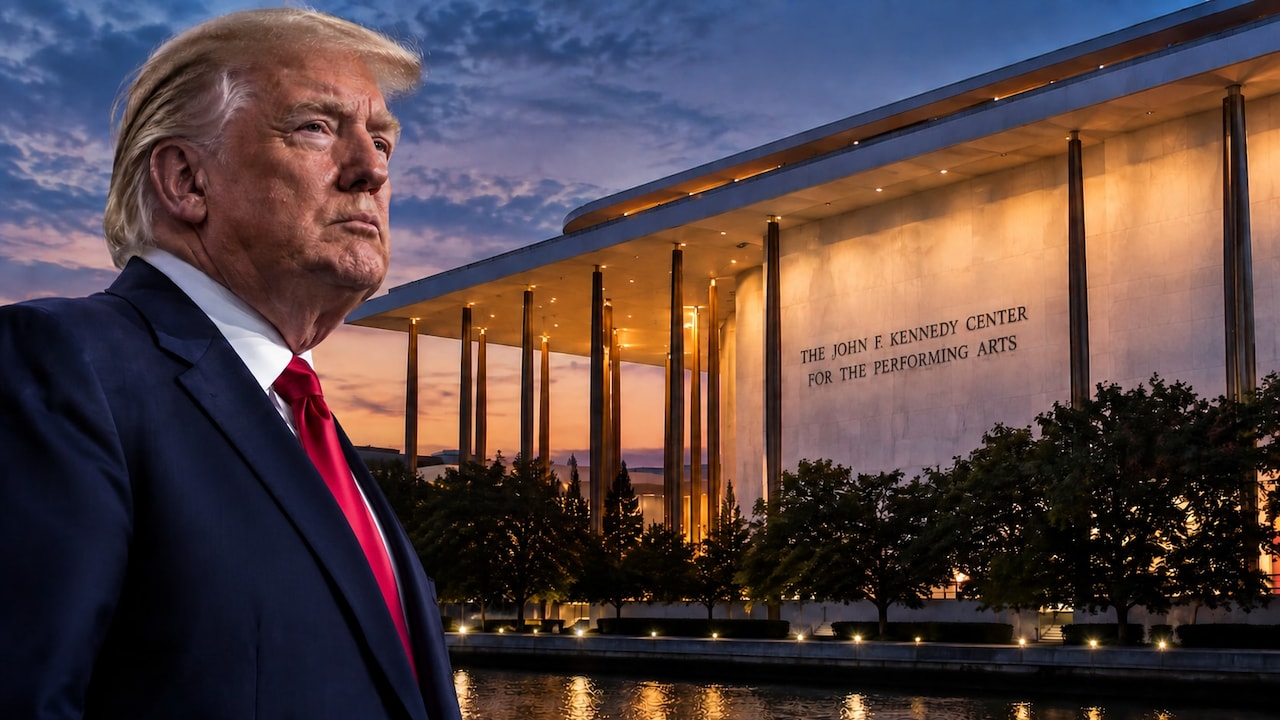
The John F. Kennedy Center for the Performing Arts stands as a monument of federal law, stone, and bitter ideological warfare. When a federal judge blocked efforts to splatter Donald Trump's name across the iconic Washington facade, the fallout was swift, vindictive, and deeply revealing. Facing legal walls that barred him from altering a congressionally mandated memorial without legislative blessing, the administration shifted tactics to an ultimatum. Fix the naming dispute or face a shutdown.
This is not merely a petty squabble over exterior signage. It is a calculated stress test of federal institutions, architectural heritage, and the limits of executive ego.
The Anatomy of a Forced Rebrand
For months, visitors walking up to America's national cultural center were greeted by bold lettering bearing the name of the sitting president alongside the slain democratic icon. That hybrid moniker was never an accident. It was the product of a packed, Trump-aligned board operating under intense political gravity.
When federal courts stepped in, ruling that the physical alteration violated the foundational statute establishing the center in 1964, the reaction from the White House was immediate. The administration did not simply accept the judicial setback. Instead, leverage was pulled from the other side of the ledger: vital renovation funds and building access.
The board voted to shutter parts of the facility, citing fiscal strain and maintenance gridlock, effectively turning a cultural landmark into a bargaining chip. Employees faced sudden layoffs. Major cultural events were uprooted and scattered to alternative venues. The message from executive channels was unmistakable. If the letters cannot go up, the doors come down.
Breaking Down the Legal and Financial Leverage
Why target a performing arts center over a marquee? To understand the strategy, one must examine how federal monuments are funded and governed.
The Kennedy Center is a unique hybrid entity. It relies on a combination of federal appropriations for maintenance and private donations for programming. By threatening to block essential capital improvements and withhold support for facility overhauls, the executive branch weaponized the maintenance backlog.
Consider how this dynamic plays out in real terms. A massive structural overhaul costing hundreds of millions of dollars requires federal cooperation. When the White House ties that funding pipeline directly to compliance with a disputed nomenclature, the board faces an impossible financial squeeze. Yield to the executive ego to keep the lights on, or protect the integrity of a national memorial and risk fiscal collapse.
Institutional watchdogs point out that this playbook extends far beyond stone and mortar. Public assets are increasingly treated as personal extensions of executive branding. When the law stands in the way, the mechanism of governance is slowed or frozen until compliance is forced.
The Broader Cultural Fallout
The collateral damage of this standoff extends well beyond the beltway. Performers, patrons, and arts organizations have been dragged into a partisan arena they never signed up to enter. Artists have canceled residencies and public appearances in protest, while unions fight to protect stagehands and administrative staff caught in the crossfire of sudden closures.
Historical precedent shows that when monuments become political footballs, public trust takes a permanent hit. Every week the center remains shuttered or shrouded in legal tarp, the damage compounds. Staff numbers dwindle, institutional memory walks out the door, and the public loses access to a space originally chartered to foster national unity through the arts.
The courts have held their ground, ruling that the statutory name belongs to Congress alone to bestow or alter. Yet the administration continues to press the boundaries of what executive pressure can achieve when normal legislative channels fail.
The doors remain contested, the scaffolding remains a physical reminder of an ongoing feud, and the future of the nation's premier cultural stage hangs in the balance while the fight for the marquee drags on.