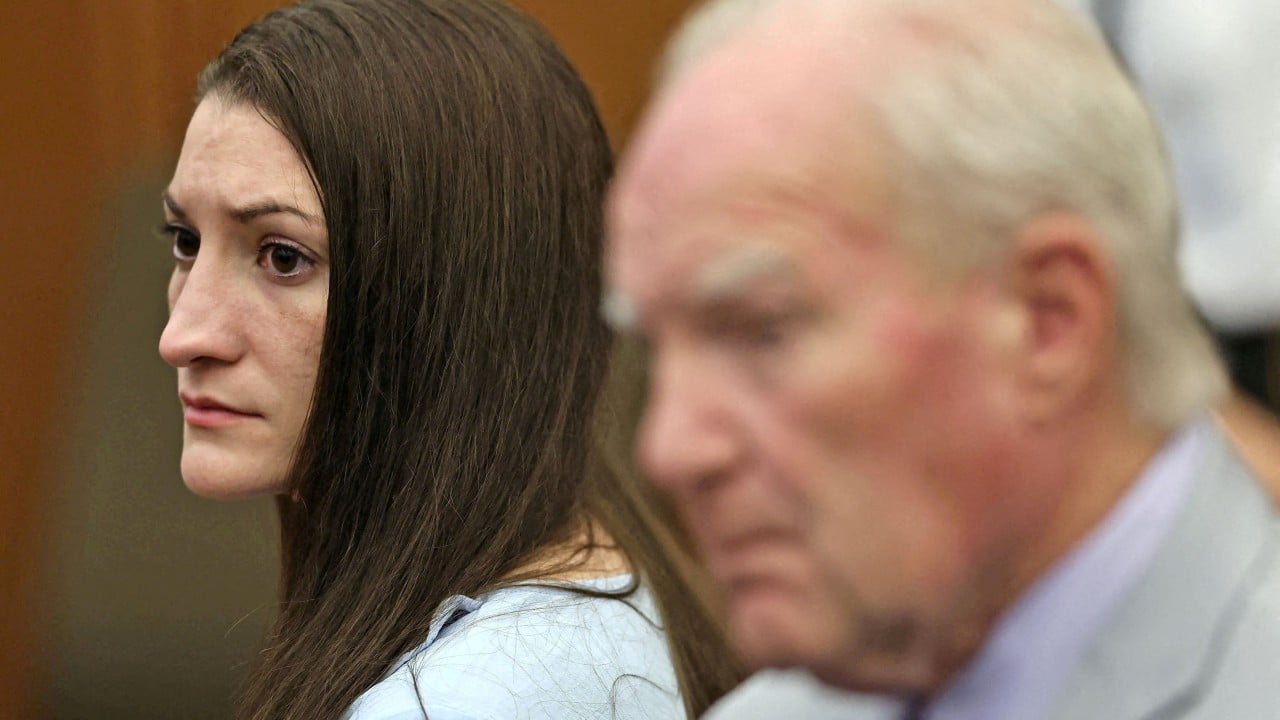
The machinery of justice ground to a violent, unresolved halt in a Plymouth courtroom when a Massachusetts judge declared a mistrial in the case of Lindsay Clancy, the former labor and delivery nurse accused of strangling her three young children. After more than thirty-eight hours of grueling deliberations spread across a week, a twelve-person jury confessed they were permanently deadlocked at eleven to one, unable to determine whether a psychotic break stripped the mother of criminal responsibility or if a calculated series of actions constituted first-degree murder. The collapse of the trial leaves the community, the legal system, and a deeply fractured public without closure. Yet the hung jury is merely a symptom of a much larger institutional failure that extends far beyond the walls of a courtroom.
The public spectacle of the trial masked the harrowing medical reality that birthed the tragedy on a cold January day in Duxbury. Defense attorneys built their entire architecture of defense around postpartum psychosis, a rare and catastrophic mental illness characterized by severe insomnia, profound hormonal crashes, and command hallucinations. Witnesses recounted how Clancy heard a persistent male voice warning her that neither she nor her children were safe unless she acted. Prosecutors countered with a narrative of calculation, emphasizing that Clancy manipulated her husband into leaving the house to pick up takeout and medicine before carrying out the acts. This polarized framing reduced a complex psychiatric catastrophe into a binary choice for jurors: cold-blooded killer or helpless victim of biology.
The courtroom battle exposed the deep limitations of the American legal system when it attempts to adjudicate psychiatric phenomena. Juries are routinely asked to peer backward through a fog of trauma and determine the exact cognitive state of a defendant at a precise microsecond in time. The prosecution argued that because Clancy managed logistics, she understood the nature of her actions. Psychiatric experts for the defense argued that executing domestic tasks while experiencing severe psychosis is a documented manifestation of a brain entirely unmoored from reality. When legal definitions of sanity crash against modern psychiatric understandings of severe postpartum mood disorders, the result is predictable confusion. Twelve ordinary citizens were tasked with reconciling conflicting medical testimony, mountains of evidentiary exhibits, and the crushing emotional weight of dead children.
Blame quickly turned outward when the mistrial was officially recorded. Defense counsel publicly lashed out at a single holdout juror, accusing them of harboring a personal bias against mental illness and stubbornly refusing to follow judicial instructions regarding reasonable doubt. A frantic last-minute legal maneuver reached the state's highest court in an attempt to force the judge to investigate or dismiss the dissenting juror, but the effort failed. Whether that lone holdout favored acquittal or conviction remains an open question behind closed jury room doors. What is clear is that the intense polarization inside the room mirrors the deep divisions outside it. Protesters and supporters had crowded the courthouse for weeks, wearing pink and carrying signs demanding mercy, turning a judicial proceeding into a referendum on motherhood and maternal health.
District Attorney Timothy Cruz insisted outside the courthouse that the trial was never about the healthcare system or the broader treatment of women, asserting it was strictly about securing justice for three dead children. That assertion flies in the face of the massive civil litigation running parallel to the criminal docket. Both Lindsay Clancy and her surviving husband, Patrick Clancy, have filed separate lawsuits against the network of medical providers and hospitals who treated her in the weeks leading up to the tragedy. These civil complaints paint a damning picture of a disorganized, uncoordinated course of heavy polypharmacy. The lawsuits allege that medical professionals failed to properly diagnose escalating bipolar disorder with postpartum onset, misprescribed powerful drugs, and completely ignored the radical erosion of a patient's psychiatric stability.
By cordoning off the criminal trial from the systemic failures of outpatient psychiatry, the court system engineered a narrow view of accountability. Society prefers to look at individual monsters rather than broken systems because individual monsters can be locked away. A broken psychiatric infrastructure, by contrast, requires structural rebuilding that institutions are loath to undertake. In the weeks before the tragedy, Clancy had checked into specialized facilities and expressed terrifying thoughts of harming her family, only to be cycled through rapid medication adjustments and discharged back into a domestic setting without adequate safety nets. When the medical system fails to catch a patient in freefall, the burden crashes down onto exhausted partners and fragile domestic environments.
Patrick Clancy's position throughout the ordeal remains one of the most agonizing elements of the case. Having lost his three children—Cora, Dawson, and Callan—he has publicly expressed a complex forgiveness, acknowledging that his wife was a victim of an illness he barely recognized. Through legal representation, he noted that the prospect of reliving the tragedy through a second trial is extraordinarily painful. Yet prosecutors now hold the cards regarding a potential retrial. They can roll the dice a second time with a newly selected jury, attempt to negotiate a plea deal, or drop the charges entirely if another deadlock seems guaranteed.
A retrial would drag a grieving community and surviving family members back through an emotional purgatory without offering any new legal frameworks. The statutory definitions will remain identical. The medical records will not change. The fundamental friction between criminal culpability and severe mental disease will persist. If the first trial proved anything, it is that a courtroom is fundamentally unequipped to heal the wounds caused by systemic medical negligence and postpartum collapse.
As the state sets a status conference to chart the next legal steps, Lindsay Clancy remains housed in a state psychiatric facility under heavy guard, where she has stayed since surviving her suicide attempt on the day of the killings. Paralysis confines her body, while a legal limbo confines her future. The broader cultural conversation about maternal mental health flared brightly during the weeks of testimony, only to gutter out against the hard, unyielding wall of a hung jury. The microphones will eventually pack up, the protesters will go home, and the underlying rot in postpartum psychiatric care will remain unaddressed until the next tragedy forces society to look again.