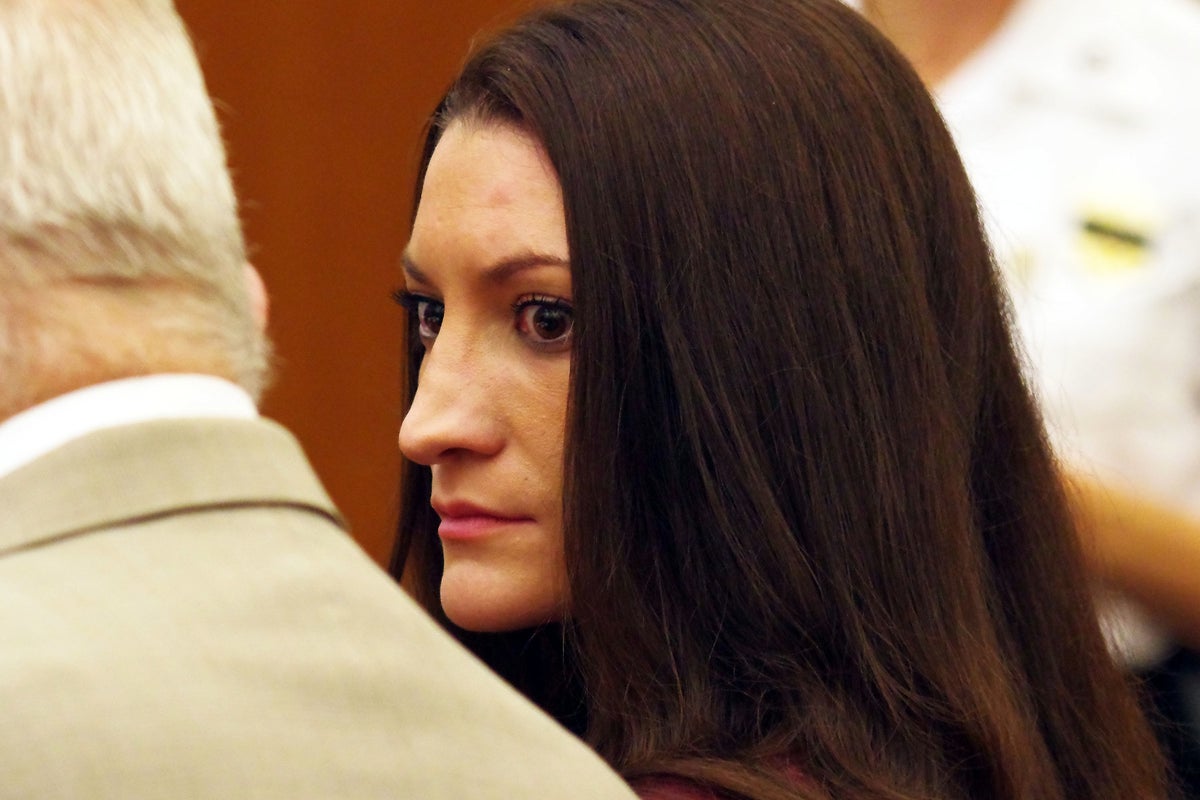
The courtroom in Plymouth, Massachusetts, smells of institutional floor wax and suppressed breath. For weeks, the trial of Lindsay Clancy has played out like a slow-motion autopsy of a modern family destroyed by a complete systems failure. The core question facing the jury is not whether Clancy strangled her three young children—defense attorneys readily admit she did—but whether a human mind can be so completely fractured by postpartum psychosis and psychiatric overmedication that criminal intent becomes a biological impossibility.
As the defense formally rests its case and rebuttal witnesses take the stand, public fascination has curdled into a polarized media circus. On one side stand true-crime sleuths spinning intricate internet conspiracies; on the other, exhausted mothers outside the courthouse wearing pink and carrying signs declaring that the medical system abandoned her. Strip away the digital noise, however, and what remains is an uncomfortable examination of how American medicine handles the acute psychiatric crises of mothers.
The Pharmacology of a Breakdown
To understand how a former labor and delivery nurse could take the lives of her children before attempting to end her own, one must look closely at the pharmacological storm brewing inside Clancy's body in January 2023. Testimony from family members and medical experts revealed a frantic scramble to treat severe postpartum depression and anxiety. In a matter of months, Clancy cycled through roughly a dozen different medications.
Antidepressants, anti-anxiety drugs, and sleep aids were stacked, swapped, and adjusted, frequently through remote telehealth appointments where doctors struggled to gauge the depth of her deterioration. Her mother testified that the medication appeared to be destroying her mind, turning her into a stranger who whispered about intrusive thoughts and internal voices.
Prosecutors argue that Clancy methodically planned the tragedy, sending her husband out for takeout and medicine just long enough to execute the killings. Yet this prosecution narrative relies on viewing her actions through the lens of a rational actor. The defense counters with testimony from forensic psychiatrists, pointing out that severe mental illness does not follow standard logic. When a brain is gripped by psychosis, reality is fundamentally rewritten. The central failure of the state's argument is its refusal to accept that a person can be simultaneously functional enough to complete a physical task while utterly detached from reason and moral agency.
The Anatomy of Institutional Blind Spots
The trial has exposed a gaping void in postnatal care protocols across the United States. Hospitals routinely discharge struggling mothers after brief evaluations, often placing the burden entirely on outpatient networks that are chronically understaffed and disjointed. Doctors often operate in silos, prescribing powerful psychotropic agents without adequate coordination or comprehensive family histories.
When Clancy sought higher levels of care, she was frequently turned away or sent home because she did not present an immediate, active suicide plan at that exact second. This bureaucratic checklist approach to mental health treats human suffering as a linear equation. It fails to account for the insidious nature of postpartum psychiatric conditions, where patients can mask their internal terror until the moment of complete cognitive collapse.
The defense team's reliance on expert testimony from veterans of similar high-profile insanity cases underscores a tragic historical pattern. Decades after landmark rulings on postpartum psychosis, the legal and medical establishments still scramble to react when biology overrides behavior. Courts remain ill-equipped to weigh the microscopic nuances of chemical imbalances against rigid criminal statutes written centuries before modern psychopharmacology existed.
The Cost of the Spectacle
Outside the courthouse walls, the case has devolved into digital entertainment. Social media feeds churn out sensationalized theories designed to maximize engagement rather than illuminate truth. This online voyeurism carries a heavy societal toll. Every time a complex medical tragedy is reduced to a clean, binary villain narrative, the stigma surrounding maternal mental health deepens.
Women experiencing terrifying, intrusive postpartum thoughts watch this trial and learn a dangerous lesson: if you speak your truth to the medical system, you might end up either dead, pathologized, or sitting in a prison cell rather than receiving life-saving medical intervention. The fear of criminalization creates an impenetrable wall of silence around millions of mothers who suffer in isolation, terrified that their internal pain will be misinterpreted as malice.
As the judge prepares the jury for closing arguments and the impending weight of deliberations, the verdict will establish a powerful legal precedent. Whether the panel finds her guilty of murder or accepts the argument of a mind destroyed by illness, the underlying structural failure remains untouched. The system broke down long before that winter afternoon in Duxbury, and no courtroom verdict can patch the cracks in a healthcare landscape that continues to fail mothers when they are most vulnerable.
Lindsay Clancy Trial: Judge Denies Defense Witness After Heated Arguments in Court
This courtroom coverage provides a direct look at the legal hurdles and witness testimonies shaping the final phases of the proceedings.
http://googleusercontent.com/youtube_content/1