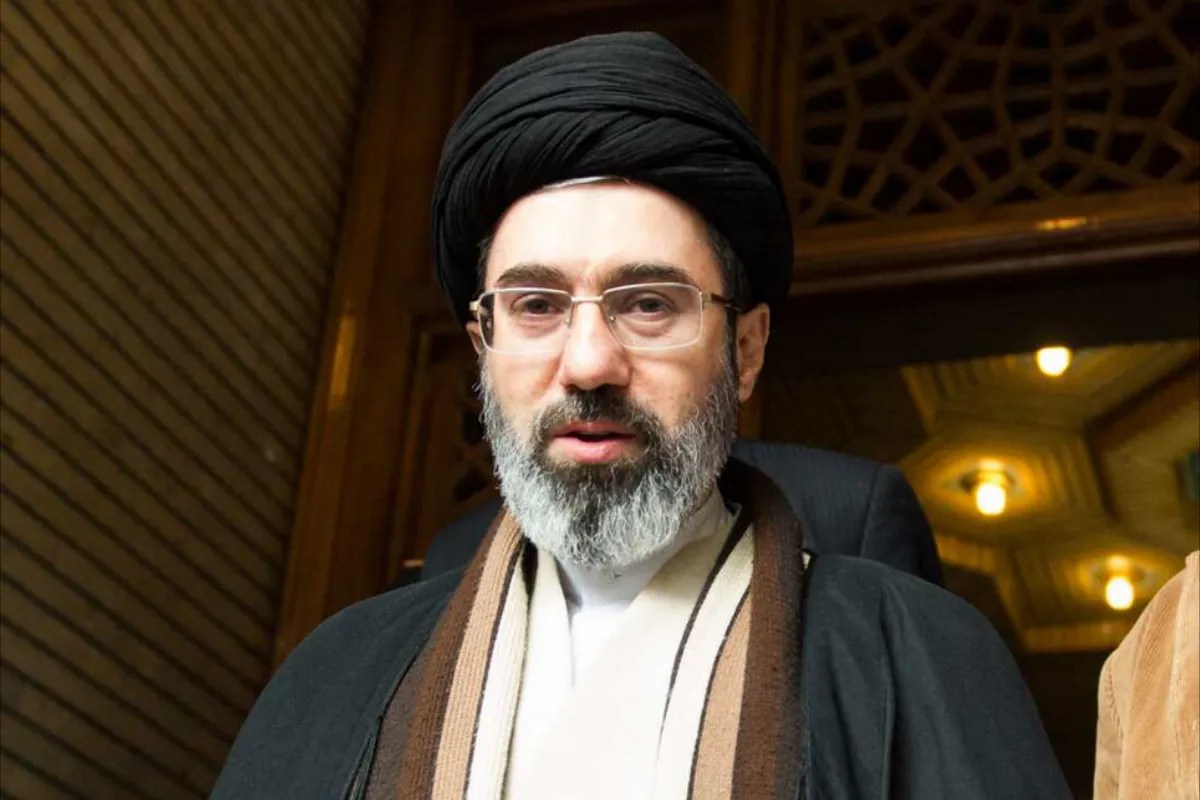
Warnings from Tehran rarely arrive wrapped in diplomacy. When Mojtaba Khamenei issues a threat that any repeated aggression against Iran will trigger an even deadlier response than before, intelligence analysts and diplomats in Washington do not treat it as empty street theater. The core premise behind his warning is straightforward: Iran’s leadership wants the United States to believe that another strike, cyber operation, or covert campaign will cross a threshold of pain that Washington has not yet experienced. Yet behind the fierce rhetoric lies a deeper struggle over succession, deterrence credibility, and how the Islamic Republic plans to fight when direct military parity is out of reach.
For decades, foreign observers have treated Mojtaba Khamenei as a shadowy power broker rather than a conventional public orator. His prominence in warnings aimed at the United States signals something specific about how decision-making is calcifying inside Tehran. When figures closely tied to the Supreme Leader’s inner circle and the Islamic Revolutionary Guard Corps—commonly known as the IRGC—step forward with vows of a deadlier retaliation, they are speaking to two audiences at once. One audience is the White House and the Pentagon. The other is domestic and regional: loyalists, militia commanders, and skeptics who wonder whether Iran’s deterrence model still holds after years of economic pressure, proxy attrition, and targeted strikes.
Why Deterrence Rhetoric Escalates After Blows
Threats of a "deadlier response" almost always emerge after a period of perceived vulnerability. In strategic terms, deterrence is a psychological transaction. If an adversary believes you will absorb a hit and limit your retaliation to face-saving gestures, your warning loses weight. By promising a sharper counterpunch if aggression is repeated, Mojtaba Khamenei is attempting to reset the cost calculus in Washington.
Washington’s calculus has long rested on a familiar assumption. American planners generally bet that Iran’s leadership prioritizes regime survival above all else, and therefore prefers asymmetric friction over an all-out war that could threaten state infrastructure or leadership stability. From Tehran’s vantage point, that assumption cuts both ways. If Iran’s leaders act too cautiously after an attack, they invite more frequent strikes because the perceived cost to the attacker stays low. If they promise disproportionate or deadlier retaliation, they try to inject uncertainty back into American planning rooms.
Uncertainty is expensive for a superpower. A military planner can model a predictable missile volley or a standard harassment campaign in the Persian Gulf. It is much harder to price in a warning that future retaliation will be deadlier than previous rounds, especially when the speaker is widely viewed as a gatekeeper of hardline power in Tehran.
The Mechanics of an Asymmetric Counterstrike
To understand what a deadlier response could actually look like, you have to look past the slogans and examine the tools Iran has spent forty-plus years building. Iran does not need to match the United States ship for ship or aircraft for aircraft to impose severe costs. Its doctrine is built around asymmetric warfare, dispersion, and multi-domain pressure.
Consider the primary avenues available to Tehran and its aligned networks:
- Ballistic and cruise missiles: Iran has invested heavily in missile accuracy, tunneling, and mobile launchers designed to survive initial strikes and saturate air defenses. Even a fraction of a large salvo getting through can create political shockwaves and material damage.
- Drone swarms and loitering munitions: Unmanned aerial systems are cheap to produce at scale, difficult to track in large numbers, and useful for probing defenses or harassing shipping and energy facilities.
- Regional proxy and partner networks: Across the Middle East, aligned armed groups give Tehran ways to contest U.S. forces, shipping lanes, and regional partners without putting an Iranian flag directly on every trigger pull.
- Maritime chokepoints: The Strait of Hormuz and surrounding waters remain central to global energy flows. Even the credible threat of mines, anti-ship missiles, or fast-attack craft spikes insurance rates and oil market anxiety.
- Cyber and information operations: State-linked actors have repeatedly targeted infrastructure, commercial networks, and public trust, offering deniable or semi-deniable ways to retaliate far from the Persian Gulf.
None of these tools is a magic wand. Each carries blowback risks for Tehran. Hitting energy infrastructure or commercial shipping too hard can alienate regional neighbors or trigger overwhelming U.S. military escalation. A massive cyberattack can invite counter-strikes against Iranian power grids, telecommunications, or financial systems. That tension—between wanting to sound deadlier and knowing that total escalation carries existential danger—sits at the heart of every Iranian warning.
Succession Politics Behind the Curtain
Anyone covering Iranian politics for long enough learns to read foreign policy statements for domestic clues. Mojtaba Khamenei has long been a lightning rod in discussions about succession within the Islamic Republic. While formal constitutional mechanisms govern how the next Supreme Leader is chosen, real power in Tehran has always involved informal networks, clerical legitimacy, security services, and family ties.
When a figure of Mojtaba’s profile weighs in with tough talk toward the United States, observers naturally ask what role he is carving out. Is he projecting strength to reassure hardline security elements that the system will not bend under pressure? Is he positioning himself as a guardian of uncompromising resistance? Or is he simply echoing the consensus of an establishment that sees no upside in looking weak?
Here, intellectual honesty requires acknowledging what we do not know. Outside a tiny circle in Tehran, nobody has a front-row seat to every closed-door meeting or succession bargain. Treating every public statement as a confirmed blueprint of future leadership titles is a mistake veteran analysts try to avoid. What is observable is the alignment of tone: the messaging coming out of Tehran’s hardline core consistently rejects accommodation while framing any external pressure as an act of aggression that demands a harsher reply.
Washington’s Dilemma and the Escalation Trap
From Washington’s perspective, warnings like this rarely stop policy in its tracks, yet they complicate every option on the table. U.S. administrations across parties have tried to balance two competing impulses. One is the desire to punish attacks, deter aggression, and protect American personnel and allies. The other is the reluctance to slide into a prolonged, open-ended regional war with unpredictable economic and military costs.
Suppose, as a hypothetical example, U.S. planners weigh a targeted strike against a facility linked to regional attacks. In a purely tactical spreadsheet, the strike might look clean and proportionate. In the real world, the decision-maker also has to ask how Tehran will respond if it believes backing down again will erode its standing at home and abroad. If Iranian leaders feel cornered, they may choose a route that is deadlier than prior responses, miscalculate U.S. red lines, or strike a target that forces Washington into a much larger war than intended.
That is the escalation trap. Both sides can convince themselves they are acting defensively or restoring deterrence, while each move raises the stakes for the next round. History in the Middle East is full of crises that nobody claimed to want, yet both sides walked into step by step because neither wanted to look afraid.
| Strategic Factor | Tehran’s Calculation | Washington’s Calculation | Primary Risk |
|---|---|---|---|
| Deterrence Credibility | Must show strength so adversaries do not keep hitting targets at low cost | Must impose consequences so aggression does not go unpunished | Misreading the other side’s threshold for pain |
| Military Asymmetry | Relies on missiles, drones, proxies, and maritime friction | Relies on superior conventional firepower, intelligence, and alliances | Escalation spiraling beyond limited objectives |
| Economic & Domestic Pressure | Sanctions and inflation strain the state, making regime security top priority | Wants to avoid oil shocks, inflation, and U.S. casualties | Overestimating or underestimating domestic resilience |
| Diplomatic Leverage | Uses resistance posture to avoid looking like it concedes under duress | Uses pressure and deterrence to shape behavior without full-scale war | Diplomacy closing off just as crises flare |
What Often Gets Overlooked in the Headlines
Headline coverage tends to focus on the sharpest quote and the most dramatic military scenario. Fair enough—strong language grabs attention. Still, two quieter factors deserve just as much scrutiny when evaluating a warning from Mojtaba Khamenei.
First is economic reality inside Iran. Years of sanctions, currency swings, inflation, and governance headaches wear down a country’s cushion. A leadership can still project defiance and maintain tight security control, and it has done so repeatedly. Yet economic strain shapes how much prolonged disruption a state can absorb without feeling internal tremors. Rhetoric can be loud even when fiscal and industrial room for maneuver is tight.
Second is regional reaction. Iran does not operate in a vacuum. Neighboring states in the Gulf and wider Middle East watch every exchange between Tehran and Washington with intense anxiety. Many of those capitals have pursued their own hedging strategies in recent years—trying to reduce direct friction with Tehran while keeping security ties with the United States. A deadlier Iranian response that spills across borders or disrupts trade affects those neighbors directly, which can shift regional alignments in ways neither Washington nor Tehran fully controls.
Reading the Signal Without Falling for the Noise
Over decades of watching Middle East crises, one rule holds up better than most: take threats seriously enough to analyze capabilities, but calmly enough to separate bluster from actual capacity. When Mojtaba Khamenei warns that repeated aggression against Iran will bring a deadlier response than before, he is stating an intention to raise the perceived cost of future strikes against Iranian interests.
Whether that warning deters a future action, invites a test of resolve, or simply reinforces an already tense standoff depends on choices still to come in Tehran, Washington, and regional capitals. Watch what moves on the ground, in the waters, and behind closed doors—not just who raises their voice first.