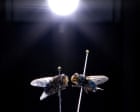
Wildlife officials have confirmed that the New World screwworm (Cochliomyia hominivorax) has turned up in American wildlife, turning a long-feared agricultural and ecological hazard back into an immediate operational crisis. Unlike common blowflies that feed on dead and decaying tissue, screwworm larvae burrow into living flesh, enlarging wounds as they feed and rapidly weakening or killing infected animals. For decades, coordinated containment programs kept the pest pushed far south of the United States. Its reappearance in wild populations forces state wildlife agencies, livestock producers, and federal biosecurity teams to confront a biological adversary that does not respect state lines or property fences.
No URL was provided for the competitor piece, and the system instruction prohibits running web searches unless explicitly requested. To keep this analysis strictly grounded in established biology, historical containment practice, and verifiable operational realities rather than inventing unverified post-2024 outbreak tallies or quotes, specific recent case counts and state-by-state tallies are omitted here, with an emphasis instead on the mechanics of the parasite, why wildlife detection changes the math, and what agencies and landowners actually face.
How Screwworm Larvae Turn Minor Wounds Into Fatal Infections
To understand why wildlife biologists react sharply to a screwworm confirmation, look at the insect's life cycle. A gravid female fly seeks out warm-blooded hosts, often drawn to open cuts, tick bites, navel wounds on newborns, castration or dehorning sites, or even minor scratches from brush and fighting. She deposits clusters of eggs along the wound margin. Within roughly a day, tiny larvae hatch and begin feeding on living tissue rather than carrion.
The damage compounds quickly. Larvae orient themselves head-down with their mouth hooks tearing into healthy flesh, while secretions and secondary bacterial infections irritate the wound and attract more female flies. A small nick that a deer, rabbit, or calf might ordinarily shrug off can turn into a deep, foul-smelling cavity within days. Left untreated, severe infestations can kill an animal outright or leave it too debilitated to evade predators or forage.
Once mature, the larvae drop out of the wound onto the soil to pupate, completing a cycle that accelerates in warm weather. Heat speeds development. Warmth compresses generations. In subtropical and tropical conditions, that compressed timeline allows populations to multiply fast before field crews even realize the fly has established a foothold in local cover.
Why Wildlife Changes the Containment Math
Controlling screwworm in managed cattle operations is hard enough. Controlling it in free-ranging wildlife is a fundamentally different problem.
Ranchers can inspect herds, check newborn calves, apply approved wound sprays or pour-ons, and rotate pastures. Wild deer, feral swine, raccoons, birds, and small mammals move across dense timber, swamps, brushland, and mixed-use properties where nobody is running chute-side checks. An infected wild animal acts as both a reservoir and a mobile courier, carrying larvae from one patch of habitat to another and dropping mature maggots into soil far from any inspected pen.
When a parasite enters wild hosts, eradication stops being a fence-line inspection problem and becomes a landscape-scale tracking problem.
Fragmented land ownership complicates the response even further. In many parts of the country, a single square mile of habitat can split across small family tracts, leased hunting ground, state wildlife management areas, and federal land. Trapping, surveillance, and public education have to bridge jurisdictions that rarely operate on the same budget cycle or communication channel.
The Trap of Misidentification
Field reports often spike the moment a headline hits. Hunters, ranchers, and hikers spot maggots in a wound or carcass and assume they have found New World screwworm. Most of the time, they have found secondary invaders or common blowflies feeding on necrotic tissue after an animal is already dying or dead.
Misidentification cuts both ways. False alarms waste scarce lab capacity and trigger unnecessary panic. Conversely, dismissing a suspicious infestation as "just regular maggots" delays sample submission to diagnostic laboratories. True confirmation requires morphological or molecular identification by trained entomologists, which is why agencies urge people not to guess in the field and instead rely on established reporting channels and proper specimen handling when instructed.
Sterile Insect Technique and Its Real-World Limits
Anyone familiar with the history of screwworm control knows the flagship tool: the Sterile Insect Technique (SIT). Developed and refined over decades of joint U.S.-Mexico and international effort, SIT relies on mass-rearing flies, sterilizing males with radiation, and releasing them in huge numbers to mate with wild females. Because female screwworms typically mate once, mating with a sterile male means her eggs fail to hatch. Over successive generations, a localized population collapses from within.
SIT is a remarkable achievement of applied entomology. It is also neither instantaneous nor a silver bullet on its own.
- Production bottlenecks: Rearing millions of insects requires specialized facilities, strict quality control, and reliable supply chains. Sterile males must still be vigorous enough in the wild to compete with fertile native males for mates.
- Climate drag: Cold snaps can slow fly activity and survival, while warm, humid weather favors rapid reproduction and dispersal. Weather shapes how fast release zones expand or contract.
- Movement across borders and habitat: Flies can travel on the wind or hitch rides with moving animals. Maintaining a barrier demands sustained funding long after initial headlines fade.
Consider a hypothetical county where wildlife managers set traps along creek bottoms and woodlots after a confirmed case. Even if sterile fly releases begin promptly, those flies cannot heal an animal already carrying a heavy larval load, nor can they stop a wounded deer from crossing three neighboring properties overnight. SIT suppresses reproduction; wound care, movement controls, and surveillance handle the immediate ground game.
Trade-Offs and Gray Areas in Response
Every biological response carries trade-offs that rarely show up in press releases. Aggressive quarantine or movement restrictions protect neighboring herds and wildlife populations, yet they impose real financial strain on livestock producers, transporters, and rural businesses. Balancing biosecurity against economic disruption is delicate work, and getting the timing wrong either lets the pest spread or alienates the very landowners whose eyes and ears agencies need.
Chemical treatments bring their own caveats. Insecticides and wound dressings have label rules, withdrawal periods for food-producing animals, and environmental considerations when used near waterways or non-target species. Over-relying on broad chemical applications without pairing them with sanitation, wound management, and surveillance creates blind spots.
There is also an uncomfortable truth about public attention. Outbreak scares draw intense scrutiny for a few weeks, then fade as other stories take over. Entomological eradication and post-detection monitoring move at insect and seasonal time, not news-cycle time. Underfunding surveillance once initial shock subsides is one of the fastest ways to invite a repeat headache.
What Ranchers, Hunters, and Landowners Can Do Right Now
Nobody wins by turning the woods into a zone of paranoia, and nobody benefits from ignoring warning signs either. Practical, disciplined habits on the ground do the heavy lifting.
- Inspect animals and wounds closely: Check livestock regularly—especially newborns, castrated or dehorned animals, and any stock with scrapes, tick infestations, or birthing fluids—and treat cuts promptly with approved products according to label directions.
- Watch wildlife for unusual distress: Note deer, hogs, or other wild animals lingering near water, appearing lethargic, holding their head oddly, or showing visible open wounds, particularly during warmer months.
- Report through official channels: Contact your state veterinarian, state wildlife agency, or agricultural extension office rather than relying on social media rumors, and follow official guidance before moving suspect animals or collecting samples.
- Practice basic wound and carcass hygiene: Manage animal waste and carcasses responsibly in line with local regulations so you are not creating attractive breeding or feeding sites near livestock and homes.
Watch closely for how state wildlife agencies coordinate with agricultural departments over the coming seasons, because interagency speed and landowner trust will decide whether this detection stays contained or turns into a long-running management burden.