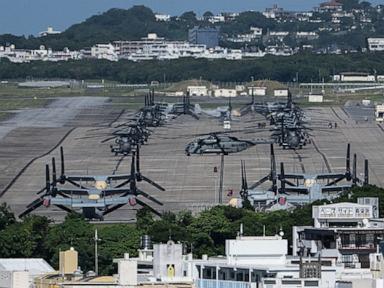
Japanese prosecutors have formally indicted a U.S. Marine on charges of robbery resulting in death following a fatal incident in Okinawa, immediately igniting diplomatic friction over off-base curfews, military discipline, and the legal mechanics of the U.S.-Japan Status of Forces Agreement. Under the bilateral treaty governing tens of thousands of American service members stationed across the Japanese archipelago, Japanese authorities retain primary jurisdiction over severe off-duty crimes committed against local nationals outside base perimeters. Yet every indictment triggers an exhaustive, months-long collision between two fundamentally incompatible justice systems, turning a localized criminal prosecution into a high-stakes geopolitical flashpoint.
The surface facts of an off-base indictment rarely capture the full weight of what happens in Naha when a uniformed American is charged with a violent felony. Headlines reduce the event to a police blotter entry. The reality on the ground is far heavier. For decades, Okinawa has shouldered roughly seventy percent of the physical footprint of U.S. military facilities in Japan while comprising less than one percent of the nation's total land area. When a Marine is indicted for robbery homicide, the legal filing does not land in a vacuum; it lands on top of seventy years of accumulated friction, unresolved base relocation disputes, and a local populace that views every off-duty crime as a systemic failure of command accountability.
The Legal Architecture of an Indictment in Okinawa
To understand why an indictment of a U.S. Marine in Okinawa generates immediate international scrutiny, one must look past the criminal charges and examine Article XVII of the U.S.-Japan Status of Forces Agreement (SOFA). Signed in 1960, SOFA dictates who arrests, detains, and prosecutes American personnel when laws are broken.
The rules appear straightforward on paper. In practice, they operate through a dense web of diplomatic handshakes and closed-door negotiations.
When a U.S. service member commits an alleged crime off-base while off-duty—as is almost always the case in robbery or assault indictments—Japan holds primary right of jurisdiction. However, the mechanics of physical custody create an immediate bottleneck. If Japanese prefectural police apprehend the suspect at the scene, they hold him. If the suspect makes it back through the gates of Camp Foster, Camp Hansen, or Marine Corps Air Station Futenma before police arrive, U.S. military authorities retain physical custody until Japanese prosecutors formally issue an indictment.
The Custody Friction Point
This pre-indictment custody gap has historically been the single sharpest point of contention between Tokyo, Washington, and the Okinawa Prefectural Government. Under Japanese criminal procedure, prosecutors have up to twenty-three days to interrogate a suspect before filing formal charges, a period during which defense attorneys are barred from interrogation rooms and suspects are questioned intensively to secure a confession.
American military officials have long viewed this process with deep skepticism, viewing it as an erosion of constitutional due process protections afforded to U.S. citizens. Conversely, Okinawan officials and local bar associations argue that shielding a suspect inside a U.S. installation prior to indictment creates a two-tiered justice system where American personnel receive preferential treatment unavailable to ordinary residents. Following high-profile incidents in the 1990s and 2000s, Washington agreed to give "sympathetic consideration" to transferring custody prior to indictment in cases of heinous crimes like murder and rape, though the formal handover remains tied to the exact moment prosecutors file the indictment in court.
| Legal Phase | U.S. Military Jurisdiction | Japanese Criminal Jurisdiction |
|---|---|---|
| On-Duty / On-Base Offense | Primary jurisdiction; tried via UCMJ court-martial. | Secondary; rarely exercised unless U.S. waives rights. |
| Off-Duty / Off-Base (Pre-Indictment) | Retains custody if suspect reaches base first; subject to "sympathetic consideration" transfers. | Primary jurisdiction; conducts investigation and requests custody handover. |
| Post-Indictment (Off-Base Felony) | Provides legal observer and monitors detention conditions. | Full physical custody; tried in Naha District Court under Japanese Penal Code. |
Once that indictment drops, the jurisdictional shield disappears. The accused Marine is transferred to a Japanese detention facility—typically the Naha Detention House—and enters a judicial apparatus with a conviction rate exceeding ninety-nine percent.
Why Robbery Homicide Carries Severe Stakes in Japan
In the United States, criminal charges are often stacked aggressively by prosecutors to compel a plea bargain, leaving room for lesser included offenses. Japan does not operate on a plea-bargaining model for violent street crimes. When Japanese prosecutors indict a suspect for robbery resulting in death (gōtō chishi), it means they have already spent weeks building an airtight evidentiary file designed to survive rigorous judicial scrutiny without a negotiated plea.
Under Article 240 of the Japanese Penal Code, robbery causing death carries only two statutory penalties: life imprisonment with labor or the death penalty. There is no option for a ten-year sentence. There is no parole after a brief stint behind bars.
Prosecutors bring this specific charge only when they believe they can prove two distinct elements beyond a reasonable doubt:
- The Intent to Deprive Property: Prosecutors must establish that the use of force or intimidation was directly linked to taking money or valuables, rather than an impromptu barroom brawl where a wallet happened to go missing afterward.
- Causal Chain of Fatality: The prosecution does not necessarily need to prove premeditated intent to kill, only that the victim's death was a direct, foreseeable consequence of the violence used during the commission of the robbery.
For a young Marine accustomed to the adversarial, deal-making culture of American courts, entering the Naha District Court under Article 240 is a jarring awakening. Trials are conducted before a mixed panel of three professional judges and six randomly selected citizen lay judges (saiban-in). Every piece of forensic evidence, CCTV frame, and digital footprint is dissected in open court, often translated line by line, stretching proceedings across months or even years.
The Command Climate and Off-Base Liberty Policies
Whenever an indictment of this magnitude hits the wires, the immediate institutional reflex inside III Marine Expeditionary Force (III MEF) and U.S. Forces Japan (USFJ) is an operational lockdown. Commanders impose liberty restrictions, ban off-base alcohol consumption, and institute strict curfews.
It is a predictable cycle. And it rarely addresses the underlying structural pressures driving off-base misconduct.
Consider the demographic reality of Okinawa's military footprint. The island hosts roughly twenty-five thousand to thirty thousand active-duty U.S. troops, a disproportionate number of whom are junior enlisted Marines in their late teens and early twenties. Many are stationed on unaccompanied tours, living in barracks, isolated from family support networks, and operating under high-tempo deployment schedules across the Indo-Pacific.
The Economics of Liberty and Isolation
While the vast majority of service members serve without incident, the small fraction who cross the line into violent criminal behavior often do so at the intersection of alcohol, financial stress, and sudden release from rigid military control.
When liberty policies tighten after an incident, thousands of compliant Marines are confined to base, breeding resentment and cabin fever. When restrictions are eventually eased—often quietly, months later, once media attention subsides—pent-up demand spills back into entertainment districts like Gate 2 Street in Okinawa City or Naha's Matsuyama district.
"You cannot curfew your way out of a discipline problem, and you cannot brief your way out of systemic friction," notes a retired senior legal officer familiar with Pacific Command operations. "Every time command treats an off-base felony as an isolated lapse in individual judgment rather than an institutional blind spot, they guarantee the cycle repeats."
The oversight mechanisms meant to prevent these incidents—joint military-civilian courtesy patrols, alcohol breathalyzer checkpoints at base gates, and mandatory cultural awareness briefings—function as perimeter defenses. They catch the intoxicated corporal stumbling back toward Camp Kinser at 2:00 AM. They cannot stop a calculated decision to commit a violent robbery off-base.
The Geopolitical Fallout in Tokyo and Naha
An indictment of a Marine in Okinawa never remains a purely criminal matter; it immediately becomes ammunition in a relentless domestic political struggle between the Okinawa Prefectural Government and the central government in Tokyo.
For years, successive governors in Naha have campaigned on reducing the U.S. military presence and halting the construction of the replacement facility for Marine Corps Air Station Futenma at Henoko, a coastal area in northern Okinawa. Tokyo, viewing the U.S.-Japan security alliance as the indispensable anchor of its national defense amid rising regional tensions in the East China Sea and Taiwan Strait, has consistently pushed construction forward despite fierce local opposition.
When a Marine is indicted for a fatal crime, the political equilibrium shifts overnight:
- Prefectural Assembly Resolutions: Local lawmakers immediately pass unanimous resolutions condemning the U.S. military, demanding formal apologies from the U.S. Ambassador and the commander of U.S. Forces Japan, and calling for a fundamental revision of SOFA.
- Diplomatic Summons: Japan's Ministry of Foreign Affairs summons the U.S. Ambassador in Tokyo to lodge a formal protest, demanding stricter discipline and preventive measures to avoid a diplomatic backlash that could weaken public support for defense spending and alliance posture.
- Erosion of Local Goodwill: Community engagement programs, beach cleanups, and joint disaster-preparedness drills built over years by base public affairs offices are wiped out in a single news cycle.
The U.S. military finds itself trapped in a defensive posture. If commanders speak too forcefully about protecting the accused Marine's legal rights, they appear callous toward the victim's family and indifferent to Okinawan suffering. If they apologize too broadly before a verdict is reached, defense attorneys argue that command influence has tainted the presumption of innocence, potentially jeopardizing any parallel administrative or Uniform Code of Military Justice (UCMJ) actions.
Double Jeopardy and the Post-Trial Reality
A common misconception surrounding SOFA indictments is that a service member tried in a Japanese court faces simultaneous prosecution by the U.S. military. Under Article XVII, Paragraph 8 of SOFA, double jeopardy protections strictly apply. Once Japanese authorities indict and try a Marine for an offense, the U.S. military cannot court-martial that individual for the exact same criminal act.
However, escaping a second criminal trial does not mean the Marine escapes military consequences.
Even while awaiting trial in a Japanese detention facility, the service member's military career is effectively frozen. Pay and allowances may be suspended depending on duty status and confinement terms. Once a Japanese court delivers a guilty verdict and appeals are exhausted, the Marine faces administrative separation—typically an Other Than Honorable (OTH) or Bad Conduct discharge processed in absentia or upon transfer—stripping them of veterans' benefits, security clearances, and future federal employment.
Serving Time in the Japanese Prison System
If convicted under Article 240 and sentenced to prison, the Marine does not serve their sentence at Fort Leavenworth. They are transferred to a Japanese penal institution designated for foreign nationals, most commonly Yokosuka Prison near Tokyo.
Life inside a Japanese prison is defined by rigid regimentation, near-total silence during work hours, and strict physical discipline. Inmates are required to march in formation, sit in prescribed postures inside their cells, and perform light industrial labor six days a week. Language barriers isolate American inmates, and visitation is severely restricted to immediate family members and consular officials.
While the U.S. and Japan are both parties to the Council of Europe Convention on the Transfer of Sentenced Persons, prisoner transfers back to the United States are neither automatic nor swift. An inmate must exhaust all appeals, pay any court-ordered restitution or civil damages to the victim's family—a critical factor in Japanese sentencing and release evaluations—and receive formal approval from both the Japanese Ministry of Justice and the U.S. Department of Justice. That process alone can take years.
The Structural Blind Spots Nobody Fixes
Look closely at the pattern of severe off-base incidents over the past three decades, and three persistent blind spots emerge that neither Washington nor Tokyo has shown the political will to resolve.
First is the information delay protocol. In several past incidents across Okinawa, local police and prefectural officials complained that U.S. military authorities failed to notify them promptly when service members were suspected of off-base offenses, or that communication channels between military police and Okinawa Prefectural Police suffered from bureaucratic lag. While joint notification procedures were supposedly streamlined following bilateral reviews, friction persists whenever an investigation straddles base boundaries.
Second is the civil compensation gap. Under SOFA, if a U.S. service member commits an off-duty crime, the U.S. government is not legally liable for damages in the same manner it would be for an on-duty vehicle accident. Victims' families must often navigate complex, discretionary ex gratia consolation payment mechanisms offered by the U.S. military or pursue civil judgments against an incarcerated junior enlisted Marine who possesses virtually no financial assets. For a grieving family in Okinawa, watching legal diplomats debate treaty clauses while basic financial restitution remains tangled in red tape deepens the sense of abandonment.
Third is the rotational deployment model. Modern Marine Corps force design in the Indo-Pacific relies heavily on rotational units—battalions cycling through Okinawa for six-month deployments rather than permanent stationing. While operationally agile, rotational units have less institutional continuity on the island. Junior Marines arrive with minimal cultural grounding, operate under intense training schedules, and depart just as they begin to understand the local environment. When command teams rotate out every half-year, institutional memory regarding off-base risk management constantly resets to zero.
What Happens Next in Naha
With the formal indictment filed, the case moves into the pretrial conference phase at the Naha District Court. Under Japanese criminal procedure, pretrial conferences (kōhan-zen seiri tetsuzuki) are closed-door sessions between judges, prosecutors, and court-appointed or privately retained defense counsel to narrow the disputed issues and organize evidence before the lay judges are empaneled.
This phase routinely consumes six to twelve months. Defense lawyers will scrutinize the admissibility of any statements made by the Marine during the twenty-three-day detention window, challenging whether translation services were accurate and whether the accused fully understood their right to remain silent under Article 38 of the Japanese Constitution.
Meanwhile, U.S. consular officers from the Consulate General in Naha will conduct regular welfare visits to monitor detention conditions, ensure access to medical care, and act as a bridge between the accused and family members back in the United States. Military legal liaisons will attend every open court session, compiling detailed reports sent up the chain of command to Camp Butler, Yokota Air Base, and the Pentagon.
The indictment itself is only the opening gavel of a legal process that will test the resilience of the U.S.-Japan alliance at its most vulnerable pressure point. Every witness called to the stand in Naha will be watched not just by a panel of nine judges, but by an entire island waiting to see whether justice under SOFA delivers accountability—or simply another chapter in a seventy-year standoff.


