The numbers climbing across public health dashboards are staggering. Federal health authorities recently confirmed that a massive multistate outbreak of cyclosporiasis, driven by contaminated processed iceberg lettuce, has expanded to 20 states with over 11,000 documented cases. When the Food and Drug Administration and the Centers for Disease Control and Prevention tied the vector to operations run by Taylor Farms in central Mexico, public attention briefly fixated on the usual suspects: agricultural runoff, inadequate sanitation, and the vulnerability of cross-border produce lines. Yet, focusing solely on a single farm or a specific recall misses the structural decay rotting our food safety apparatus from the inside out.
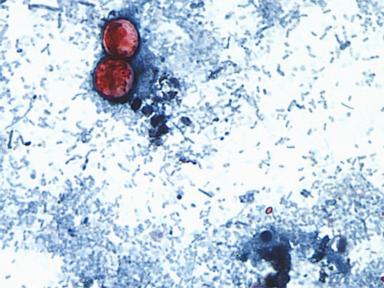
An intestinal infection caused by the microscopic parasite Cyclospora cayetanensis is not a new phenomenon, but the sheer scale of this event exposes systemic fragility. Consumers are told that mandatory recalls solve the immediate threat, while commercial operators pivot back to business as usual once the news cycle fades. The reality on the ground is far more complex, exposing an industrial supply chain that moves too fast for safety protocols to keep pace.
The Anatomy of a Parasitic Vector
Understanding how a microscopic organism manages to paralyze distribution networks across twenty states requires looking closely at what makes Cyclospora uniquely difficult to manage. Unlike bacterial pathogens such as E. coli or Salmonella, which can multiply rapidly under the right temperature conditions on the surface of a leaf, Cyclospora operates on a different biological timeline.
When shed through human feces, the parasite is not immediately infectious. It requires days or even weeks in a warm environment to sporulate and become dangerous to humans. This biological requirement points directly to environmental conditions at the point of origin. Irrigation water exposed to human waste or inadequate sanitation infrastructure near agricultural fields creates an ideal incubation matrix.
When large-scale processing facilities wash, shred, and package millions of servings of iceberg lettuce, a single contaminated batch from a regional farm can mix into centralized processing streams. Cross-contamination multiplies exponentially. By the time the packaged greens land in commercial kitchens or fast-food distribution hubs like Taco Bell, tracking the exact origin point becomes a forensic nightmare for epidemiologists.
The Logistics of Vulnerability
Modern agriculture relies on centralization for efficiency. High-volume processing plants aggregate produce from vast geographic footprints to maintain year-round supply consistency for major restaurant chains and national grocery retailers. This optimization creates a single point of failure.
When a contamination event occurs at a centralized facility handling lettuce from central Mexico, the radius of impact is vast. A local farming failure in a previous era remained localized. Today, centralized bagging and distribution ensure that a localized sanitation breakdown can simultaneously sicken diners in Michigan, Texas, Pennsylvania, and Georgia.
Traceback investigations by federal authorities often stall because the paper trail of food logistics is murky. Supply chains are built for speed and low cost, not forensic transparency. When investigators attempt to map the path of a bagged salad, they encounter layers of middlemen, third-party distributors, and commingled lots. By the time a recall is issued, the shelf life of the product has usually expired, meaning the contaminated food has already been consumed and digested. The recall functions as a symbolic gesture rather than a practical intervention.
The Human Toll and Diagnostic Gaps
The statistics provided by federal agencies tell only part of the story. While the official count sits above 11,000 cases with hundreds of hospitalizations, public health experts acknowledge that the true figure is likely much higher.
Cyclosporiasis symptoms mimic various other gastrointestinal bugs. Patients experience explosive watery diarrhea, severe cramping, bloating, and profound fatigue. Standard routine stool cultures ordered during a typical doctor visit do not automatically screen for parasites unless the physician specifically requests a specialized test for Cyclospora. Many individuals suffer through weeks of relapsing illness without ever receiving an accurate diagnosis. They recover at home or receive broad-spectrum treatments that do nothing to clear the parasite.
This diagnostic friction shields the true economic and health impact of outbreaks from immediate view. It also distorts the epidemiological data, leaving public health departments playing a perpetual game of catch-up. Weeks pass between the time a patient first experiences symptoms and the moment that case is verified, logged, and connected to a larger cluster. By then, the trail is cold, and the agricultural cycle has moved on to new fields and new harvests.
Rethinking Agricultural Oversight
Preventing future crises of this magnitude requires moving past reactive recalls and superficial finger-pointing. Border inspections and voluntary compliance measures have repeatedly proven insufficient against biological hazards that thrive in irrigation water and soil.
Agricultural operations exporting produce into major consumer markets must face mandatory, real-time microbial monitoring of water sources rather than periodic audits. Furthermore, processing facilities must implement rigorous lot-isolation protocols to prevent commingling produce from disparate growers. If a single compromised farm can contaminate an entire national distribution pool, the system is fundamentally misaligned with basic risk management principles.
Until structural reforms force supply chains to prioritize isolation and traceability over raw speed, large-scale outbreaks of foodborne parasites will remain an inevitable hazard of the modern diet. Every time a new state is added to an outbreak tracking map, it signals that the underlying vulnerabilities of industrial agriculture remain entirely unaddressed.