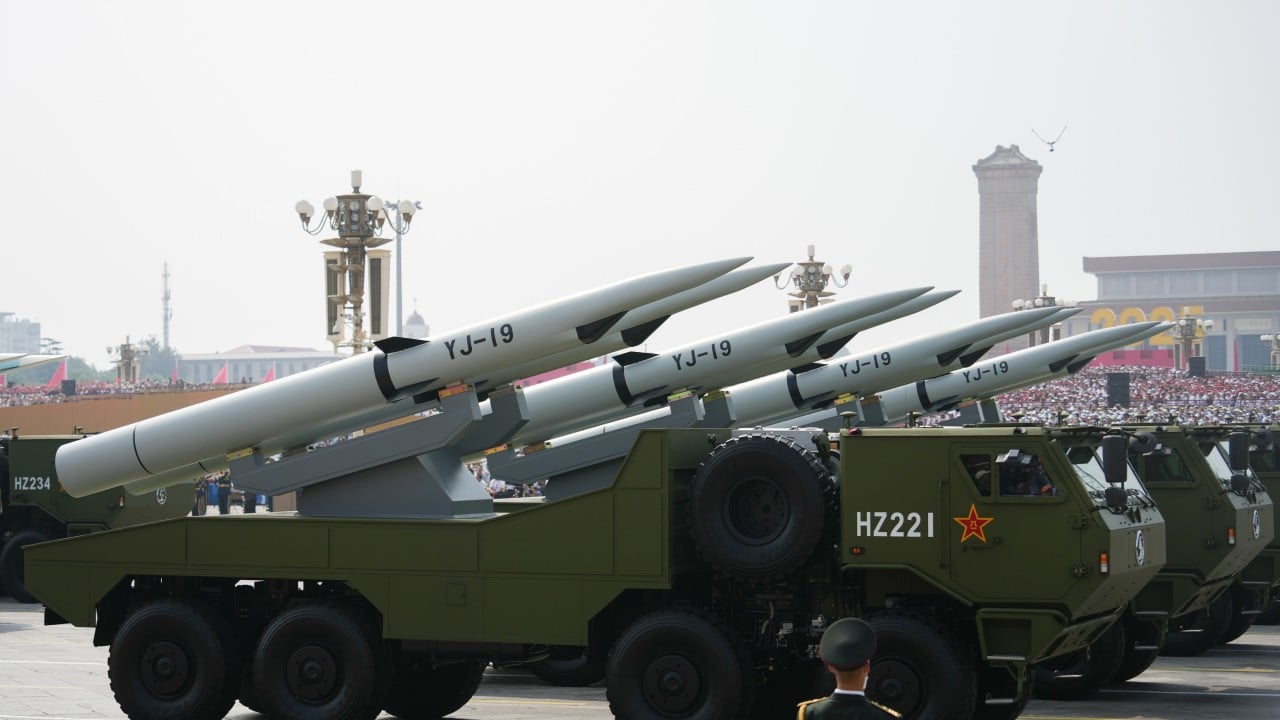
The United States defense establishment is scrambling to close a punishing capability gap in air-breathing hypersonic weapons, facing an adversary in China that has steadily operationalized high-speed delivery systems while Western procurement programs bogged down in bureaucratic sand. Through a newly minted Defense Advanced Research Projects Agency initiative targeting next-generation air-breathing architectures, Washington is attempting to reset a broken trajectory. But a multi-billion dollar injection of funds cannot immediately solve the foundational manufacturing and physics bottlenecks that have plagued the American defense industrial base for over a decade.
For years, Pentagon strategy prioritized exquisite, hand-crafted engineering over repeatable mass production. While Beijing fielded operational systems capable of sustaining flight above Mach 5 using supersonic combustion ramjets, or scramjets, American planners debated test methodologies and chased marginal performance increments. The result is a stark inventory deficit. When defense analysts look at the current strategic balance in the Indo-Pacific, they do not see an overwhelming technological advantage. They see an expensive, fragile arsenal built around boost-glide weapons that cost tens of millions of dollars per round and roll off assembly lines at a rate of half a dozen per year.
The Physics of the Scramjet Trap
To understand why the Pentagon is turning back to DARPA for a fresh start, one must look at the brutal constraints of atmospheric flight at extreme velocities. Unlike boost-glide vehicles—which rely on large rocket boosters to hurl a payload into the upper atmosphere before it glides ballistically toward a target—an air-breathing hypersonic missile operates differently.
A rocket booster kicks the missile up to the threshold speed, usually around Mach 4 or 5, where internal combustion can physically begin. At that exact moment, the heavy onboard oxidizer tanks used by traditional rockets are discarded. The engine opens its inlets, swallows raw atmospheric oxygen at supersonic speeds, mixes it with hydrocarbon fuel, and burns it continuously inside a combustion chamber swept by hurricane-force winds.
The engineering hurdles are punishing. Maintaining stable combustion when the air passing through the engine is moving faster than sound is equivalent to keeping a match lit inside a tornado. The thermal stress is equally unforgiving. Airframes regularized to cruise continuously at Mach 5 or higher experience skin temperatures hot enough to melt standard aerospace titanium. Managing this heat requires exotic carbon-carbon composites, complex active cooling channels, and advanced thermal protection systems that are notoriously difficult to manufacture without defects.
When DARPA ran its successful Hypersonic Air-breathing Weapon Concept campaign, commonly known as HAWC, it proved that the technology worked in controlled flight tests. Missiles flew past Mach 5 over hundreds of nautical miles. Industry executives celebrated, and the Air Force translated those physics demonstrations into the Hypersonic Attack Cruise Missile program. Yet proving a concept in a desert test range is fundamentally different from mass-producing an affordable weapon that can sit in a humid magazine for a decade, mount securely to a fighter jet's underbelly, and ignite reliably on command.
Industrial Realities and the Cost of Exclusivity
The deeper crisis facing the American military is not scientific; it is industrial. Modern defense procurement is hooked on low-rate, high-cost manufacturing models. A hypothetical example illustrates the structural failure: if an aerospace prime contractor builds a weapon using bespoke milling processes and hand-calibrated sensors, each unit requires thousands of specialized man-hours. Scaling up production during a conflict becomes mathematically impossible because the supply chain lacks resilient secondary vendors.
Recent assessments from government oversight bodies laid bare a grim reality. Certain major U.S. hypersonic programs crawl along at production rates of six to seven rounds annually. In a peer-level conventional conflict against a modern integrated air defense network, an entire year's national inventory could be expended in the opening forty-eight hours.
This inventory starvation forces a dangerous strategic calculus. Commanders cannot practice with weapons they cannot replace. Training pipelines remain dry, doctrine remains untested at scale, and deterrence weakens when potential adversaries calculate that American staying power is measured in days rather than months. China recognized this dynamic early, structuring its missile fabrication around modular components and automated assembly lines designed for high-rate wartime output. Beijing treats hypersonics as ammunition; Washington has historically treated them as science projects.
Rethinking the Launch Architecture
DARPA's latest push, the Next-Generation Hypersonic Cruise Missile initiative, attempts to break this cycle by hardcoding manufacturing constraints into the initial engineering blueprints. Rather than demanding absolute perfection in every single performance metric—such as squeezing out an extra Mach of speed at the expense of a tripling in unit cost—the program emphasizes design for manufacturing and assembly.
Engineers are being pushed to consider how a missile is bolted together before the final shape is even locked. If a component requires a rare-earth element sourced from a single foreign supplier, it gets redesigned. If an internal guidance bay demands tolerances so tight that half the machined parts fail quality control, the tolerances are relaxed to a level that secondary commercial machine shops can handle reliably.
Furthermore, the physical dimensions of these new air-breathing weapons dictate their operational utility. Because scramjets do not need to carry massive internal oxidizer tanks, they are fundamentally more compact than rocket-boosted glide systems. This smaller footprint allows them to fit inside the internal weapons bays of tactical stealth fighters like the F-35, or to be loaded onto heavy bombers in large quantities.
By expanding the launch ecosystem from specialized heavy assets to standard tactical aircraft and palletized cargo delivery systems, the Pentagon hopes to distribute its strike capability. Losing a single runway or a handful of dedicated bomber bases would no longer decapitate the nation's high-speed standoff response.
The Unforgiving Timeline Ahead
Closing the gap with China requires more than drawing up new requirements sheets in Arlington. The pipeline from a DARPA paper study to a fielded, mass-produced weapon spans years of rigorous environmental testing, software integration, and flight validation. Test ranges remain heavily congested bottlenecks, where scheduling a single hypersonic flight can take months due to telemetry and safety clearance limits.
The race is no longer about who can achieve the highest peak speed in an isolated laboratory demonstration. It is a grueling test of industrial endurance, supply chain resilience, and institutional willingness to accept "good enough" mass over unattainable perfection. As contractors review the new federal directives, the true measure of success will not be found in press releases celebrating velocity milestones, but in factory ledger books tracking thousands of reliable, affordable units ready for deployment.