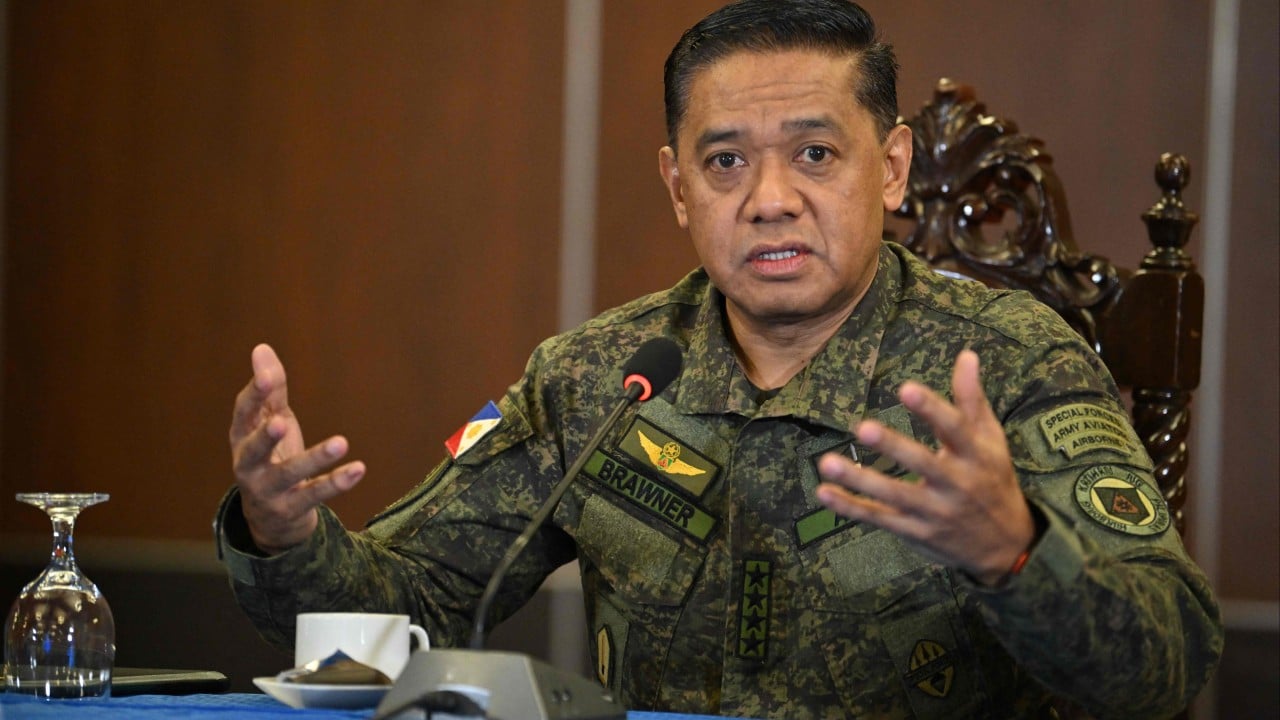
When the chief of the Armed Forces of the Philippines, General Romeo Brawner Jr., stood before reporters at Camp Aguinaldo to declare that his soldiers are "not blind, and not deaf," he was doing far more than issuing a standard boilerplate defense of military neutrality. He was acknowledging a dangerous reality that has plagued the republic for decades. The upper chamber of the legislature is locked in a volatile, multi-faction power struggle, and civilian politicians are actively trying to pull the barracks into the mud with them.
The immediate trigger for Brawner’s intervention was an explicit, public appeal from Representative Paolo Duterte, urging the military to "stand for truth and justice" amid explosive corruption scandals and a legislative coup that has shattered the Senate’s stability. For a veteran observer of Manila's political theater, the subtext of that appeal was chillingly clear. It was an invitation to mutiny, wrapped in the flag of civic virtue.
By tracing the current crisis to its institutional roots, it becomes obvious that Brawner’s assurances of non-intervention are not a sign of military indifference, but rather a desperate containment strategy. The Philippine state is facing a perfect storm. Massive anti-corruption protests are filling the streets over a multibillion-peso flood control scandal. The International Criminal Court is knocking at the door to arrest a sitting senator. Rogue ex-Marines are allegedly delivering suitcases of cash to lawmakers, and the Senate has degenerated into a physical battleground featuring midnight escapes and unauthorized gunfire.
Underneath Brawner's calm exterior lies a deeply uncomfortable truth. While the military high command remains fiercely loyal to the constitutional order, the operational readiness and structural stability of the armed forces are already being actively degraded by the civilian political collapse.
The Senate Coup and the Breakdown of Civilian Order
To understand why the military is being dragged into the conversation, one must examine the absolute anarchy taking place within the Senate. The upper chamber has effectively fractured into warring tribes, turning a co-equal branch of government into a security hazard.
The chaos reached a boiling point during the dramatic return of Senator Ronald "Bato" dela Rosa, who had been hiding from a confidential International Criminal Court arrest warrant. His re-emergence ignited a sequence of events that looked less like legislative procedure and more like a low-budget action film. National Bureau of Investigation agents chased Dela Rosa through the Senate hallways. Gunshots were fired into the air by security personnel in the adjacent Government Service Insurance System building. A midnight escape via an auxiliary exit followed, facilitated by political allies.
Simultaneously, a ruthless leadership coup unseated the Senate leadership, installing a revolving door of acting presidents and majority leaders while competing factions branded each other’s leadership illegitimate.
[Timeline of Senate Destabilization]
Nov 2025: ICC unseals secret arrest warrant for Sen. Dela Rosa.
May 2026: Dela Rosa returns; NBI raid triggers Senate lockdown and gunfire.
June 2026: Leadership coup fractures Senate into warring factions; Brawner issues warning.
This is not a functioning democracy. It is a structural vacuum. When civilian institutions dissolve into this level of farce, the military historically becomes the ultimate arbiter of Philippine politics. Politicians out of power know this, which is why they are actively fishing for support in the barracks.
The Quiet Attrition of Military Readiness
The real damage to the Armed Forces of the Philippines is not occurring through overt mutiny, but through bureaucratic strangulation. The political paralysis in Manila has completely frozen the machinery that allows the military to function.
Consider the Commission on Appointments. Because the Senate is paralyzed by leadership disputes and unable to hold regular sessions, the confirmation of five newly appointed military generals assigned to critical frontline commands has been indefinitely postponed. These are not paper-pushing roles. These are commanders designated for newly created units tasked with territorial defense and counter-insurgency.
Furthermore, Defense Secretary Gilberto Teodoro Jr. has warned that the lack of Senate sessions is actively sabotaging the ratification and implementation of vital Status of Visiting Forces Agreements with key international allies like Canada and New Zealand. At a time when external security pressures demand total institutional alignment, the military is being forced to operate with its hands tied by civilian dysfunction.
The Myth of a Unified Barracks
General Brawner’s public declaration that there are "no threats from inside" the military is an institutional necessity. He has to say it. But seasoned defense analysts know that the military is never a monolith.
Senator Panfilo Lacson, a former national police chief who understands the internal psychology of the uniform, recently sounded the alarm regarding "widespread frustration" within the ranks. Rank-and-file soldiers are watching politicians enrich themselves through anomalous flood control projects while the economy suffers from persistent inflation and soaring fuel prices. The military rank-and-file are drawn from the same working-class families bearing the brunt of these economic pressures.
The danger is magnified by the presence of rogue elements. The recent arrest and investigation of 18 individuals—identified as former Marines wearing fatigue uniforms who allegedly served as bagmen for corrupt officials—demonstrates how easily military credentials can be weaponized to manufacture the illusion of armed forces backing for political factions.
If a charismatic, mid-level officer decides that the civilian leadership has lost all moral authority to govern, the script for a classic Philippine coup d'état is already written. Brawner is fighting a daily battle to ensure that the frustration within the lower ranks does not match the ambition of unscrupulous politicians.
The Exploitation of the Digital Battlefield
The threat to military neutrality has shifted away from secret meetings in safe houses. It is now playing out across algorithmic feeds. Over the past week, coordinated disinformation networks have flooded social media with manipulated images of General Brawner, falsely claiming that the military chief is actively calling on citizens to join mass protests against the administration.
These operations are sophisticated. They are designed to exploit the high level of public trust that the military enjoys relative to the deeply discredited legislature. By fabricating military endorsement for street protests, destabilizers are attempting to create a self-fulfilling prophecy. If the public believes the military is ready to move, the crowds grow larger. If the crowds grow larger, the pressure on the military to intervene becomes irresistible.
The Armed Forces Public Affairs Office has been forced to shift valuable intelligence resources away from external defense monitoring to play digital whack-a-mole, constantly urging the public to exercise discernment before sharing online content that falsely implies a military mutiny is underway.
The Long Road to June Twelve
As the nation approaches its June 12 Independence Day celebrations—a day traditionally marked by mass military parades and displays of state unity—the tension in Manila is palpable. The Philippine Army has issued its own secondary statements reinforcing Brawner's stance, an unusual doubling-down that betrays the severity of the anxiety behind closed doors.
The military is holding the line, but it is holding it on behalf of a political class that is rapidly burning down its own house. General Brawner can keep his soldiers in the barracks today, and he can keep them there tomorrow. But if the Senate remains a combat zone, and if civilian governance continues to forfeit its moral authority, the historical precedent of the Philippine security apparatus suggests that neutrality has an expiration date.
The question is no longer whether the military will meddle in politics. The question is how much longer civilian politicians can fail before the military decides it has no choice but to fill the vacuum.


