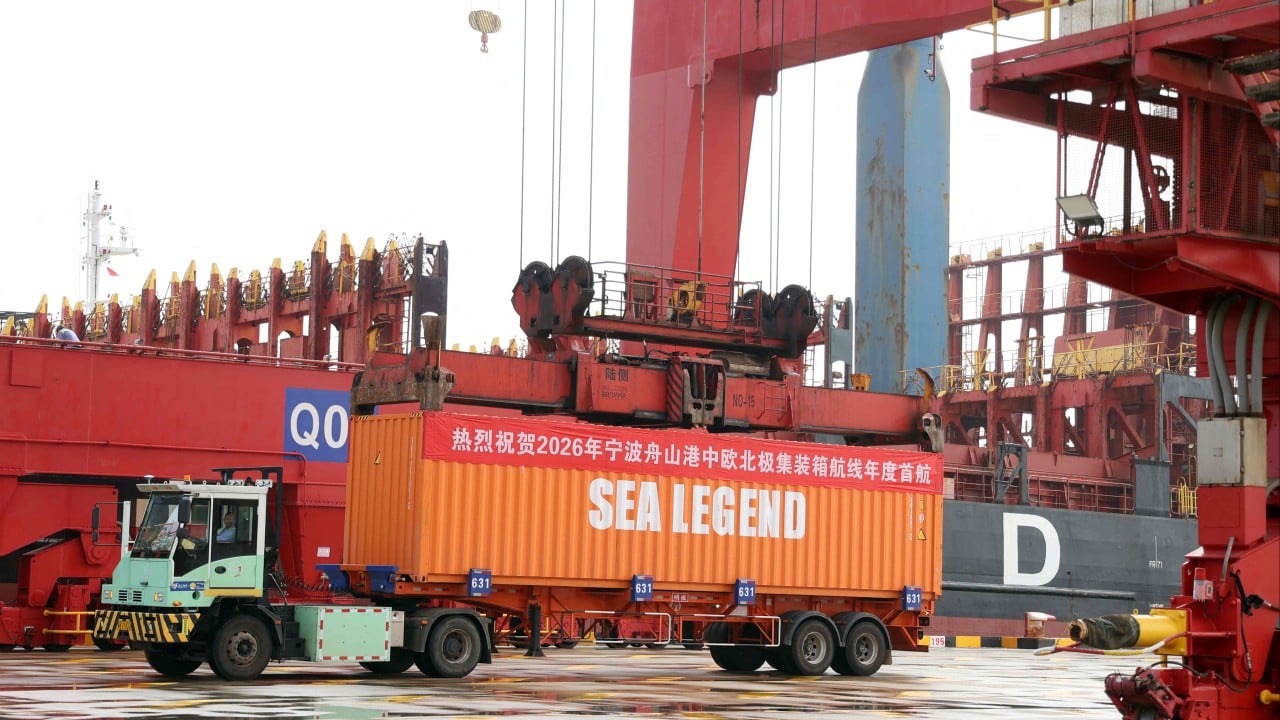
Beijing is not an Arctic state, yet its research icebreakers, satellite stations, and commercial shipping lines now press against the northern flank of Europe. For Europe, China is neither a pure military menace nor an innocent polar partner. It is a selective, sanctions-wary strategic actor riding Moscow’s geopolitical isolation while probing European vulnerabilities from the Barents Sea to Greenland.
Treat any neat binary between "polar threat" and "polar partner" as lazy analysis. Security analysts in Brussels, Oslo, and Helsinki have spent years debating whether Beijing’s Polar Silk Road is a commercial route or a Trojan horse. That debate misses how power actually works in the High North. China does not need to march troops across frozen tundra or build permanent bases on Russian soil to reshape European security. It only needs data, shipping corridors, critical minerals, and leverage over a Moscow that has few other buyers.
The Myth of a Unified Polar Axis
Walk through any defense briefing in northern Europe and you will hear warnings about a tightening Sino-Russian bloc in the Arctic. Joint naval patrols in the Bering Sea and bomber flights near Alaska make dramatic headlines. Coast guard agreements and navigation satellite integration between Beidou and GLONASS sound ominous on paper.
Look closer at the balance sheets and the reality turns murkier. Moscow is desperate for capital and technical fixes along the Northern Sea Route, yet Chinese state and private firms have moved with noticeable caution whenever Western sanctions threaten secondary exposure. Russian officials talk grandly about turning polar waters into an unstoppable alternative trade artery. Chinese executives do the math on insurance, sanctions compliance, and icebreaker availability, and they often slow down.
Moscow wants a junior partner that pays upfront and asks few questions. Beijing wants long-term access, scientific data, and supply-chain resilience on its own terms.
That asymmetry creates friction beneath the photo-ops. Russia has long guarded its Arctic sovereignty fiercely, treating coastal waters and rules as its private domain. War in Ukraine and Western isolation forced the Kremlin to open doors it once kept bolted. Still, Russian leaders remain wary of letting China dominate critical infrastructure or establish a permanent military footprint in Russia’s backyard.
For European capitals, this tension matters enormously. Treating Moscow and Beijing as a single monolithic mind in the Far North blinds policymakers to where their interests diverge. Beijing cares deeply about sea lanes that reduce reliance on southern chokepoints like the Malacca Strait. Moscow cares about regime survival, nuclear second-strike sanctuaries, and keeping Western influence out of its northern perimeter. Those goals overlap in places. They collide in others.
Dual-Use Science and the Quiet Mapping of the North
If you want to see where China’s Arctic push actually bites Europe, stop staring at fighter jets and look at oceanography. Polar science is rarely pure charity. Hydrographic mapping, seabed surveys, ice drift modeling, and atmospheric monitoring all serve civilian climate science. They also map acoustic channels, submarine operating depths, and communications blind spots.
Western commanders have grown sharper about this dual-use reality. A vessel gathering bathymetric data or deploying autonomous sensors does not fire a shot. Yet the information it collects can help naval planners understand under-ice acoustics or chart routes for future vessels.
Meanwhile, China’s 15th Five-Year Plan (2026–2030) underscores a steady march toward deeper polar capability, marine technology, and expanded influence in maritime governance. Beijing frames itself as a "near-Arctic state" with legitimate stakes in polar affairs. European diplomats often bristle at that label because China has no Arctic coastline. Bristling does not stop icebreakers. Building better European icebreaking, subsea cable protection, and maritime domain awareness does.
Consider a hypothetical example to see how commercial reach turns into strategic leverage. Suppose a European port authority or logistics firm relies heavily on Chinese-built cranes, container tracking software, or port financing tied to northern transit routes. Nothing illegal happens on day one. Everything runs smoothly and cheaply. Years later, during a diplomatic standoff over tariffs or Taiwan, a foreign supplier slows spare parts or tightens software maintenance. Suddenly a commercial convenience becomes a security headache.
That pattern has played out across European telecoms, rail, and energy grids over the past two decades. In the Arctic, where spare parts are scarce and weather leaves zero margin for error, supply-chain dependence carries extra bite.
Where Europe Actually Stands Exposed
Europe’s Arctic exposure is not abstract. It sits right next to European territory, European seabed cables, and European raw material needs.
Nordic Security and Subsea Lifelines
With Finland and Sweden inside NATO, the Nordic map has shifted dramatically. Northern waters are no longer a quiet backwater on the edge of European defense planning. They are a front line for early warning, naval patrols, and undersea infrastructure defense.
Undersea fiber-optic cables and energy pipelines link Europe to North America and bind Nordic economies together. Any heightened Russian military activity or Sino-Russian maritime coordination near these corridors forces European navies and coast guards to stretch thin patrols across vast distances. Even when Chinese vessels operate lawfully or conduct joint drills far from European shores, the cumulative effect raises the cost of European deterrence.
Greenland and the Critical Minerals Tug of War
Greenland sits at the crossroads of transatlantic defense, rare earth mining, and geopolitical agitation. For years, concerns over Chinese interest in Greenlandic ports, airports, and mineral deposits drew intense scrutiny from Copenhagen and Washington. At the same time, renewed American pressure and political rhetoric over Greenland have complicated transatlantic coordination, testing how Europe balances alliance solidarity with respect for local self-rule in Nuuk and Copenhagen.
Europe needs critical minerals—such as rare earths, lithium, and titanium—for its green transition, electric vehicles, and defense industries. China dominates much of global processing and supply chains in these areas. Turning Arctic mining into a reality in Europe or Greenland, however, is brutally hard. High labor costs, short construction seasons, environmental rules, and local community consent slow projects down. Chinese capital is often patient and willing to absorb risk where Western investors balk, which is precisely why European governments screen mineral deals so closely.
Shipping Routes That Are Still Overhyped for Quick Profits
For over a decade, commentators have predicted that melting ice would turn the Northern Sea Route into a massive shortcut between East Asia and Rotterdam. Reality has been less romantic.
| Factor | Northern Sea Route Reality | Traditional Suez Route Reality |
|---|---|---|
| Seasonality & Ice | Heavy ice, narrow windows for standard ships, icebreaker escorts required | Year-round navigation, predictable schedules, higher port frequency |
| Infrastructure | Sparse ports, limited search-and-rescue, harsh weather delays | Dense global port network, established supply chains, deep insurance market |
| Geopolitics & Sanctions | Heavy Russian state control, Western sanctions complications | Exposed to regional conflict and chokepoints, yet globally standardized |
| Strategic Value to China | Alternative energy and trade hedge, polar logistics experience | Core commercial artery linking Chinese factories to European markets |
The route matters more as a long-term strategic hedge and a source of Russian oil and gas or Arctic commodities than as an overnight replacement for global container shipping. Still, even partial or seasonal growth in Arctic traffic requires rules, search-and-rescue capacity, and environmental standards that Arctic states cannot afford to ignore.
Why European Policy Keeps Tripping Over Itself
Europe has produced plenty of Arctic strategy papers. Execution is where things get messy.
First, hard security and climate policy often run in separate lanes. Defense ministries focus on radar, submarines, and border patrols. Environment and energy ministries worry about permafrost thaw, emissions, and green industrial targets. A melting Arctic is both a climate crisis and a strategic shift. Treating them as competing priorities weakens both.
Second, Europe struggles with alliance whiplash. Washington’s posture toward Moscow, Beijing, and Arctic territory like Greenland has shifted sharply across administrations, leaving European capitals worried about being sidelined in big-power deals. When European states move together—especially alongside Nordic partners and Canada—they carry far more weight. When they fracture into bilateral deals or inward-looking squabbles, outside powers exploit the gaps.
Third, European leaders sometimes overreact to symbolism while underinvesting in basics. Condemning a joint patrol or a scientific expedition takes an afternoon. Funding dual-use icebreakers, resilient undersea cables, coastal sensors, and Arctic-trained troops takes years of steady budgets.
Where Selective Cooperation Makes Sense—and Where It Does Not
Should Europe treat China strictly as an adversary in the Arctic, or leave doors open for selective engagement? Blanket answers fail in cold water.
On hard security, critical infrastructure, and dual-use research, Europe has every reason to stay guarded. Foreign investment screening, tighter scrutiny of sensitive marine research near European waters, and joint NATO-EU monitoring of subsea cables are basic self-defense. Allowing unchecked foreign control over strategic ports or sensitive technology in a militarizing region is reckless.
On global climate science, search-and-rescue coordination, and multilateral maritime rules, pragmatic engagement still has a place—provided it does not legitimize Russian aggression or hand Beijing veto power over Arctic governance. China is a major emitter and a major trading nation. Ignoring its footprint altogether does not make the ice freeze faster or the ocean quieter.
Here is the uncomfortable truth for Brussels, Oslo, Stockholm, and Copenhagen: Russia remains the immediate military threat on Europe’s northern border, while China is the patient, long-horizon competitor testing every economic, technological, and diplomatic seam. Misreading either one is costly. Confusing the two is worse.
Start by auditing every northern port, cable landing station, mineral project, and polar research link on European soil for hidden dependencies before the next ice season opens.


