Washington and Jerusalem are quietly weighing fresh military strikes against Iran in the wake of autumn elections, even as public signals from the White House point in two opposite directions. Nearly nine months after joint strikes ignited the 2026 conflict in late February, senior officials from both capitals have held high-level consultations over potential new operations while tit-for-tat drone and missile exchanges flare around the Persian Gulf. What looks like a straightforward continuation of air and missile campaigns is actually a tense collision of shrinking political timelines, fragile shipping lanes, and asymmetric retaliation threats.
Why Post-Election Timing Changes the Equation
Elections rarely freeze military planning in the Middle East. They compress it.
In late October, Israeli Prime Minister Benjamin Netanyahu lost his governing majority in Israel's legislative election, and a week later Republicans lost control of the U.S. Congress amid widespread voter frustration over inflation, energy shocks, and the war's toll. Lame-duck periods create an awkward window for executives. Incoming lawmakers will take office in January 2027 with sharper oversight tools and less appetite for open-ended regional commitments, even after the outgoing Senate rejected a war-curbing measure in mid-November.
That calendar pressure explains why consultations have accelerated behind closed doors. Mossad Director Roman Gofman and Israel's military chief of staff Eyal Zamir have engaged directly with U.S. officials and U.S. Central Command leadership, while Netanyahu has pressed for discussions on renewed strikes. From a purely tactical standpoint, waiting until next year risks facing a more hostile congressional environment and potentially different political leverage in Jerusalem.
Yet President Donald Trump's public comments underscore how unsettled the decision remains. In mid-November interviews, he paired threats to finish off the conflict soon with statements that he is not rushing into a decision and could let matters stretch into 2027. When a leader keeps both a strike option and a stall tactic on the table, allies and adversaries alike have to read every troop movement and diplomatic detour carefully.
What Renewed Strikes on Iran Would Target
Any new round of attacks on Iran would build on—and likely adjust for—the lessons of the campaign that began on February 28, 2026. That initial wave saw heavy coordinated air and missile pressure against Iranian military sites, naval assets, and nuclear-related infrastructure such as heavy water and yellowcake facilities, triggering a severe disruption to transit through the Strait of Hormuz.
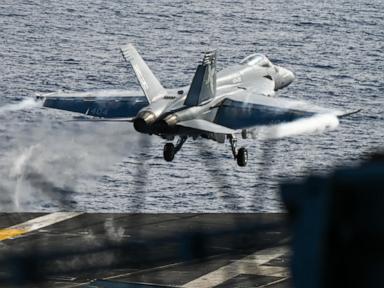
Reporting in mid-November pointed to discussions around striking economic infrastructure alongside military or missile sites, reflecting a calculation that pressure on revenue and daily functioning hits harder than isolated military exchanges. Already, localized strikes have continued to flare around strategic choke points, including a U.S. fighter jet strike on an Islamic Revolutionary Guard Corps missile launch site on Qeshm Island in the Strait of Hormuz following drone and aerial incidents involving U.S. installations in Bahrain and Kuwait.
Targeting economic nodes carries steep trade-offs. Energy and trade infrastructure sit tightly intertwined with regional markets and global supply chains. Hit a port, refinery, or power grid too hard, and world oil prices—already battered by Strait of Hormuz disruptions—can spike again within hours. Hit too lightly, and Tehran absorbs the blow without changing its strategic posture.
Asymmetric Retaliation Beyond the Gulf
Airpower solves certain problems quickly. It cannot erase geography or asymmetric reach.
Iranian officials and IRGC commanders have warned openly that a renewed large-scale assault would draw a wider response than earlier rounds. Statements attributed to Supreme Leader Ayatollah Mojtaba Khamenei and warnings from IRGC leadership have floated retaliation reaching beyond Israel and Gulf bases to include Gulf energy assets, U.S. facilities in Europe, and undersea internet cables. Even where specific claims of damage to radars or bases are disputed or unconfirmed, the threat envelope itself forces planners to price in multi-front friction.
Consider a hypothetical example to see how escalation spirals outside traditional battlefields. Suppose a strike on Iranian coastal or economic infrastructure prompts a coordinated campaign of drone harassment against Gulf energy terminals and commercial shipping lanes, paired with cyber or cable disruptions affecting European financial and telecommunications links. Even if air defenses intercept the majority of incoming projectiles, maritime insurance rates jump, tankers reroute or pause, and neighboring Gulf states—already wary of bearing blowback from a conflict they did not choose—face severe domestic and economic strain.
That regional exposure is a crucial counterweight often glossed over in war-room chatter. Gulf states hosting U.S. forces and exporting energy through the region sit directly inside the blast radius of miscalculation. Meanwhile, parallel fronts in Lebanon and Yemen keep regional militaries stretched across multiple theaters at once.
The Overlooked Friction Between Washington and Jerusalem
Alignment on the threat does not automatically mean alignment on the endgame.
Washington and Jerusalem share years of intelligence coordination and deep operational ties, yet their domestic political incentives and strategic tolerances diverge in subtle ways. A U.S. president weighing global inflation, naval logistics, and a shifting Congress in January looks at a different balance sheet than an Israeli leadership navigating a post-election political transition and ongoing regional security pressures.
Diplomacy also lingers in the background despite the drums of escalation. Mediation channels—such as outreach through Oman—have continued alongside military signaling, showing that backchannels rarely vanish completely even during active hostilities. Negotiations held under the shadow of looming strikes are volatile and brittle, yet leaders often treat military pressure and bargaining leverage as two halves of the same stick rather than mutually exclusive paths.
What Separates Bluster From an Actual Campaign
Watch hardware and shipping rather than rhetoric. Speeches and warnings move markets for an afternoon; force posture and maritime behavior reveal real intent.
- Strike package scope: Look for whether discussions center on narrow retaliatory hits against missile or drone launch sites or expand toward sustained waves against economic and energy infrastructure.
- Regional air and naval posture: Pay attention to force deployments, air-defense readiness across Gulf partners, and activity around the Strait of Hormuz and Qeshm Island.
- Diplomatic movement: Track whether quiet mediation through regional intermediaries produces concrete de-escalation steps or collapses under fresh exchanges of fire.
Ultimately, resuming large-scale attacks on Iran is not just a military question of aircraft, munitions, and target lists. It is a test of whether Washington and Jerusalem want a decisive shock before new political realities set in—or another costly cycle of escalation with no clear exit.