Puerto Rico is keeping its lights on by turning tens of thousands of residential solar panels and home batteries into a massive, coordinated virtual power plant that feeds electricity back into a failing grid during peak demand. By aggregating distributed energy resources across the island, utility operators and private solar providers can dispatch stored power instantaneously to prevent cascading blackouts without waiting years for centralized fossil fuel plants to be rebuilt.
That is the short answer. The reality on the ground is far messier, more expensive, and vastly more consequential for the future of modern energy infrastructure.
For decades, the standard playbook for fixing a broken electrical grid involved pouring billions of dollars into massive, centralized power stations and stringing hundreds of miles of high-voltage transmission lines across rugged terrain. In Puerto Rico, that model didn't just fail; it collapsed entirely. Following the devastation of Hurricane Maria in 2017, the subsequent bankruptcy of the Puerto Rico Electric Power Authority (PREPA), and the troubled privatization of transmission and distribution under LUMA Energy, the island's centralized grid became a case study in systemic fragility. Aging oil- and gas-fired plants routinely trip offline, triggering rolling blackouts that spoil food, shutter businesses, and endanger medically vulnerable residents.
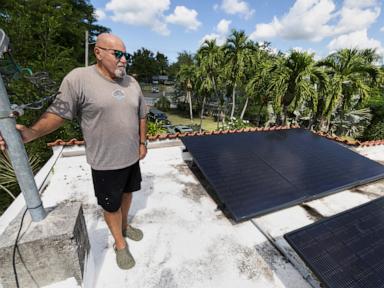
Rather than waiting for federal reconstruction funds to slowly materialize into concrete and steel, residents took matters into their own hands. Driven by necessity and steep retail electricity rates, Puerto Ricans adopted rooftop solar and lithium-ion battery storage at one of the fastest per-capita rates in the world. Over 100,000 homes and businesses on the island now generate and store their own power. For years, those batteries sat idle during normal grid operation, acting solely as personal insurance policies against the next outage. Now, software is stitching those isolated batteries into a unified, dispatchable power plant.
How a Virtual Power Plant Actually Works
A virtual power plant (VPP) is not a physical building with smokestacks or turbines. It is a cloud-based software network that links thousands of decentralized energy assets—primarily residential solar arrays and home battery systems—and operates them as a single, cohesive power generator.
To understand the mechanics, consider a hypothetical scenario on a sweltering August evening in San Juan. At 6:00 PM, the sun drops low, causing rooftop solar generation across the island to plummet just as hundreds of thousands of residents return home and crank up their air conditioners. On a traditional grid, this sudden spike in demand forces utility operators to fire up expensive, polluting "peaker" plants—usually aging diesel or natural gas turbines—to keep the system's electrical frequency stable at 60 Hertz. If a peaker plant fails to start, the grid suffers a voltage drop, triggering automated load-shedding blackouts across entire municipalities.
In a VPP-enabled grid, the utility sends an automated digital signal to a VPP aggregator—companies like Sunrun, Sonnen, or Tesla—hours or minutes before that evening peak hits. The aggregator's software immediately calculates how much spare capacity sits inside tens of thousands of enrolled home batteries across the island. At the designated moment, the software instructs those home inverters to switch from powering just the house to pushing excess stored electricity backward through the utility meter and onto the local distribution lines.
Individually, a single home battery discharging 5 kilowatts of power is a rounding error. Aggregated across 15,000 homes, that synchronized discharge injects 75 megawatts of clean, instantaneous power directly into the neighborhoods that need it most. It happens in milliseconds. There is no mechanical inertia to overcome, no fuel to burn, and no long-distance transmission bottlenecks to navigate because the power is generated right where it is consumed.
The Economics of Decentralized Survival
The rapid deployment of Puerto Rico's VPP programs—most notably LUMA Energy’s Customer Battery Energy Sharing (CBES) initiative—is driven by cold, hard math rather than environmental idealism.
Historically, PREPA relied heavily on imported fossil fuels, leaving ratepayers exposed to volatile global oil markets and saddling the island with some of the highest electricity tariffs in the United States. Every time a centralized generator fails, the utility must buy emergency power or run inefficient backup units at astronomical costs, passing those expenses directly onto consumers through fuel adjustment clauses.
The VPP model flips this financial structure. Instead of spending billions in capital expenditures to build a new 100-megawatt gas turbine—a project that takes years to permit, finance, and construct—the utility pays homeowners a performance-based incentive for the kilowatt-hours their batteries export during grid emergencies.
For homeowners, the math is equally compelling. Installing a solar-plus-storage system in Puerto Rico is a major upfront investment, often costing tens of thousands of dollars. By enrolling in a VPP program, residents earn hundreds of dollars annually in grid-service credits, effectively subsidizing the cost of their backup hardware while retaining a guaranteed reserve buffer—typically 20% to 30% of battery capacity—in case the grid goes down entirely.
The aggregator takes a cut of the utility payments to cover the software infrastructure, telemetry, and grid-compliance engineering. Everyone gets paid, the grid stays up, and the utility avoids building stranded fossil fuel assets.
The Hidden Friction Behind the Grid Transformation
If virtual power plants are cheaper, faster to deploy, and more resilient than centralized generators, why hasn't every utility on earth abandoned traditional power plants? Because integrating tens of thousands of privately owned batteries into a legacy electrical grid introduces profound technical and regulatory headaches.
The most immediate hurdle is distribution grid congestion. Legacy electrical grids were engineered for one-way traffic: massive power plants pushed high-voltage electricity down to passive consumers. When thousands of homes suddenly push electricity backward up the distribution feeders, it can cause localized voltage spikes that trip neighborhood transformers or damage sensitive utility equipment. Grid operators require granular, real-time visibility into low-voltage distribution networks—visibility that Puerto Rico's battered infrastructure still largely lacks.
Then there is the regulatory battle over net metering and utility business models. Traditional investor-owned utilities make money by deploying capital into physical infrastructure—poles, wires, and power plants—and earning a guaranteed rate of return regulated by public utility commissions. They do not traditionally earn a profit margin on operational expenses, such as paying homeowners for battery power.
In Puerto Rico, this tension plays out constantly before the Puerto Rico Energy Bureau (PREB). Solar advocates and VPP operators push for streamlined interconnection rules and fair compensation rates for exported energy. Meanwhile, legacy financial stakeholders and bondholders restructuring PREPA's massive $9 billion debt worry that widespread grid defection—where wealthy residents generate all their own power and barely buy anything from the utility—will shrink the customer base left to pay off the utility's historic liabilities.
The Equity Divide on the Island
There is an uncomfortable socioeconomic reality buried beneath the optimistic headlines about Puerto Rico's clean energy transition. The solar-and-battery boom has largely been financed by middle- and upper-income homeowners who possess the credit scores, homeownership status, and roof integrity required to qualify for solar loans or leases.
Low-income families, renters, and residents living in multi-family public housing complexes cannot simply bolt solar panels onto their roofs and buy $15,000 lithium-ion batteries. Yet, when the centralized grid fails, it is these exact communities that suffer the worst consequences—lacking air conditioning during dangerous heatwaves, losing vital refrigerated medications, and enduring days without power while their wealthier neighbors run seamlessly on battery backup.
A VPP helps bridge this gap indirectly. When affluent homeowners discharge their batteries into the grid during a peak shortage, the resulting stabilization prevents rolling blackouts that would otherwise disproportionately hit lower-income neighborhoods. However, indirect protection is not energy equity. Federal initiatives, including the Department of Energy’s Puerto Rico Energy Resilience Fund (PR-ERF), have begun allocating hundreds of millions of dollars specifically to subsidize rooftop solar and battery installations for low-income households and residents with electricity-dependent medical needs. Until those installations scale dramatically, Puerto Rico risks cementing a two-tiered energy system: reliable, privately owned microgrids for the haves, and a precarious, state-managed legacy grid for the have-nots.
Why Mainland Utilities Are Watching San Juan
What is happening across Puerto Rico’s mountains and coastal cities is no longer an isolated island experiment. It is a live stress test for the North American electrical grid.
Across the mainland United States, utilities are facing an unprecedented convergence of threats. Extreme weather events—from winter freezes in Texas to heat domes in California and hurricanes along the Gulf Coast—are battering aging transmission lines. Simultaneously, electricity demand is surging for the first time in decades, driven by artificial intelligence data centers, domestic manufacturing, and the electrification of transportation.
Utilities in states like California, Texas, Vermont, and Massachusetts are actively copying the Puerto Rican playbook. Green Mountain Power in Vermont has used networked home batteries to shave millions of dollars off peak capacity charges. In Texas, deregulated retail electric providers are aggregating Tesla Powerwalls to sell ancillary services into the ERCOT market when prices spike to $5,000 per megawatt-hour.
Puerto Rico simply got there first because it had no other choice. When your centralized grid is held together by patchwork repairs and vulnerable to every tropical storm that enters the Caribbean, waiting a decade for a new transmission corridor is a death sentence.
The Long Road to True Grid Independence
The virtual power plant is not a silver bullet that instantly cures Puerto Rico's energy crisis. A VPP cannot generate electricity out of thin air; it can only store and shift energy that has already been produced. If a Category 5 hurricane wipes out the local distribution poles and wires connecting homes to the neighborhood transformer, a VPP cannot push power across severed lines—though each individual home with solar and batteries will remain energized as an isolated island of light.
Furthermore, managing a grid with high penetrations of inverter-based resources requires sophisticated grid-forming inverters capable of establishing voltage and frequency baselines without relying on the spinning magnetic mass of giant steam turbines. Engineering teams in Puerto Rico are currently working through the complex task of upgrading grid protections and telemetry so that distributed batteries can do more than just shave evening peaks—they must eventually help restart blacked-out sections of the grid from scratch.
The real achievement in Puerto Rico is not merely technological. It is institutional. For over a century, the electrical utility industry operated on a rigid monopoly assumption: customers consume, utilities produce, and never the twain shall meet. By turning everyday rooftops and garage walls into critical infrastructure, Puerto Rico has shattered that assumption permanently. The grid of the future will not be built solely by utility executives in boardrooms; it will be assembled, megawatt by megawatt, on the walls of the people who rely on it to survive.