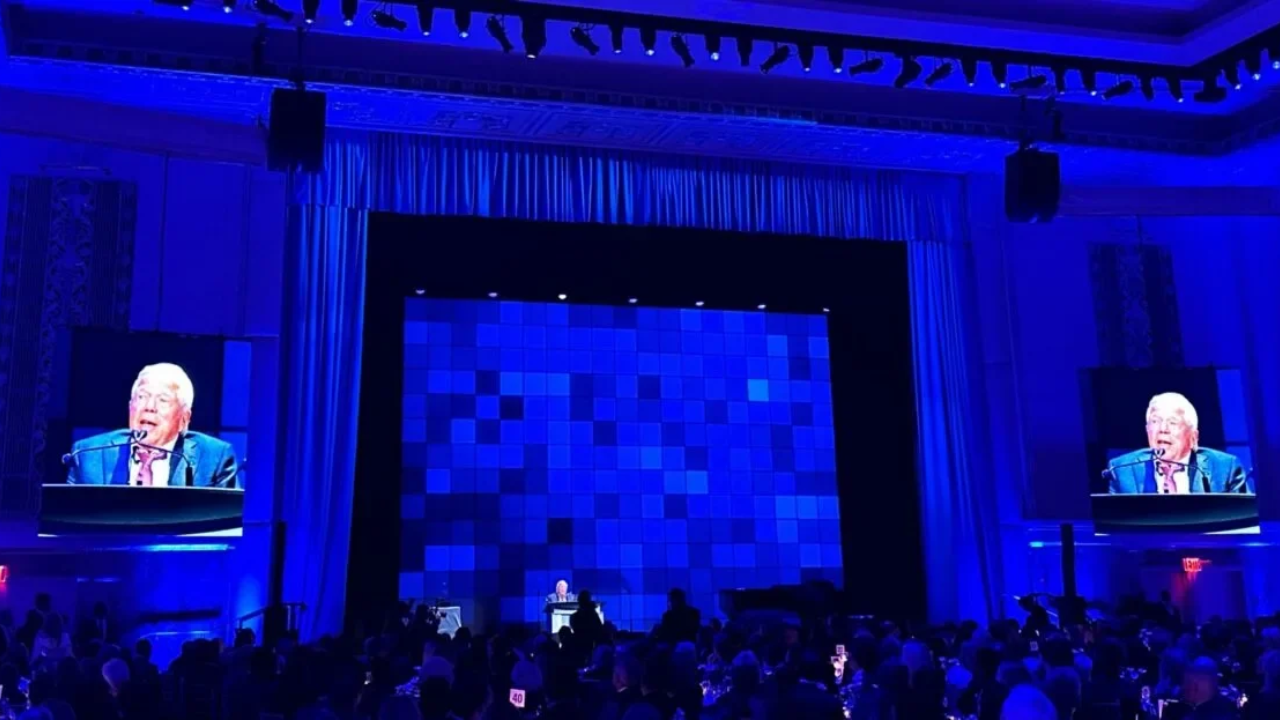
Robert Kraft’s Foundation to Combat Antisemitism recently pulled in $32 million in a single evening, drawing 800 high-profile guests including Tom Brady and Jon Bon Jovi to convert celebrity capital into rapid institutional funding. While standard press coverage treats a haul of that size as a straightforward victory lap for social good, the mechanics behind mega-fundraisers reveal a much more calculated reality. Raising eight figures in four hours is not an accident of spontaneous generosity. It is the result of high-level corporate alignment, tax-advantaged wealth transfers, and the strategic deployment of cultural icons to move needle-moving capital in an era of deep social polarization.
The numbers alone command attention. Eight hundred people walked into a room and walked out having committed an average of $40,000 per head, though in reality, the math is heavily skewed toward the top 1 percent of the room. In modern high-net-worth philanthropy, the whale donor model dictates the night. A handful of billionaires and corporate foundations anchor the evening with seven-figure matching pledges before the salad forks are even lifted, creating social proof and peer pressure that compel the remaining guests to open their checkbooks.
The Mechanics of the $32 Million Room
To understand how an organization founded in 2019 scales its fundraising to $32 million in a single night, you have to look at the intersection of sports ownership, entertainment, and institutional power. Robert Kraft is not merely a wealthy donor; he is an apex networker whose ownership of the New England Patriots and New England Revolution places him at the center of American media, corporate sponsorship, and political influence.
When Kraft sends an invitation, executives do not view it as a standard charity request. They view it as an ecosystem event. Attending means sharing air with the people who control broadcast rights, stadium naming deals, private equity allocations, and philanthropic boards.
The presence of figures like Tom Brady and Jon Bon Jovi serves a dual purpose that seasoned event producers understand well. First, celebrity attendance guarantees earned media coverage that no paid public relations campaign could replicate organically. Second, it changes the psychological temperature of the ballroom. Ultra-wealthy donors are immune to standard pitch decks, yet they remain remarkably susceptible to proximity to fame. Putting a seven-time Super Bowl champion and a Rock and Roll Hall of Famer in the room turns a solemn policy initiative into an exclusive cultural moment.
How the Money Actually Moves
A common misconception among the general public is that a $32 million gala announcement means $32 million in cash immediately hits a checking account the next morning. In practice, mega-gala totals represent a mix of several financial instruments:
- Multi-year pledges spread across three to five fiscal years to ease annual tax burdens and balance sheet hits.
- Donor-Advised Fund (DAF) distributions, where wealthy individuals have already taken their tax deductions years prior and are simply directing warehoused charitable capital toward a timely cause.
- Corporate sponsorships booked as marketing or corporate social responsibility expenses, allowing companies to align their brands with a high-visibility anti-hate message while securing tables for key clients.
- Live auction and paddle-raise commitments, which rely on real-time competitive bidding in front of peers.
This financial architecture allows foundations to announce massive headline numbers that signal dominance in the nonprofit sector. Dominance matters because, in the philanthropy market, money follows perceived momentum. Institutional donors want to back winners with the scale to buy national television ad space, not small grassroots outfits struggling to pay rent.
The Shift From Quiet Advocacy to Mass Media Campaigns
Historically, organizations fighting antisemitism and broader hate relied on legal defense, legislative lobbying, school curricula, and community security grants. Those methods are essential, yet they move slowly and rarely capture the imagination of corporate boardrooms.
Kraft’s Foundation to Combat Antisemitism (FCAS) took a radically different approach by treating prejudice like a consumer brand problem. With the launch of its Blue Square campaign—a symbol designed to represent the roughly 2.4 percent of the U.S. population that is Jewish while standing up against all forms of hate—the foundation leaned heavily into mass-market advertising. You do not buy Super Bowl commercials and national prime-time media slots with bake-sale money. You need tens of millions of dollars in liquid capital to compete with major consumer brands for public attention.
That strategic choice explains the urgency behind a $32 million night. Media buying at a national scale burns cash at an astonishing rate. A single 30-second spot during a major televised sporting event can eat up $7 million before production costs are even factored in. Without massive, recurring infusions of capital from high-net-worth networks, a media-first advocacy model collapses under its own overhead.
The Criticism Behind Big-Ticket Philanthropy
Not everyone in the nonprofit and civil rights sectors applauds the mega-gala model, and ignoring those critiques misses half the story. Veteran organizers and watchdog analysts point out several friction points when billionaire-led foundations dominate an advocacy space.
First, there is the question of donor concentration versus grassroots accountability. When an organization is funded by 800 elites and anchored by a billionaire founder, its strategic priorities naturally reflect the worldview of the boardroom rather than the street. Critics argue that high-gloss awareness campaigns—billboards, television ads, social media pushes—make wealthy donors feel productive without necessarily addressing the structural, economic, or local security needs of vulnerable communities.
Second, critics question the return on investment of mass-market anti-hate advertising. Decades of sociological research suggest that deep-seated bigotry rarely dissolves because someone sees a well-produced commercial during a football game. Skeptics argue that $32 million deployed into local community policing partnerships, school district interventions, or direct legal aid produces measurable, durable outcomes that a splashy media buy cannot match.
Proponents of the Kraft model counter that you cannot win a cultural war without fighting on the cultural battlefield. In an era where algorithmic social media feeds amplify extremism and conspiracy theories to millions of screens every hour, silence is surrender. From their perspective, saturating mainstream culture with an unambiguous message against hate shifts the Overton window, reminding the silent majority that bigotry remains socially unacceptable. Both arguments carry weight, and the tension between direct aid and mass messaging defines modern philanthropy.
Why Celebrities Lean Into Institutional Causes
For celebrities at the level of Tom Brady or Jon Bon Jovi, lending their names to a $32 million fundraiser is a calculated alignment of personal brand and legacy building. Athletes and musicians in the second half of their careers face a distinct transition. Performance metrics fade, and public relevance shifts toward business ventures, cultural commentary, and philanthropy.
Bon Jovi has spent decades building infrastructure around hunger and homelessness through his Soul Foundation, giving him genuine credibility when he steps onto a philanthropic stage. Brady, long known for guarding his public persona and avoiding polarizing political endorsements, aligns himself with Kraft—his longtime mentor and team owner—on an issue framed around universal human decency rather than partisan politics.
This framing is critical. Corporate sponsors and A-list talent flee from partisan crossfire, which can alienate half their customer base overnight. By positioning the mission broadly as anti-hate while anchoring it in the specific fight against antisemitism, the organization creates a big-tent moral consensus. Nobody in corporate America wants to go on the record opposing an anti-hate gala. That moral clarity removes friction for Fortune 500 executives deciding whether to wire $250,000 for a prime table.
The Economics of Exclusivity
If you stripped away the mission statement and examined the event purely as an experiential business product, a gala like this operates on the exact same principles as a luxury brand launch or a Formula 1 paddock club. Scarcity drives value.
Capping attendance at 800 guests in a nation of over 330 million people creates an immediate hierarchy. Being inside the room signals status, liquidity, and access. Event planners choreograph every detail—from the security perimeter to the table assignments—to reinforce that sense of privilege. Guests are not buying dinner; they are buying entry into a closed network where deals get whispered between courses and introductions happen without gatekeepers.
At the same time, the public relations value works in reverse. By releasing the headline figure of $32 million alongside the names of marquee attendees, the organizers project overwhelming institutional strength to the outside world. In the attention economy, big numbers act as a force multiplier. A $2 million fundraiser gets buried on page twelve of a local society column. A $32 million haul with a legendary quarterback and a rock icon makes national headlines, extending the reach of the message far beyond the walls of the venue.
What the $32 Million Actually Buys Moving Forward
Once the tuxedos go back into garment bags and the press releases fade from the news cycle, the real test begins. Raising $32 million solves a resource problem, yet it creates an execution problem. Expectations scale alongside the check sizes.
With a war chest of that magnitude, the foundation gains the runway to fund multi-year research into how hate spreads online, expand regional partnerships across major American cities, and keep its Blue Square messaging in front of tens of millions of viewers through high-cost television and digital placements. It also gains the leverage to demand matching commitments from other major institutions, turning one night of fundraising into a broader capital campaign.
Yet money alone cannot immunize an organization against the realities of a fractured media landscape. The audiences most entrenched in extremist ecosystems rarely watch network television or respond to celebrity appeals. Reaching them—or preventing the next generation from drifting into those digital echo chambers—requires more than polished creative agencies and ballroom applause. The true measure of that $32 million night will not be found in the gala’s press clippings, but in whether hate crime statistics and online extremism metrics actually bend downward over the next five years.


