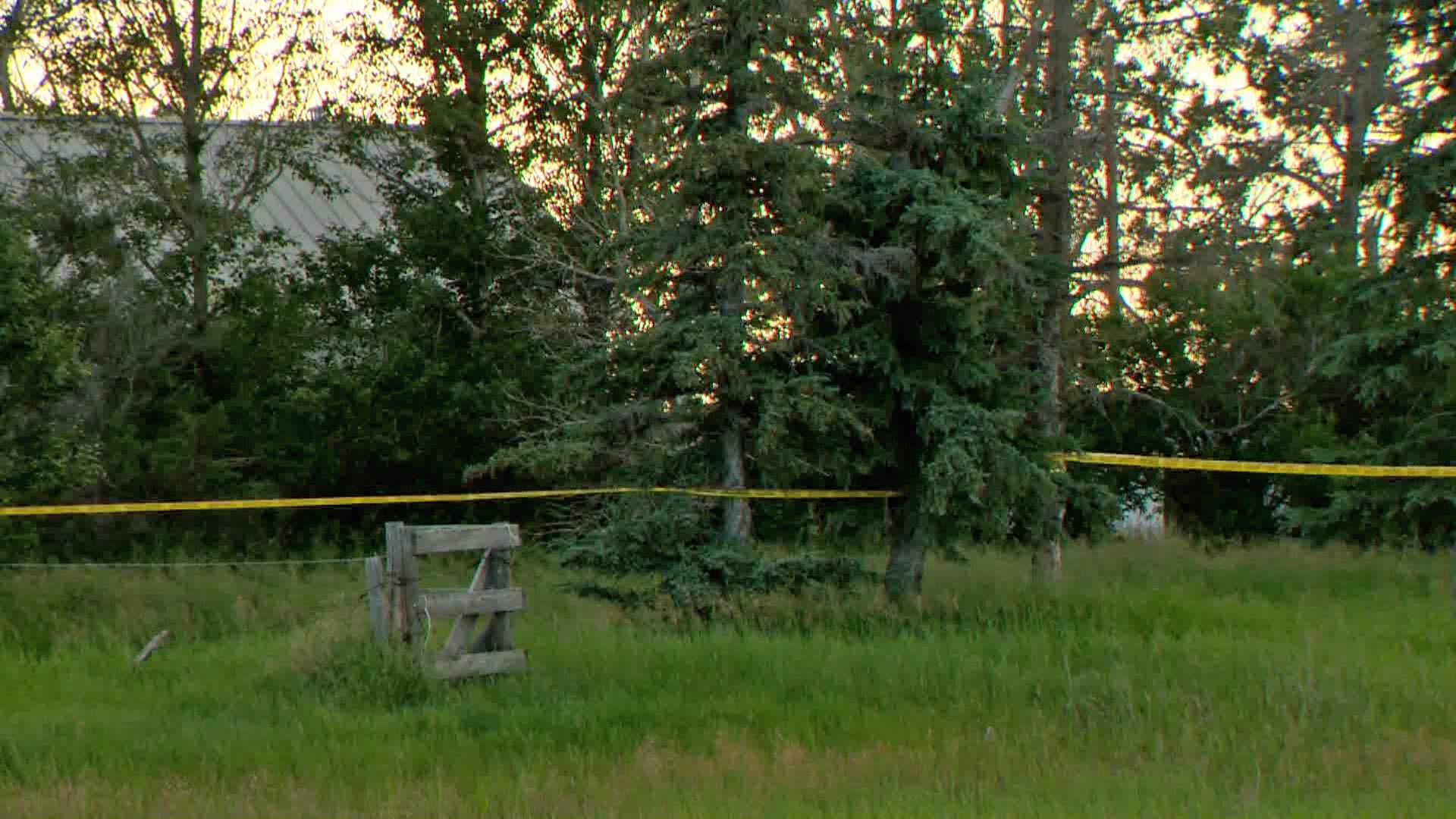
A rural homestead just off Highway 9 near Irricana, Alberta, became the latest flashpoint in Canada’s escalating crisis of high-stakes rural policing. On July 3, 2026, two Airdrie RCMP officers responded to an open-line 911 call from a woman reporting a domestic disturbance involving her boyfriend. Within minutes of their arrival, a man was dead, shot multiple times by a police service weapon after advancing toward officers with what appeared to be a handgun. The Alberta Serious Incident Response Team has stepped in to investigate the lethal encounter, which was entirely captured on body-worn cameras.
This fatal shooting underscores a brutal reality that urban centers rarely see. Rural law enforcement officers routinely walk into domestic disputes with minimal backup, vast distances separating them from tactical support, and a statistically higher probability of encountering firearms. The incident in Irricana is not an isolated tactical failure. It is the predictable outcome of an overstretched rural policing framework colliding with the most volatile category of emergency response.
The Anatomy of a High Risk Domestic Call
Domestic disturbance calls are universally recognized by law enforcement as the most unpredictable environments an officer can enter. Emotions run high. Alcohol or substances are frequently involved. The introduction of a weapon transforms a volatile situation into a lethal one in a fraction of a second.
When the two Airdrie detachment officers arrived at the Irricana property around 6:20 p.m., they immediately heard shouting from inside the house. Standard operational procedure dictates that officers establish a perimeter and assess the threat before entering a structure, especially when internal yelling confirms active hostility. Moments later, the female complainant emerged from the front door.
Instead of rushing the property, the officers maintained their positions near the entrance and attempted verbal de-escalation, commanding the male occupant to step outside. He ignored the initial commands. For several minutes, a tense standoff hung over the rural property.
When the man finally appeared in the doorway, the dynamic shifted instantly. He did not surrender. Instead, he began walking directly toward the two officers while gripping an object that looked identical to a semi-automatic handgun. One officer discharged their service pistol multiple times, striking the man. Despite immediate first aid and the dispatching of a STARS Air Ambulance, the man died on the dirt outside his home.
The Tyranny of Distance in Rural Policing
To understand why these encounters escalate so decisively, one must look at the geography of rural Alberta. Airdrie mounties cover an immense jurisdiction that spans hundreds of square kilometers of farmland, acreages, and small hamlets like Irricana.
In a dense urban center, a high-risk call draws immediate containment. A primary unit can expect four or five additional cruisers, a supervisor, and potentially a canine unit within three to five minutes. If a suspect barricades themselves, negotiators and tactical squads are often less than half an hour away.
Rural policing enjoys no such luxury. When those two officers rolled up to the Highway 9 address, the closest reinforcement was likely miles away, racing down gravel roads. This isolation forces rural officers into a defensive mindset. They know that if control is lost, help will not arrive in time to save them.
This psychological weight heavily influences the use of force. When a suspect advances with a suspected firearm in an isolated environment, the luxury of waiting for compliance evaporates. The officer is forced to make a definitive split-second decision based entirely on the immediate threat presented.
The Replica Firearm Dilemma
While the independent investigation will determine the exact nature of the weapon carried by the deceased, the initial report notes he held what appeared to be a handgun. This phrasing points to a recurring nightmare for Canadian police forces, which is the proliferation of realistic replica firearms, airsoft guns, and modified starter pistols.
From a distance of fifteen feet in the fading evening light, differentiating between a polymer-frame Glock and a black airsoft pistol is functionally impossible. Police training emphasizes the threat of action versus reaction. A human being can raise a hand and pull a trigger faster than an officer can process the movement, draw, and fire.
The law does not require an officer to confirm a weapon is real and loaded before defending themselves. The legal standard established by Canadian jurisprudence rests on whether a reasonable officer, possessing the same information and facing the same circumstances, would believe their life or the lives of the public were in imminent danger. Walking toward armed police while ignoring commands while holding a suspected firearm meets that threshold in almost every analytical framework.
Accountability Through the Lens of the Body Camera
A critical element of the Irricana shooting is the existence of comprehensive video evidence. Both responding RCMP officers were equipped with body-worn cameras that remained active throughout the entire sequence of events.
For years, civilian oversight agencies relied on fractured eyewitness testimony, confusing physical ballistics, and the inherently biased recollections of traumatized individuals. The implementation of body cameras across rural detachments fundamentally alters the post-incident calculus.
The Alberta Serious Incident Response Team now has access to the exact visual and auditory inputs the officers experienced. Investigators can track the precise timeline, analyze the verbal warnings given, evaluate the speed of the suspect's advance, and count the exact number of seconds between the weapon becoming visible and the first shot being fired.
This technology protects both sides of the equation. If the officers acted with unjustified aggression, the digital file will expose it. If the deployment of lethal force was a textbook response to an unavoidable threat, the video will vindicate the member, shielding the detachment from unwarranted public rancor.
The Backlog Crisis Facing Police Oversight
While the evidence in this case appears digital and immediate, the path to a final report will be painfully slow. The Police Review Commission has designated this incident as a Level 1 matter under the Police Act, meaning it involves serious injury or death resulting from police actions.
The civilian-led agency is tasked with investigating these events without political or institutional interference. However, the agency has spent years buckling under the weight of an immense case backlog.
An investigation that should take six months routinely stretches into two or three years. This systemic delay exacts a heavy toll on everyone involved. The family of the deceased is left in an administrative limbo, unable to find closure or clear answers about their loved one's final moments. Simultaneously, the involved officers remain under a cloud of suspicion, often placed on administrative duties or leave while their careers stall.
The backlog stems from chronic underfunding and a severe shortage of qualified investigators. Striking the balance between a thorough independent review and a timely conclusion remains an unfulfilled promise within the province's oversight apparatus.
Redefining the Response to Intimate Partner Violence
Beyond the tactical mechanics of the shooting lies the persistent issue of domestic violence in isolated communities. Rural victims face distinct barriers when trying to escape abusive relationships. Neighbors are miles away, making physical cries for help useless. Cellular service can be spotty, and transportation is often controlled by the abuser.
When a victim finally makes the decision to call 911, the situation has frequently reached a boiling point. Open-line calls, where the dispatcher can only hear screaming or fighting in the background without direct communication from the caller, represent the absolute apex of danger for responding units. Officers enter the property blind, unaware of who holds the upper hand or what weapons are cached inside the home.
Addressing the root of these tragedies requires looking upstream long before the RCMP are dispatched to a rural highway. Social services, crisis stabilization units, and emergency shelters are heavily concentrated in major urban centers like Calgary or Edmonton. Rural Alberta remains a service desert for mental health interventions and domestic crisis teams.
Until resource distribution matches the geographic reality of the province, the frontline response will continue to default to blue uniforms and service weapons. That reality ensures that the final line of defense remains a lethal one, turning domestic disputes into fatal encounters on gravel driveways.