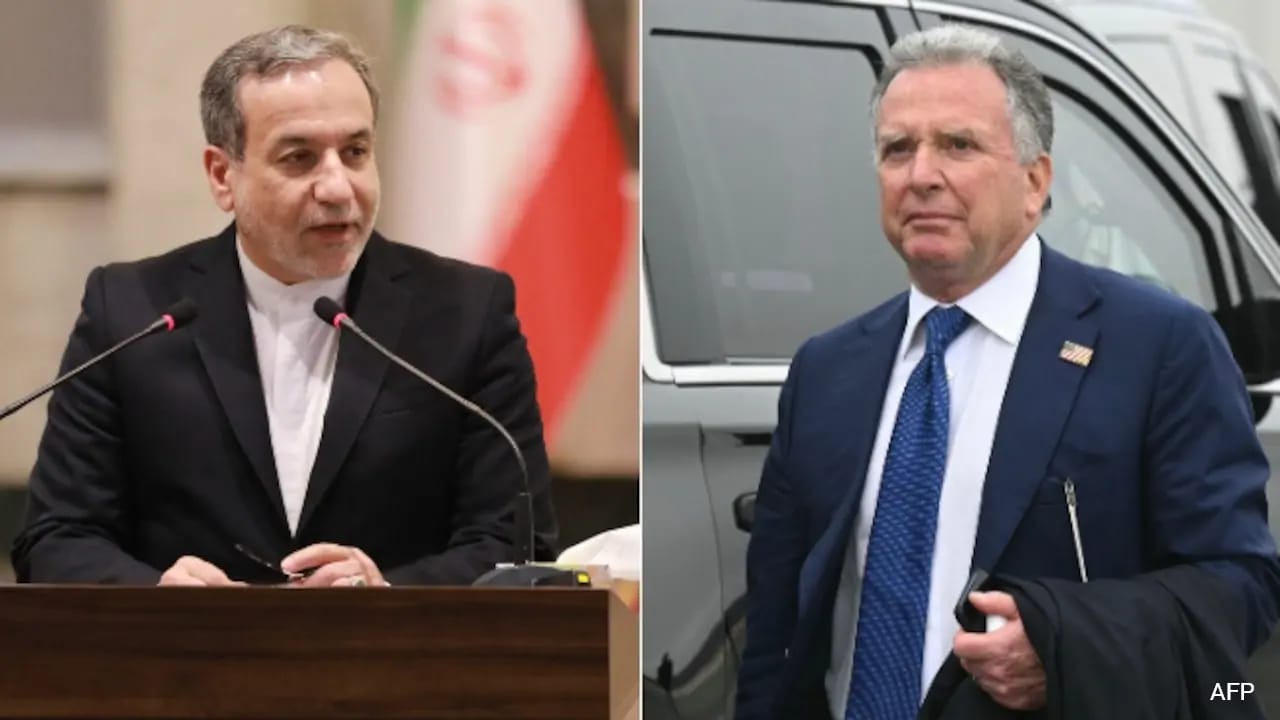
White House special envoy Steve Witkoff and presidential adviser Jared Kushner have arrived in Switzerland for high-stakes technical negotiations with Iranian Foreign Minister Abbas Araghchi. The Swiss summit follows the signing of the Islamabad Memorandum of Understanding, a 14-point framework aimed at halting the recent US-Iran conflict, reopening the blockaded Strait of Hormuz, and freezing Iranian nuclear development. While initial reports framed the Alpine meeting as a straightforward diplomatic victory lap, the reality on the ground at the Bürgenstock Resort reveals a fragile backchannel nearly derailed by intense fighting in Lebanon and fierce backroom maneuvering over sanctions and verification.
Behind the public optics of a standard diplomatic breakthrough lies a high-risk gamble. Washington is attempting to use unprecedented economic pressure to force structural changes in Tehran, while Iran is leveraging its regional influence to secure immediate economic relief. Meanwhile, you can find similar events here: Stop Trying to Fix the Punjab Congress (The Ugly Truth About Party Restructuring).
The Leverage Machine Behind the Bürgenstock Summit
The diplomatic choreography in central Switzerland represents the first direct, face-to-face technical engagement between senior American and Iranian officials after months of indirect signaling through Qatari and Pakistani mediators. The foundational document for these talks is a newly signed 14-point framework that establishes a strict 60-day window to achieve a permanent settlement.
Under the immediate terms of the agreement, the United States has agreed to grant temporary sanctions waivers for Iran's fossil fuel sector and ease the naval blockade that choked Iranian ports during the recent military escalation. In return, Iran committed to an immediate cessation of hostilities and a pause in its advanced uranium enrichment activities. To see the bigger picture, check out the detailed analysis by NBC News.
The enforcement mechanism relies on an economic countdown. The US sanctions waivers expire precisely at the end of the 60-day period unless a comprehensive treaty is finalized. By tying economic survival directly to measurable technical concessions, Washington believes it holds the definitive upper hand. Tehran, conversely, enters the room knowing that its compliance is the only path to halting a catastrophic domestic financial collapse.
The Lebanon Friction Point
The road to the Bürgenstock Resort underscores how tightly these bilateral negotiations are bound to the broader Middle East conflict. The technical talks were initially scheduled to begin sooner but were abruptly postponed when a spike in regional hostilities threatened to collapse the framework before it even started.
Iranian officials initially refused to travel to Switzerland, delivering a blunt ultimatum that discussions could not proceed while intensive military strikes continued against their regional proxies. The standoff forced a flurry of frantic, late-night communications between Washington, Jerusalem, and Beirut to stabilize a localized ceasefire.
This friction highlights a fundamental structural vulnerability in the current negotiations. While the talks focus heavily on the nuclear ledger and maritime freedom in the Strait of Hormuz, the operational reality is hostage to non-state actors and regional frontline commanders. A single miscalculated missile strike outside of Switzerland can instantly freeze the diplomatic track inside the resort.
Reopening the Strait of Hormuz
For the international community, the primary focus of the Switzerland summit is not the abstract mechanics of centrifuge counts, but the immediate normalization of global energy corridors. The recent conflict saw a near-total shutdown of shipping through the Strait of Hormuz, a maritime choke point responsible for the transit of roughly one-fifth of the world’s petroleum.
The initial technical working groups are tasked with establishing a joint maritime de-escalation protocol.
[Strait of Hormuz Shipping Corridors]
       │
       ├──► US Naval Patrol Zones (External Perimeter)
       │
       └──► Iranian Revolutionary Guard Maritime Limits
The goal is to transition from a hot naval blockade to a monitored, predictable transit system. The process is fraught with operational distrust. American negotiators are demanding verifiable guarantees that commercial tankers will not face harassment, while Iranian representatives are insisting that Western naval assets pull back from the immediate perimeter of Iranian territorial waters.
The economic stakes prevent either side from walking away. The shipping freeze caused sharp spikes in global energy markets and strained supply chains across Europe and Asia. For the US administration, securing the permanent reopening of the strait is an essential economic priority that anchors the domestic political narrative of peace through strength.
The Verification Dilemma
The most contentious sub-text of the 60-day negotiation window is the verification of Iran’s nuclear facilities. Recent military strikes damaged key infrastructure, and the international community remains in the dark regarding the precise status of Iran's enriched stockpiles.
Negotiators are wrestling with two conflicting approaches to verification:
| United States Demands | Iranian Demands |
|---|---|
| Immediate, unannounced IAEA inspections of all declared and undeclared military sites. | Inspections conditioned on the permanent, legislated removal of primary US sanctions. |
| Zero-enrichment cap above commercial energy grades with continuous remote monitoring. | Retention of domestic research capabilities for civilian medical and agricultural use. |
| Real-time inventory tracking of all specialized carbon-fiber centrifuge components. | Phased access protocols managed through a committee of neutral international observers. |
The technical teams face the daunting task of aligning these positions. The American delegation is operating under strict instructions to avoid the perceived loopholes of past agreements, insisting on intrusive, any-time access. Iran views these demands as an infringement on national sovereignty and a transparent attempt to map out military intelligence targets for future operations.
The Shadow of Past Accords
The ghost of the 2015 Joint Comprehensive Plan of Action (JCPOA) hangs heavily over the Swiss resort. Domestic critics in Washington argue that any new framework risks offering premature economic lifelines to a hostile government without securing permanent structural changes. They point to the immediate relief of fossil fuel sanctions as an unnecessary concession that forfeits critical leverage.
Conversely, regional analysts note that the current geopolitical environment is vastly different from a decade ago. Tehran is negotiating under the pressure of severe domestic economic strain and direct military damage, forcing a pragmatism that was absent in earlier rounds of diplomacy. The current strategy relies on rapid, transactional milestones rather than a broad, trust-based grand bargain.
The next 60 days will determine whether this aggressive, high-pressure diplomacy can produce a durable security architecture or if the Bürgenstock summit is merely a brief pause before a renewed, more volatile phase of regional escalation. The technical teams are in their seats, the economic clocks are ticking, and the margins for error have vanished.