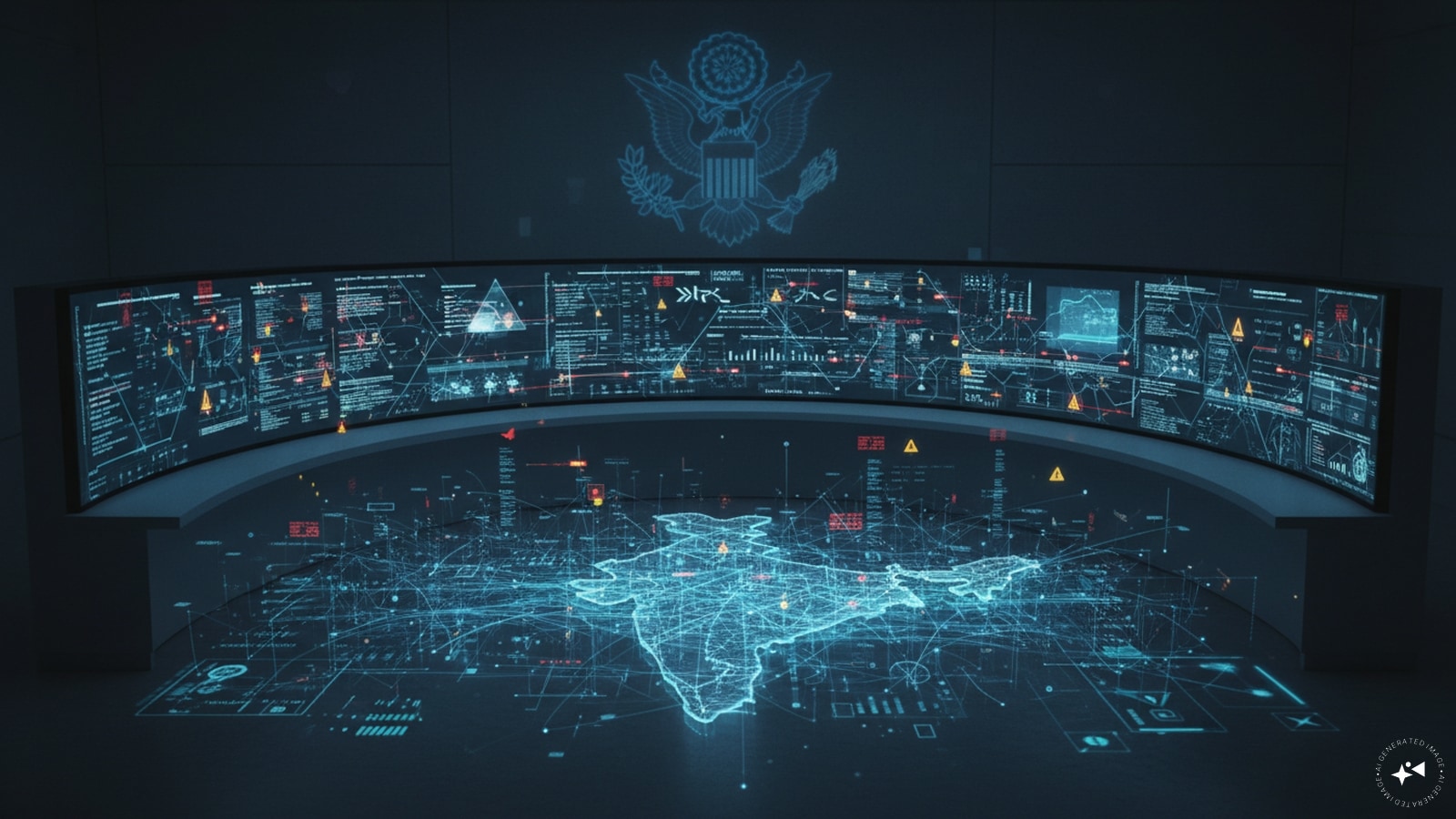
For over fifteen years, a cottage industry of commercial cyber espionage has operated out of New Delhi with industrial efficiency, systematically picking apart the digital defenses of American private equity firms, pharmaceutical giants, and over a thousand attorneys. The operation is no longer hidden behind anonymous handles or masked proxy servers. A bipartisan group of United States lawmakers, led by Senators Ron Wyden and Sheldon Whitehouse alongside Representative Pat Harrigan, has formally petitioned Commerce Secretary Howard Lutnick to place three India-based entities—Sunkissed Organic Farms (formerly known as Appin Technology), BellTroX, and CyberRoot—onto the Department’s restrictive Entity List.
The move attempts to choke off these firms' access to American cloud infrastructure, software licenses, and cybersecurity tools. Yet, the bureaucratic designation merely scratches the surface of a far more disturbing reality. This is not an isolated story of foreign data theft. It is a cautionary tale about how the commercialization of offensive cyber capabilities has weaponized foreign legal systems against American free expression, converting the open internet into a playground for transnational mercenaries.
The Architecture of Industrial Cyber Espionage
The blueprint of modern commercial espionage relies on a simple economic truth. Building an advanced, state-sponsored cyber warfare unit requires billions of dollars and decades of infrastructural investment. Renting one out costs a fraction of that, and the market is saturated with talent.
Firms like Appin started decades ago as legitimate IT training centers in India before mutating into incubators for mercenary hackers. Over time, their alumni network bled out into specialized boutique firms like BellTroX and CyberRoot. These operations function like modern corporate entities. They maintain payrolls, manage client rosters, and pitch services to the highest bidder.
The targets identified in the congressional push reveal a chilling strategic focus. These syndicates did not just steal intellectual property for financial gain. They targeted private equity firms mid-transaction, pharmaceutical laboratories developing proprietary compounds, and legal teams orchestrating complex multi-million dollar litigation. By hacking the legal counsel representing major corporate entities, these operatives gained the extraordinary ability to view litigation strategies before they were filed in court. They could see the playbook before the game even started.
Evidence uncovered by investigative researchers and security watchdogs points to a darker geopolitical patron. Portions of these hacking campaigns reportedly operated at the direct behest of foreign government actors, including elements tied to the Qatari state. Targets included figures critical of Qatar's World Cup bid and family members of prominent American lawmakers. When cyber mercenaries operate as outsourced proxies for sovereign wealth, the traditional lines between criminal enterprise and state-backed intelligence gathering blur into nonexistence.
The Weaponization of Global Lawfare
What separates these modern Indian cyber syndicates from traditional threat actors is their aggressive use of cross-border legal systems to suppress public scrutiny. Data theft is only the first phase of the operation. The second phase involves silencing the journalists and researchers who expose it.
Following landmark investigative reports by media outlets and civil society groups detailing the hack-for-hire ecosystem, these firms did not simply absorb the negative PR. They launched a coordinated campaign of transnational litigation. Using foreign courts, particularly in jurisdictions where defamation and privacy laws favor plaintiffs, these entities secured sweeping injunctions.
At one point, a court order forced a global takedown of investigative reporting concerning their operations, effectively scrubbing public databases of information vital to American security. Simultaneously, these companies initiated sprawling legal battles against Silicon Valley giants and media institutions, including Google, Meta, Microsoft, and major magazine publishers.
This is corporate lawfare at scale. By forcing Western technology and publishing companies into protracted legal defense cycles across multiple continents, the hackers imposed an invisible tax on truth. The goal was never necessarily to win every courtroom battle. The objective was to bleed the opposition dry of legal resources, deter future investigations, and keep the American public blind to ongoing threats against their digital infrastructure.
The Limits of Bureaucratic Sanctions
Placing Sunkissed Organic, BellTroX, and CyberRoot on the Commerce Department's Entity List is a necessary tactical strike, but it remains an incomplete remedy.
Bureaucratic blacklists assume that commercial entities rely permanently on Western software stacks and direct corporate registration in target markets. In reality, modern mercenary networks are structurally fluid. When one shell company faces severe regulatory friction, its operators simply dissolve the corporate entity, spin up a new registration under a different name, and pivot their infrastructure to decentralized or non-Western cloud providers.
The structural flaw lies in the globalized nature of technical talent. The individuals writing the exploit scripts and executing phishing campaigns against American law firms are highly skilled engineers operating within jurisdictions where local law enforcement has historically shown little appetite for prosecuting domestic companies that target foreign adversaries. Unless Washington pairs trade restrictions with aggressive international law enforcement cooperation and direct diplomatic pressure on New Delhi, blacklisting a handful of corporate names will only prompt a game of technological whack-a-mole.
The lawmakers' letter to the Commerce Department lays bare a fundamental vulnerability in the American digital ecosystem. For decades, the United States treated cyber security as a technical problem solvable by firewalls, endpoint detection, and encryption. The rise of the Indian hack-for-hire market proves it is an economic and legal problem. As long as there are wealthy clients willing to pay for stolen litigation strategies, and as long as foreign courts can be leveraged to gag American journalists, the market for outsourced espionage will continue to thrive in the shadows.