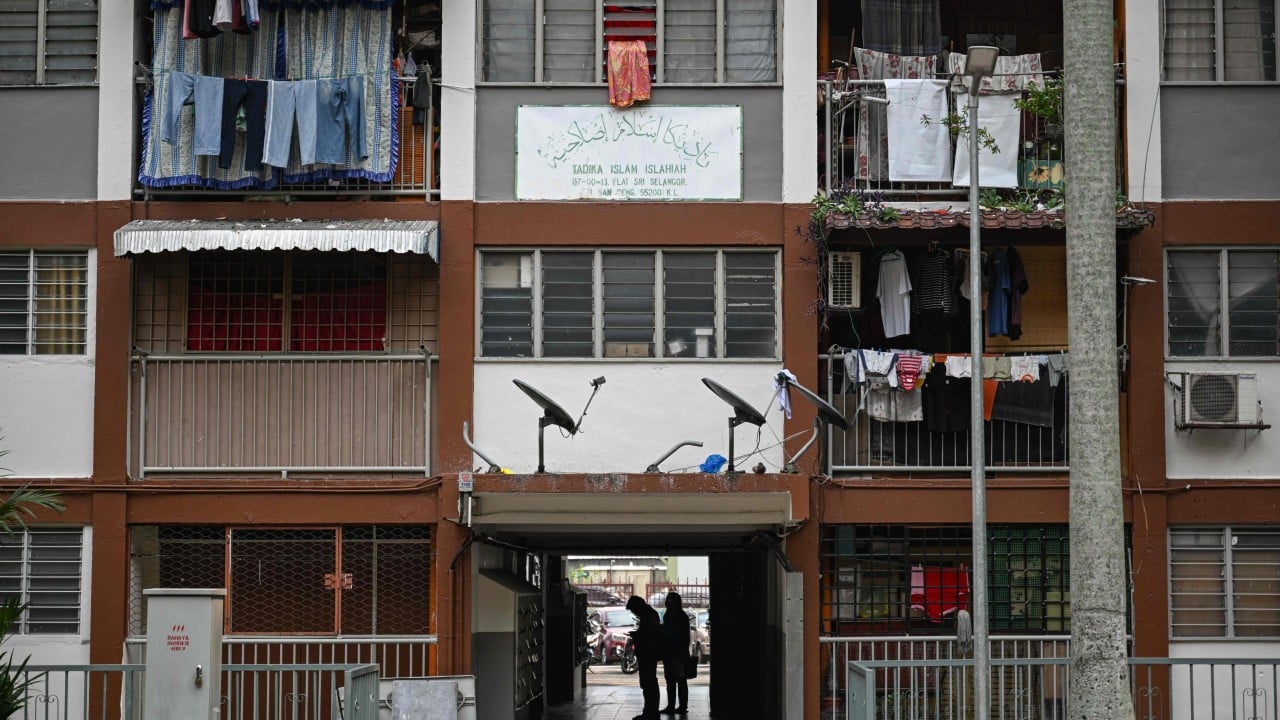
Walk through the outlying districts of Kuala Lumpur, the eastern seaboard of Thailand, or the sprawling outskirts of Jakarta after sunset, and you will witness a quiet, concrete contradiction. Tower after tower rises into the humid night, their glass facades gleaming, yet whole floors remain pitch black. Southeast Asia is currently trapped in a severe housing paradox where millions of newly constructed apartments sit empty while millions of young working families cannot afford a roof over their heads. This is not a simple failure of supply and demand; it is the inevitable result of a regional economic model that treats residential real estate as a speculative financial asset rather than basic shelter.
For two decades, property developers across ASEAN nations built almost exclusively for the top tier of domestic earners and waves of foreign investors. They chased higher profit margins on luxury condominiums while ignoring the massive demographic bulge of middle- and lower-income households entering their prime home-buying years. Today, the bill for that short-sightedness has arrived. Elevated interest rates, stagnant real wages, and tightening household credit have dried up the speculative buyer pool, leaving builders sitting on mountains of unsold luxury inventory while an acute shortage of affordable starter homes worsens by the month. If you found value in this post, you might want to read: this related article.
The Structural Mismatch Behind the Concrete Glut
To understand how an entire region managed to overbuild and under-supply at the exact same time, you have to look at the balance sheets of major Southeast Asian developers. Land acquisition costs in primary metropolitan areas like Bangkok, Manila, and Ho Chi Minh City surged dramatically throughout the 2010s. Once a developer pays top dollar for a prime urban parcel, the math becomes unforgiving. Building mass-market housing with thin margins ceases to make financial sense when land costs eat up forty percent of the project budget.
To protect their returns on equity, developers pivoted upward. They packed high-rise developments with resort-style infinity pools, sky lounges, and concierge lobbies, slapping "luxury" labels on shoebox-sized units to justify premium price-per-square-foot valuations. In Kuala Lumpur and Johor Bahru, this dynamic reached extreme proportions, resulting in tens of thousands of completed, unsold residential units—a phenomenon local regulators officially track as the property overhang. For another look on this story, refer to the latest coverage from Business Insider.
Consider a hypothetical example of how this distortion plays out on the ground. Imagine a mid-sized developer acquiring a transit-adjacent plot outside Bangkok. To satisfy institutional lenders and hit a target internal rate of return, the firm prices its one-bedroom units at the equivalent of $180,000. Meanwhile, the median household income in the surrounding district hovers around $18,000 a year. Even with zero down payment, a local family would need to spend well over half their gross monthly income just to service the mortgage, breaching standard debt-service ratio limits enforced by commercial banks. The developer built for a buyer who barely exists in the local economy, banking on cross-border capital from mainland China, Singapore, or Hong Kong to absorb the excess.
When pandemic border closures halted international property tours and Beijing subsequently tightened capital outflows to stabilize its own domestic property sector, that external demand evaporated overnight. What remained was a fractured market: an ocean of high-priced, investor-grade concrete that locals cannot buy, paired with a desperate scarcity of reasonably priced family homes near employment centers.
Why Mortgage Rejections Keep Rising Despite Empty Towers
A common misconception among casual observers is that falling property prices will naturally clear this backlog. In reality, prices in Southeast Asia rarely crash in nominal terms; they stagnate while inflation slowly erodes their real value. Developers prefer to offer hidden incentives—waived legal fees, free interior furnishing packages, or temporary mortgage subsidies—rather than slash sticker prices, because publicly discounting units triggers defaults among earlier buyers and forces banks to revalue collateral across the developer's entire loan portfolio.
Even where discounts appear, the banking sector acts as a rigid gatekeeper. Following the painful lessons of the 1997 Asian Financial Crisis, central banks across Thailand, Malaysia, Indonesia, and the Philippines enforce strict macroprudential lending rules. Commercial lenders scrutinize debt-to-income ratios with ruthless precision.
The Informal Economy Penalty
Millions of workers across Southeast Asia earn their living in the informal or gig economy—running small family trading businesses, driving for ride-hailing platforms, or working on short-term freelance contracts. While their actual cash flow may be sufficient to cover a monthly housing payment, their lack of standardized payslips, formal tax filings, and provident fund contributions makes them virtually invisible to traditional underwriting algorithms.
Banks routinely reject these applicants. In markets like Thailand and Malaysia, loan rejection rates for affordable and mid-market housing applications have climbed stubbornly high, sometimes exceeding forty percent for lower-income brackets. High household debt is the other half of this vise. Thailand, for instance, carries one of the highest household debt-to-GDP ratios in emerging Asia, hovering around ninety percent. When a young couple is already servicing an auto loan—often a necessity given patchy public transit outside city cores—and carrying personal credit balances, a mortgage approval becomes mathematically impossible.
The Geopolitical Mirage of Foreign Buyer Bailouts
Whenever domestic sales slump, industry lobbyists reliably call on governments to loosen foreign ownership restrictions. They argue that lowering minimum price thresholds for overseas buyers or expanding long-term residency visas will quickly clear unsold inventory.
We have seen this playbook repeatedly. Malaysia revised its Malaysia My Second Home program rules, Thailand debated extending foreign leasehold terms to ninety-nine years, and Vietnam cautiously eased rules around foreign condo ownership quotas. Yet relying on foreign wealth to solve a domestic inventory glut is a mirage.
Foreign buyers are overwhelmingly interested in a narrow slice of the market: branded residences in central business districts or beachfront resort properties with strong short-term rental potential. They do not buy thirty-square-meter apartments in suburban industrial corridors twenty miles outside Manila or Jakarta, which is precisely where the bulk of the unsold inventory sits. Worse, aggressive courting of foreign capital often inflates land values in secondary neighborhoods, pricing out local builders who might otherwise construct workforce housing. It treats the symptom of developer illiquidity while deepening the disease of local unaffordability.
The Urban Sprawl Tax on Working Families
Because affordable housing cannot pencil out inside urban cores, working families are pushed farther and farther toward the metropolitan periphery. Subdivisions of landed terrace houses spring up on former agricultural land forty or fifty kilometers from city centers. On paper, these homes look like a victory for affordability. In practice, they impose a crushing hidden tax on the people who live in them.
Commuting Costs Eat the Savings
A family moving to the outer fringes of Greater Jakarta or Metro Manila might save thirty percent on their monthly mortgage compared to renting closer to the city. However, they immediately surrender those savings in transportation costs and lost time. Inadequate mass transit networks force commuters onto congested toll roads via motorcycles or aging private cars. Spending three to four hours a day in gridlock drains household budgets through fuel expenses, vehicle maintenance, and toll fees, while eroding productivity and family life.
Municipal governments face an equally steep bill. Extending water pipes, sewage treatment, electrical grids, and reliable internet infrastructure across sprawling, low-density suburban developments costs vastly more per capita than upgrading infrastructure in compact urban neighborhoods. Local authorities rarely have the tax base to maintain these sprawling networks, leading to chronic flooding, brownouts, and deteriorating roads within a decade of construction.
How Policy Failures Distort Land Supply
Governments across the region are hardly passive bystanders; they routinely announce ambitious public housing targets and subsidized loan schemes. Yet state interventions frequently misfire because they target demand rather than fixing broken supply mechanisms.
Subsidizing mortgage interest rates or offering government-backed down-payment grants without increasing the physical supply of well-located, low-cost homes simply bids up prices. Sellers and builders capture the subsidy, leaving buyers no better off. Meanwhile, vast tracts of prime urban land sit idle, hoarded by state-owned enterprises, military conglomerates, and legacy family dynasties that face negligible holding costs.
Property taxes in most Southeast Asian countries remain remarkably low by global standards. Without meaningful vacant-land taxes or progressive levies on multiple investment properties, wealthy landowners have zero financial incentive to sell or develop underutilized urban parcels. They can afford to sit on prime real estate for decades, waiting for a luxury developer to meet their price. At the same time, fragmented zoning laws and archaic building codes restrict density around newly built mass-transit stations, preventing the construction of compact, mid-rise apartment blocks that could house thousands of workers within walking distance of train lines.
Breaking the Deadlock Requires Painful Reform
Solving Southeast Asia's housing paradox demands dismantling the incentives that reward speculative overbuilding. No single policy lever will fix a distortion twenty years in the making, and every genuine reform carries political friction.
First, municipal authorities must overhaul land taxation. Implementing steep, escalating taxes on vacant urban land and unoccupied residential units forces hoarders and developers to either bring properties to market at realistic clearing prices or sell the land to builders who will. Speculation thrives when holding empty concrete is cheap; make vacancy expensive, and market prices will rapidly adjust to local incomes.
Second, urban planners need to unlock density where infrastructure already exists. Upzoning neighborhoods within an eight-hundred-meter radius of commuter rail and subway stations—paired with strict inclusionary zoning mandates requiring at least twenty-five percent of new floor area to be priced for median-income earners—can bring working families back into the city. Developers will resist mandatory quotas, arguing they erode project viability, yet high-density transit hubs offer the foot traffic and land efficiency that make mixed-income developments profitable over the long haul.
Third, financial regulators must modernize credit underwriting. Commercial banks cannot continue treating a digital-era workforce with nineteenth-century paperwork requirements. Integrating alternative credit scoring—using verified utility payments, digital wallet transaction histories, and e-commerce cash flows—allows lenders to accurately assess risk for informal workers without abandoning prudent lending standards. Paired with shared-equity mortgage models, where housing finance agencies co-invest in the down payment in exchange for a share of future appreciation, millions of creditworthy families could finally cross the threshold into homeownership.
Until policymakers confront the reality that housing cannot simultaneously serve as an endlessly appreciating speculative asset and an affordable basic need, Southeast Asia's skylines will continue to grow taller, darker, and emptier at night while the people who actually build and run these cities remain locked out at street level.