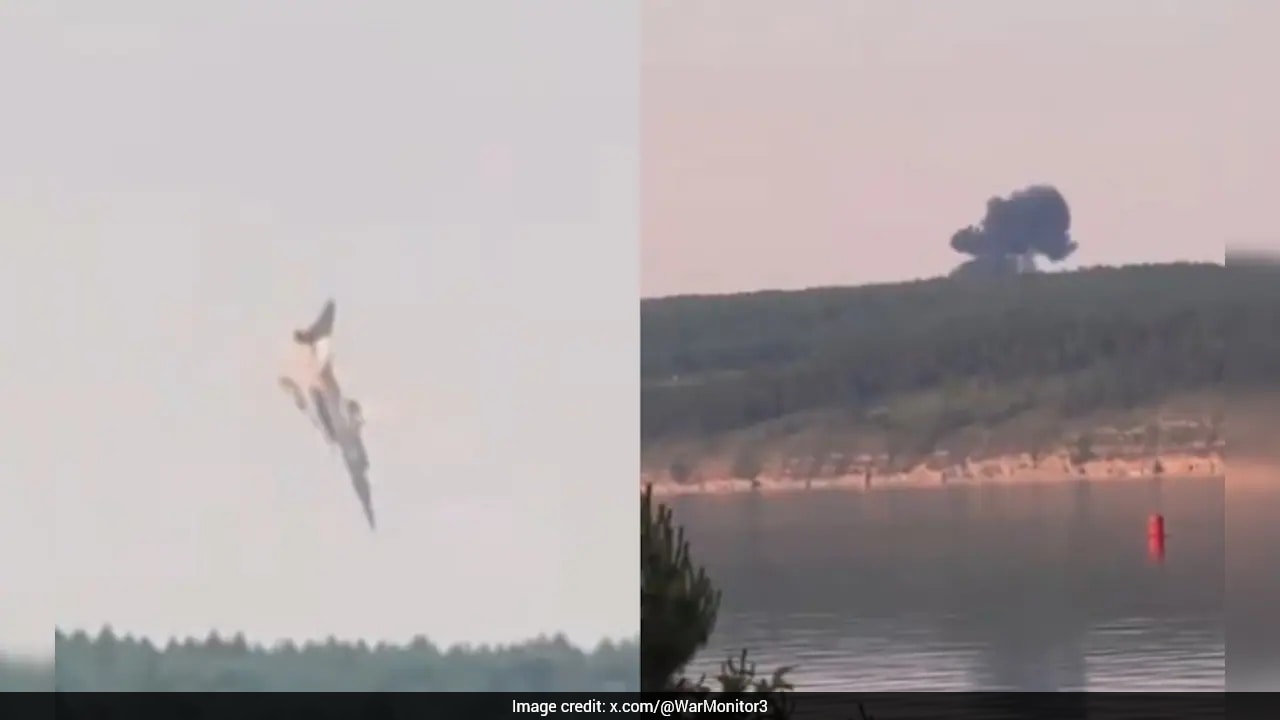
The catastrophic descent of a Tupolev Tu-22M3 strategic bomber into the thick forests of Siberia’s Irkutsk region exposes a deep systemic vulnerability within Russia’s long-range aviation fleet. On June 15, 2026, the supersonic missile carrier nosedived near the village of Kamenka while attempting a landing approach. While the four-person crew managed to eject with non-life-threatening injuries, the loss of this dual-capable nuclear platform is not an isolated training mishap. It is the latest symptom of an unsustainable operational tempo grinding down aging, irreplaceable Soviet-era airframes that Moscow cannot replicate under modern sanctions.
A string of recent crashes indicates that technical failure is rapidly outpacing Russia's ability to maintain its frontline bombers. In April 2025, another Tu-22M3 disintegrated over the Irkutsk region under near-identical circumstances. Before that, a mechanical failure claimed an airframe in August 2024. When combined with combat losses, including a historic midair downing by Ukrainian S-200 air defenses in April 2024, the Russian Aerospace Forces are burning through their heavy strike capacity at a rate that threatens the core of their strategic deterrence.
The Cold Math of Metal Fatigue
The Tu-22M3, known by NATO as the Backfire-C, relies on technology finalized in the late 1970s and early 1980s. It is a variable-sweep wing aircraft. This design introduces enormous mechanical complexity. Heavy pivot mechanisms allow the wings to sweep backward for Mach 2.2 dashes or forward for low-speed landings, but these structures are subjected to immense physical stress over decades of flight operations.
Preliminary data from the Irkutsk crash points directly to engine malfunction. The bomber is powered by twin Kuznetsov NK-25 turbofans, complex pieces of engineering designed to output up to 55,000 pounds of thrust each with afterburners engaged. These engines are no longer in serial production. The maintenance pipeline relies on overhauling existing, decades-old components or cannibalizing parts from retired hulls.
When an airforce forces heavy strategic bombers to fly frequent, high-stress operational routes and rapid turnaround training cycles, metallurgy wins out over propaganda. Over time, micro-fractures develop in turbine blades and structural spars. Without advanced non-destructive testing and an abundance of pristine replacement parts, those microscopic flaws expand. During a high-power phase like an airfield approach, a fractured turbine blade can cause catastrophic uncontained engine failure, severing hydraulic lines and turning a 120-ton bomber into an unguided lawndart within seconds.
The Sanctions Bottleneck
Moscow has frequently touted modernization programs, such as the Tu-22M3M standard, which promises upgraded avionics, digital communications, and compatibility with the latest Kh-32 cruise missiles. However, retrofitting an existing hull with new digital screens does nothing to fix a crystallized wing spar or worn internal plumbing.
The defense industrial base faces an insurmountable bottleneck due to international sanctions. Modern electronics, radar components, and specialized tooling required to maintain advanced supersonic aircraft require western-made machine tools and semiconductors that are now tightly restricted. While smuggling networks and dual-use components from allied nations keep assembly lines moving for smaller drones and standard missiles, they cannot easily replicate the high-performance metallurgy needed for strategic bomber engines.
The Logistics of Exhaustion
Belaya airbase, located roughly 50 kilometers from the crash site, hosts the 220th Heavy Bomber Aviation Regiment. This base is a vital hub for long-range strikes, housing both Tu-22M3 and Tu-95 fleets. It has also become a clear target. In the summer of 2025, Belaya was hit during a massive Ukrainian drone offensive known as Operation Spider Web.
The pressure on these bases is immense. Ground crews must work under constant threat of drone strikes while trying to accelerate maintenance turnarounds to support ongoing operations. When specialized technicians are exhausted and spare parts are rationed, routine inspections get compressed. A safety check that should take twelve hours is condensed into four. Minor fluid leaks are ignored, and questionable vibration readings in the engine nacelles are logged as acceptable risks.
The Strategic Void
Russia cannot build a new Tu-22M3 from scratch. The tooling is gone, the specialized factories have been repurposed, and the technical knowledge has faded. Every hull that hits the ground reduces the total inventory permanently.
Experts estimate that Russia started its recent military campaigns with roughly 60 operational Tu-22M3 bombers. Between active combat losses, Ukrainian drone strikes on airfields, and a relentless cycle of maintenance-induced accidents, that number has contracted significantly.
The remaining fleet must carry a heavier operational load to compensate for fewer available airframes. This creates a classic death spiral for military aviation. Fewer planes fly more hours, accelerating metal fatigue across the surviving inventory, which inevitably leads to more mechanical failures and more crashes. The plume of black smoke rising over the Angara River is not just the remains of a single bomber; it is the visible degradation of an empire's ability to project strategic power.



/this-little-piggie----157402234-5c8badbac9e77c0001ac181f.jpg)