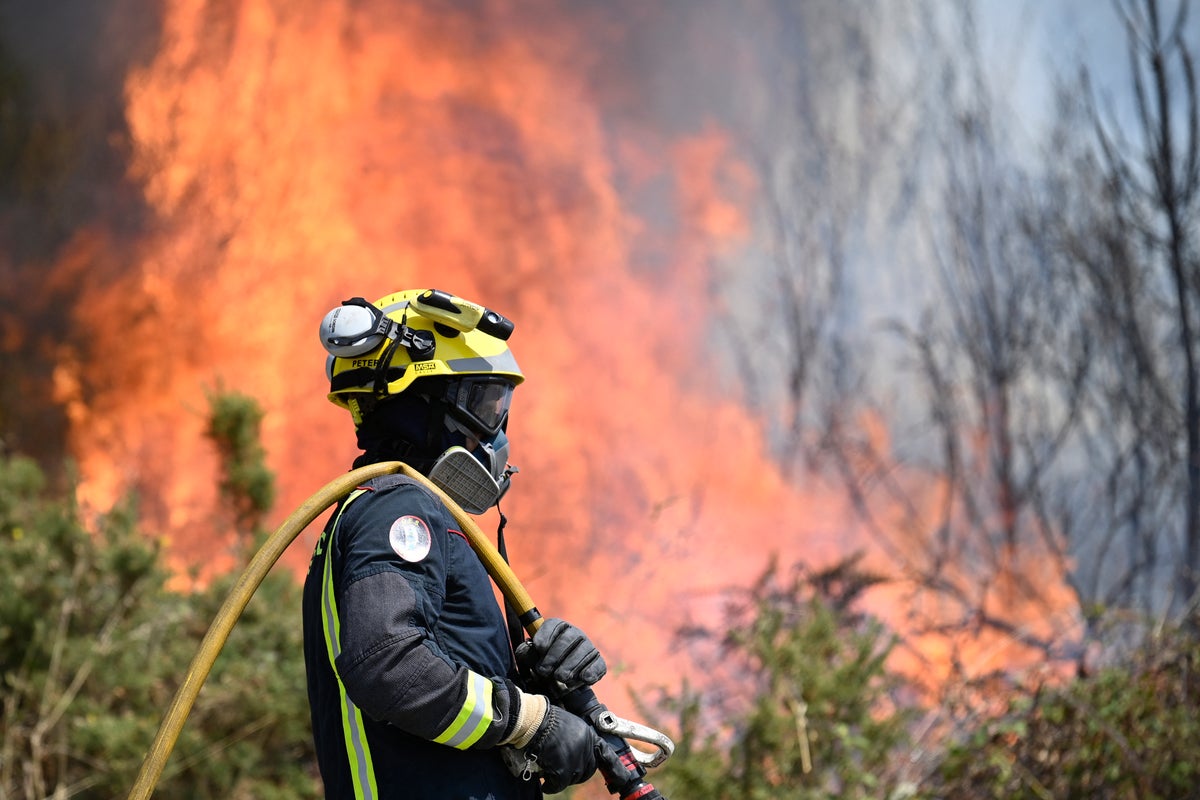
Spain is burning, and high-tech suppression tools are proving remarkably ineffective at stopping the tide. Every summer, wildfire season sweeps across Southern Europe, torching hundreds of thousands of hectares, gutting villages, and forcing emergency evacuations. Yet the most effective countermeasure taking root in the Iberian countryside isn't a satellite monitoring network or a fleet of multi-million-dollar water bombers. It is a rare, nimble breed of mountain cattle capable of scaling vertical cliffs and consuming dense, flammable scrubland like goats.
For decades, European environmental policy prioritized fire suppression over vegetation management. The logic seemed sound on paper: detect blazes quickly, deploy heavy equipment, and extinguish the flames before they spread. But this approach created a catastrophic ecological feedback loop. By suppressing minor blazes without clearing the underlying underbrush, governments allowed decades of dry vegetation to accumulate across depopulated rural zones. When an ignition event inevitably occurs during record-breaking heatwaves, the result is an uncontainable inferno that bypasses traditional firebreaks entirely.
The Rural Abandonment Crisis Behind the Burning Hillsides
To understand why traditional firebreaks fail, one must examine the demographic collapse of rural Spain over the last half-century. Between 1960 and 2020, millions of Spaniards migrated from interior agricultural regions to coastal urban centers. Entire mountain villages emptied.
With the departure of rural populations went the traditional livestock systems that kept hillsides clear. Goats, sheep, and native cattle had historically grazed these pastures down to the dirt, effectively creating vast networks of natural fuel breaks. When the livestock vanished, fast-growing Mediterranean brush filled the void. Scrub oak, gorse, and dense brambles invaded abandoned orchards and terraced fields, turning millions of acres into open-air powder kegs.
Modern heavy machinery cannot solve this problem on steep terrain. Bulldozers and mechanical brush cutters are limited by slope gradients, fuel costs, and environmental regulations that prohibit heavy vehicles on fragile soils. Mechanical clearing costs upwards of 2,000 euros per hectare, making regional maintenance budgets mathematically impossible to sustain across millions of vulnerable acres.
How a Specialized Breed Redefines Vegetation Control
This economic and logistical wall forced regional managers in Northern and Central Spain to re-evaluate native livestock systems. Conventional commercial cattle are ill-suited for fuel reduction on rugged terrain. Heavy beef breeds like the Limousin or Charolais require flat pasture, flat water access, and high-protein feeds. They refuse to climb rocky slopes and reject tough, woody vegetation in favor of soft grass.
Enter native mountain breeds like the Pasiega and the Tudanca. These animals evolved over centuries in steep, nutrient-poor alpine environments.
Physically, these cattle behave more like mountain goats than standard dairy cows. They possess light bones, exceptionally strong hooves, and a center of gravity optimized for vertical ascents. More importantly, their digestive systems handle fibrous, low-nutrient woody biomass that standard cattle reject. Where a standard beef cow starves, these mountain breeds thrive, stripping down dense stands of combustible brush down to safe ground levels.
The Economics of Living Firebreaks
Using livestock as living firebreaks is not merely an ecological decision; it is a cold economic calculation.
A single herd of fifty specialized mountain cattle can clear up to three hectares of dense underbrush per week during peak grazing season. The operational cost of managing that herd—including shepherd stipends, veterinary oversight, and mobile fencing—amounts to a fraction of mechanical clearing methods. Regional forestry departments in Catalonia, Andalusia, and Cantabria have begun contracting directly with local herders, paying them a fixed fee per hectare cleared to guarantee specific fuel reduction goals around vulnerable towns.
- Mechanical brush clearing: 1,500 to 2,500 euros per hectare.
- Heavy machinery maintenance on rocky terrain: High risk of equipment failure and soil compaction.
- Targeted livestock grazing: 300 to 600 euros per hectare, with added economic return from meat sales and wool production.
However, scaling this solution faces structural obstacles within European policy frameworks. The European Union's Common Agricultural Policy has historically tied subsidies to crop yield and herd weight rather than environmental service provision. Farmers raising native, low-weight breeds on scrubland frequently received lower subsidy payouts than factory-farming operations, actively disincentivizing the very practice needed to save rural areas from seasonal destruction.
Strategic Limitations and the Reality on the Ground
Grazing is not a universal solution for every ecosystem. Overgrazing can cause serious soil erosion on fragile granite slopes, while improper herd management can wipe out protected native plant species alongside flammable brush.
Furthermore, livestock cannot operate during active, high-intensity fires. They are a preventative measure designed to lower fuel loads before the summer dry season hits, reducing flame height and spread speed so ground crews can safely intervene. Expecting a herd of cattle to arrest an active crown fire in forty-knot winds is a dangerous misconception.
The success of this strategy relies on precise rotational grazing plans developed by forestry engineers alongside traditional shepherds. GPS collars and virtual fencing technology now allow managers to map exact target corridors, holding animals in high-risk zones until fuel density drops below critical fire-transmission thresholds before moving them to the next sector.
Rebuilding these herds takes time, and the window to prepare interior Spain for intensifying summer droughts is closing rapidly. Without direct reform to agricultural subsidies and a renewed investment in young pastoralists, millions of hectares will remain vulnerable to catastrophic fires that no fleet of aircraft can put out.