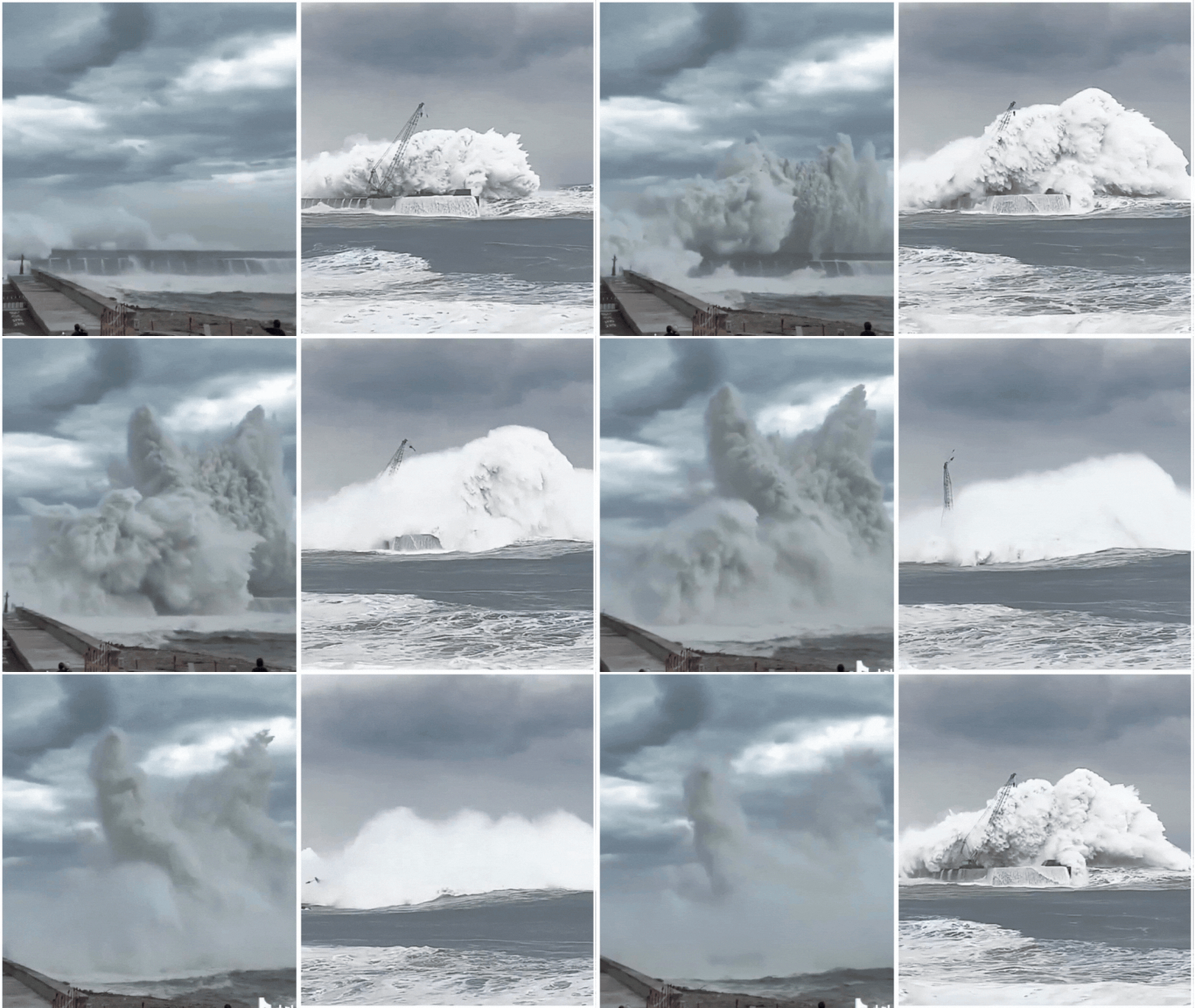
When Typhoon Champi slammed into Taiwan, the viral footage of towering walls of water smashing against coastal seawalls told a dramatic story, leaving over 500 people injured and claiming one life. Yet looking strictly at the casualty figures misses the real engineering and emergency management story unfolding on the ground. In a region routinely battered by some of the planet's most violent tropical cyclones, keeping fatalities to a single digit during a major system with widespread coastal inundation is not luck. It is the direct result of decades of aggressive infrastructure hardening, strict evacuation protocols, and lessons paid for in blood during past disasters.
To understand what happened when Typhoon Champi made its presence felt, you have to look beyond the sensational clips of waves breaching concrete barriers along the eastern coastline. Media coverage naturally gravitates toward kinetic destruction. A thirty-foot swell obliterating a coastal road makes for compelling television, while a functioning storm drain or a preemptively evacuated mountain village generates zero clicks.
The Anatomy of a Modern Typhoon Strike
Taiwan sits directly in the primary breeding ground and transit corridor of the Western Pacific typhoon basin. Warm ocean currents, specifically the Kuroshio Current running northward along the island's eastern flank, act as high-octane fuel for developing tropical systems. When a storm like Typhoon Champi tracks toward the island, it encounters a unique geographical barrier that fundamentally alters its behavior and concentrates its destructive energy.
The Central Mountain Range runs like a jagged spine down the length of Taiwan, featuring dozens of peaks exceeding 3,000 meters. This topography acts as a massive meteorological wall. As the cyclonic winds of Typhoon Champi slammed into these steep slopes, the air was forced rapidly upward, cooling and condensing at extreme rates. This orographic lift turns a wind event into a catastrophic rainfall machine within hours.
Meanwhile, along the coast, the interaction between the storm's low-pressure center and the ocean surface generates a deadly combination of wind-driven waves and storm surge. The viral videos of giant waves crashing into seawalls are the visible manifestation of massive kinetic energy transferring from the atmosphere to the ocean over hundreds of miles of open water. When that deep-water swell hits the steep, abrupt continental shelf off eastern Taiwan, the energy has nowhere to go but up.
Why Injury Counts Spike While Fatalities Drop
Seeing a headline reporting over 500 injuries alongside a single death often confuses outside observers. How does a storm hurt hundreds of people without killing dozens? The answer lies in the specific mechanics of urban typhoon impacts and how modern warning systems change human behavior.
When a typhoon warning is issued by Taiwan's Central Weather Administration, the island essentially shuts down. Schools close, financial markets halt, and employers are legally mandated to keep non-essential workers off the roads. This institutional friction keeps millions of commuters out of harm's way during the peak wind gusts.
However, human nature remains a stubborn variable in emergency management. Analysis of past Pacific typhoons consistently shows that the vast majority of non-fatal injuries occur in three specific scenarios:
- Last-minute property reinforcement: Residents climbing ladders to tape windows, secure rooftop water tanks, or clear blocked balcony drains just as outer rainbands arrive with sudden, violent gusts.
- Traffic accidents during the onset phase: Motorcyclists and scooter riders—the backbone of Taiwanese urban transit—getting caught in sudden crosswinds while trying to beat the storm home.
- Post-storm cleanup hazards: Falls from damaged roofs, lacerations from shattered glass, and electrical shocks occurring immediately after the eye passes, when people mistakenly assume the danger has entirely cleared.
Keeping the fatality count to one person amidst this chaos requires an operational playbook that leaves almost no room for administrative hesitation. Local governments execute mandatory evacuations in high-risk mudslide zones long before the first drops of rain fall, utilizing military assets to physically move reluctant residents out of vulnerable mountain townships.
The Ghost of Typhoon Morakot
You cannot analyze Taiwan's response to Typhoon Champi without understanding the trauma of August 2009. When Typhoon Morakot struck the island, it dumped nearly three meters of rain over a single weekend, triggering massive landslides that buried entire villages alive and killed nearly 700 people. The political and institutional fallout was absolute.
Morakot exposed fatal flaws in Taiwan's disaster response architecture. Agencies operated in silos, local officials waited too long to order evacuations, and infrastructure designs were based on outdated historical rainfall models that had been rendered obsolete by warming ocean temperatures.
In the wake of that catastrophe, Taiwan overhauled its entire approach to extreme weather. The government established the Central Emergency Operation Center with sweeping authority to coordinate military, police, fire, and meteorological assets under a unified command structure. They poured billions into watershed management, slope stabilization, and real-time automated sensor networks capable of detecting ground movement in remote mountain valleys before a catastrophic debris flow occurs.
When Typhoon Champi approached, that post-Morakot machinery kicked into gear automatically. The low death toll is the direct dividend of an institutional refusal to ever repeat the failures of 2009.
The Coastal Defense Dilemma
While Taiwan's inland evacuation protocols have become a global benchmark, the dramatic footage of giant waves breaching coastal defenses during Typhoon Champi highlights an escalating vulnerability that concrete alone cannot solve.
For decades, the standard engineering response to coastal erosion and storm surge in East Asia has been the deployment of massive concrete tetrapods—those interlocking, four-legged structures piled along shorelines to dissipate wave energy—backed by towering vertical seawalls. On paper, these structures are built to withstand one-in-fifty or one-in-one-hundred-year storm events.
In reality, coastal engineers are fighting a losing war against shifting baselines. Rising sea levels elevate the starting point for every storm surge, while warmer sea surface temperatures allow typhoons to undergo rapid intensification right before landfall. When a storm like Champi pushes massive swells directly against a vertical seawall, the water does not simply vanish; it shoots vertically into the air, crashing down onto coastal highways, railway lines, and low-lying communities with enough force to peel asphalt off the ground.
Furthermore, hard coastal armor creates a false sense of security. Developers build closer to the water, and municipal authorities route critical infrastructure—like the vital eastern railway corridors connecting Taipei to Hualien and Taitung—along narrow coastal ledges protected by aging concrete barriers. Every major typhoon now tests the absolute structural limits of these corridors, frequently severing rail links and isolating eastern counties for days at a time.
The Hidden Economic Toll of Survival
Surviving a typhoon with minimal loss of life is an operational triumph, yet it masks a staggering economic burden that rarely makes international headlines. Every time Taiwan activates its full typhoon defense posture, the financial meter runs into the hundreds of millions of dollars.
Shutting down an advanced industrial economy for one or two days halts manufacturing output across key supply chains. While semiconductor fabrication plants—the crown jewels of Taiwan's economy—operate with massive backup power generators, water reserves, and hardened facilities designed to ride out major storms without halting wafer production, the broader logistics network grinds to a halt.
Ports close, container ships scatter to open ocean to avoid being smashed against piers, and air cargo sits grounded. Agricultural losses in the central and southern plains routinely wipe out seasonal harvests of fruit, rice, and vegetables within hours, triggering immediate spikes in domestic food prices that linger for months.
Then comes the repair bill. Clearing millions of tons of driftwood and landslide debris from mountain highways, repairing damaged power grids, and rebuilding washed-out coastal embankments drains municipal budgets year after year. As typhoon intensity increases, Taiwan is forced to spend an ever-larger share of its infrastructure budget simply maintaining the status quo against nature's repeated assaults.
The Limits of Engineering Against Nature
The viral images from Typhoon Champi serve as a stark reminder of the physical limits of human engineering. No seawall can be built high enough to stop every wave without turning coastal towns into concrete bunkers cut off from the ocean. No drainage system can instantly absorb a meter of rain falling in twenty-four hours onto steep, saturated mountain slopes.
Taiwan's emergency planners know this. That is why the focus has steadily shifted away from trying to defeat storms purely through structural resistance toward embracing managed retreat and operational resilience.
Instead of promising citizens that concrete walls will keep their streets dry, the strategy now prioritizes getting people out of the impact zone before the water rises, hardening critical utilities so power and water can be restored within hours rather than weeks, and building redundancy into transportation networks so a single washed-out bridge does not isolate an entire region.
The story of Typhoon Champi is not found in the sensational clips of waves crashing over a breakwater, nor is it captured by a raw tally of injuries and fatalities. It lies in the quiet, relentless adaptation of an island nation that has learned how to absorb a direct hit from one of nature's most violent forces, take the punch, and keep functioning the very next morning.


