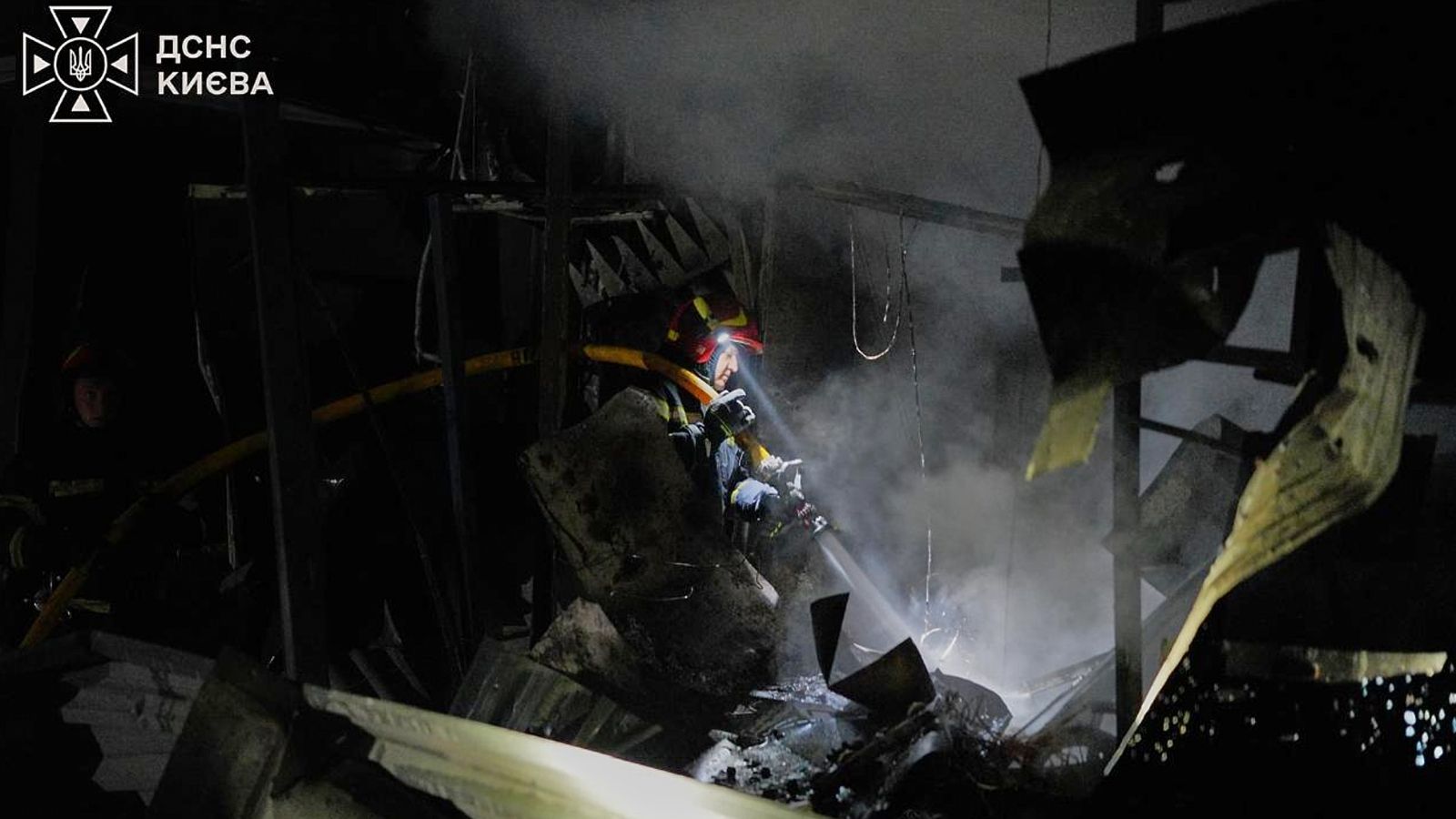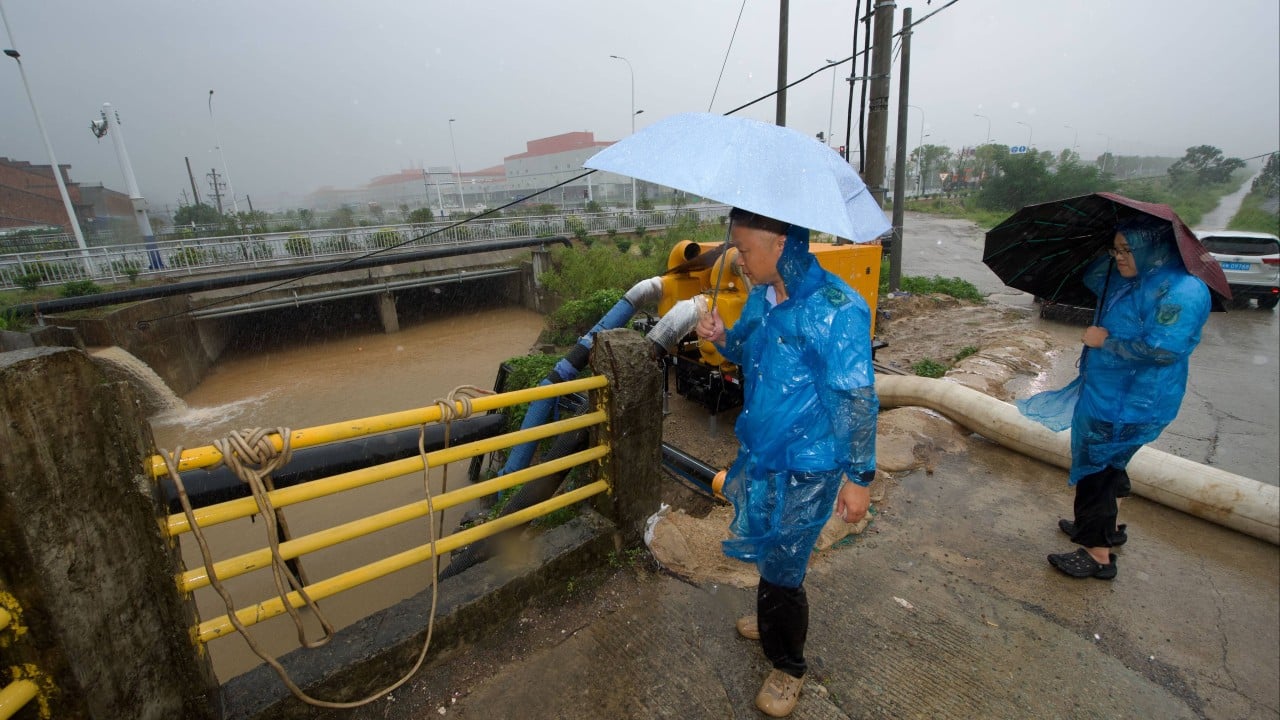
Typhoon Saudel has rewritten the playbook on atmospheric anomalies by refusing to die quietly over land. After an initial, punishing landfall along the East China coastline in Zhejiang province, conventional meteorological models predicted the customary trajectory: structural degradation, inland dissipation, and a quiet downgrade to a rain-bearing depression. Instead, the system tracked back over the warm waters of the northwestern South China Sea, staged an unexpected reintensification, and forced eastern and southern logistics hubs into a state of perpetual industrial whiplash.
This rare meteorological boomerang exposes a harsh operational reality for global trade corridors stretching from Ningbo to Shenzhen. When a storm system punches ashore, tears through industrial heartlands, and then loops back to gather strength over marine heat reservoirs, standard risk management protocols fail. Port operators, container terminal managers, and manufacturing conglomerates do not just face high winds; they face an irregular compounding of supply chain shocks that ripple outward within hours.
The Mechanics of an Anomalous Loop
To understand why Saudel's second life caught maritime authorities off guard, look at the thermodynamic profile of the South China Sea. Sea surface temperatures remain elevated through late summer, acting as an open buffet for decaying tropical cyclones. When Saudel drifted off the Guangxi and Guangdong margins, the low-level vortex managed to anchor itself over a moisture-laden marine boundary layer.
The system did not require classic vertical stacking to regenerate. Instead, a shallow core pulled energy from the water column while steering currents stalled, trapping the storm in a loop that caught regional forecasters flat-footed.
- Initial Strike: Landfall near Wenzhou brought sustained winds surpassing 150 kilometers per hour, shutting down container yards and freezing regional barge traffic.
- The Inland Dip: As the system tracked west, friction degraded the winds to tropical depression status, prompting authorities to prematurely downgrade emergency tiers.
- The Marine Rebound: Emerging back over the water southwest of Shanwei, the storm re-collected Force 8 gales, forcing an immediate reversal of reopening protocols at major southern terminals.
This trajectory violates the neat, linear paths often assumed in automated risk-assessment software. Meteorological volatility is accelerating, driven by shifting thermal baselines across maritime Asia.
The Logistics Fracture Zone
Ports like Ningbo-Zhoushan and Shanghai operate on razor-thin efficiency margins. Every hour of berth closure creates a cascading backlog that takes days to clear. When Saudel forced top-tier emergency responses, terminal operators executed textbook shutdowns. Gantry cranes locked down, empty-container yards suspended operations, and vessels scattered into open water to ride out the gale.
Yet, the true operational crisis arrived when the storm refused to dissipate on schedule. Terminal managers who prepared for a standard forty-eight-hour disruption suddenly confronted a prolonged stalemate as the regenerated system lingered offshore. Warehouses in Zhejiang and Fujian that expected to resume packing export goods found themselves stranded under red warnings for flash floods and mudslides.
Trucking networks suffered similar paralysis. Highway restrictions across southern coastal corridors cut off feeder transport between inland manufacturing plants and coastal ports. Shippers relying on just-in-time delivery models discovered that inventory buffers designed for standard typhoons were wholly inadequate for a system that hits twice from different directions.
The Cost of Climate Predictability Deficits
Insurance actuaries and maritime analysts are currently auditing the financial fallout of storms that defy historical tracks. Traditional risk pricing models rely heavily on historical climatology—the statistical probability that a storm moving along a specific latitude will behave in a predictable manner. Saudel demonstrates that historical baselines are fracturing.
When a cyclone loops back to threaten the same industrial zones twice within a single lifecycle, supply chain redundancies are tested to their breaking point. Companies utilizing single-sourcing strategies in eastern and southern manufacturing clusters experienced severe component bottlenecks. Alternative routing options through secondary ports quickly congested as vessel queues lengthened off the coast.
Mitigating these shocks requires a shift from reactive emergency management to continuous operational flexibility. Facilities that invested in elevated automated storage, independent emergency power grids, and decentralized warehousing weathered the rebound far better than those tethered to centralized coastal logistics parks.
The storm will eventually dissolve into the mainland hills for good, but the structural vulnerabilities it exposed across China's industrial littoral will take months to re-engineer.