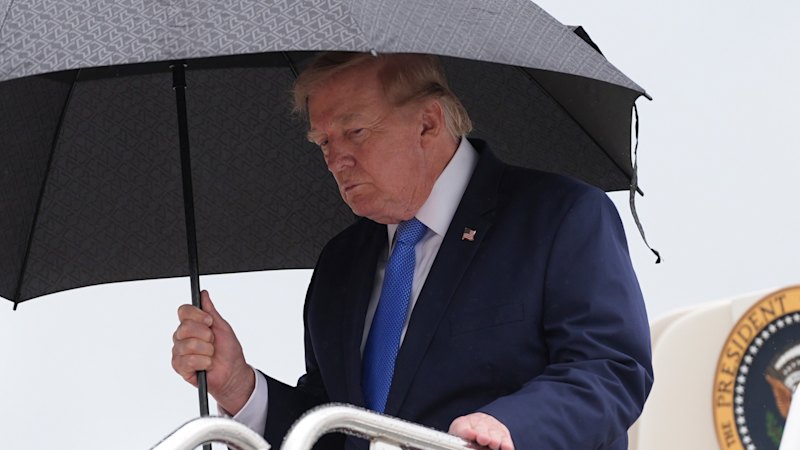
The American executive office operates on a fragile fiction. Behind the mahogany desks and the solemn pageantry lies a reality most citizens refuse to acknowledge: the presidency is largely sustained by unwritten rules, shared understandings, and a collective agreement to respect boundaries that are nowhere to be found in the constitutional text. When Donald Trump entered the White House, he did not merely break political protocols; he exposed the structural vulnerabilities of a system built on good faith rather than enforceable constraints. Analysts who view this era as an isolated anomaly miss the deeper mechanical failure. The unmaking of the presidency is an ongoing transformation of American governance, permanently altering how power is seized, wielded, and perceived.
For decades, political scientists operated under the assumption that the office molds the occupant. The gravitational pull of historical precedent, institutional expectations, and the sheer weight of executive responsibility were thought to be powerful enough to chasten even the most unconventional leader. Trump shattered that hypothesis within his first hundred days. By treating institutional norms as optional suggestions rather than mandatory guidelines, he laid bare the truth that the executive branch has accumulated an astronomical amount of unchecked authority. If a power is technically available and the political cost of abusing it can be absorbed through partisan loyalty, the guardrails effectively vanish.
The Myth of the Guardrails
Consider how structural checks are supposed to function. Congress holds the purse strings and the power of oversight. The judiciary acts as an impartial referee. The civil service provides institutional memory and administrative competence. Yet, every single one of these counterweights relies on actors within the system agreeing to play a specific role.
When an executive refuses to recognize the legitimacy of oversight, bypasses traditional clearance channels for appointments, or treats independent agencies as extensions of personal will, the traditional machinery stalls. It is a mistake to attribute this strategy to mere chaos or erratic impulse. Beneath the erratic public messaging lies a consistent operational logic. By keeping opponents constantly reacting to a barrage of unexpected moves, the administration successfully decentralized accountability. Nobody could pinpoint a single point of failure because the entire framework was intentionally flooded with noise.
To understand how this functions in practice, examine the historical expansion of executive orders and emergency declarations. Long before the Trump era, successive administrations pushed the envelope of unilateral authority. Presidents from both parties realized that working through a gridlocked legislature was inefficient. They turned pen and phone into primary instruments of governance. Trump simply took this pre-existing trajectory and accelerated it to its absolute logical extreme. He demonstrated that if you are willing to absorb short-term legal challenges for the sake of long-term policy shifts, the courts are too slow and Congress is too fractured to stop you in real-time.
The Weaponization of Distrust
A functional democracy requires a shared baseline of factual reality. When that baseline is systematically eroded, institutions lose their binding agent. The ongoing deconstruction of the presidency relied heavily on a sustained assault on objective verification. By framing career civil servants as a hostile internal faction—the administrative state—the administration inverted the traditional hierarchy of loyalty.
Loyalty to the Constitution was quietly replaced by loyalty to the individual. This shift created immense internal friction. Bureaucrats found themselves trapped between professional ethics and partisan demands. Many chose resignation or quiet resistance, which paradoxically proved the administration's narrative that the permanent government was actively working against elected leadership. This feedback loop poisoned the well of institutional trust.
As an investigative reporter who has watched administrations come and go, the most striking element of this era is how easily compliance was secured through social pressure and media amplification. Traditional gatekeepers lost their monopoly on information. The executive could communicate directly with millions, bypassing editorial filters and fact-checking mechanisms entirely. This direct pipeline altered the incentive structures of politics. Elected officials who might have once stood on principle against executive overreach calculated their survival based on audience metrics rather than constitutional duty.
The Permanent Aftermath
The damage done to the executive office goes far beyond bruised norms or historical grievances. Future occupants of the Oval Office inherit a blueprint for total institutional dominance. Once a boundary is crossed and the consequences are found to be negligible, it ceases to be a boundary. It becomes a precedent.
Consider how subsequent administrations will view the unilateral use of emergency powers or the sidelining of independent inspectors general. They will not look at these actions as forbidden territory; they will look at them as tools left on the table by their predecessors. If one side uses executive muscle to bypass legislative deadlock, the opposing side cannot afford to disarm when they regain power. This creates a ratchet effect, steadily pulling the office further away from its constitutional design and closer to an imperial model of governance.
The institutional decay is structural, systemic, and self-reinforcing. Legislative branch members have largely grown comfortable abdicating their responsibilities, preferring the safety of partisan posturing to the hard work of actual governance and oversight. Courts are increasingly forced to wade into political thickets they were never designed to navigate, damaging their own perceived neutrality in the process.
We are left staring at a transformed landscape where the presidency is no longer a stabilizing anchor of the American republic. It has been converted into a high-stakes arena of permanent campaign and personal grievance. The unmaking is complete, and the pieces cannot simply be glued back together by nostalgia or rhetorical appeals to better days. The office has been redefined by its limits, or rather, by the absence of them.