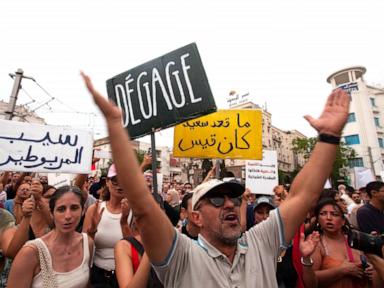
Tunisians are facing severe water and electricity shortages amid an unprecedented summer heatwave, fueling public anger and organizing a new wave of anti-government protests led by opposition groups like the Nafas movement. Temperatures soaring past 45 degrees Celsius have strained the national grid past its breaking point, resulting in rolling blackouts that leave neighborhoods dark and taps dry for days at a time. This environmental stress has collided with an entrenched political and economic crisis, transforming routine summer discomfort into a flashpoint for civic fury against President Kais Saied's administration.
The friction visible on the streets of Tunis and regional governorates is not merely the result of a hot month. It exposes decades of deferred infrastructure maintenance, structural economic stagnation, and a political ecosystem that struggles to convert official growth statistics into basic municipal reliability.
The Anatomy of a Failing Grid
When the state power company, STEG, implemented rolling outages across Tunisian cities, officials pointed to soaring air conditioning demand as the primary culprit. That explanation is technically accurate, but it papers over deeper structural failures. Tunisia's generation capacity has failed to scale alongside demographic shifts and climatic realities. Power plants operate on aging infrastructure, and transmission losses siphon away precious megawatts before they reach urban centers or agricultural hubs.
When the grid trips, the cascading effects are immediate. Water distribution networks rely entirely on electrical pumping stations. When power fails, water stops flowing. Hospitals in northern suburbs have scrambled to maintain emergency respirators for vulnerable patients during multi-hour blackouts. Poultry farms have reported devastating stock losses as ventilation systems die in the blistering heat, while corner stores watch thousands of dollars worth of inventory spoil in uncooled refrigerators.
For years, citizens in central regions grew accustomed to periodic water rationing. But when the rationing expanded to major northern cities and combined with absolute electricity blackout periods lasting hours, the threshold of public endurance was crossed.
Political Fallout and the Rise of New Opposition
The timing of these utility failures amplified their political impact. The height of the blackouts coincided with the anniversary of President Saied's consolidation of executive power. What began as spontaneous, localized roadblocks using burning tires in towns like Menzel Abderrahmane and Zaghouan quickly coalesced into broader metropolitan demonstrations.
Protesters have turned out in the capital demanding systemic accountability and chanting slogans against deteriorating purchasing power. In response, the newly formed Nafas movement has stepped into the breach. This political collective attempts a rare feat in modern Tunisian politics by bridging fragmented opposition factions and independent public figures across traditional ideological lines.
The administration's initial silence during the worst days of the heatwave worsened public sentiment. When the presidency finally addressed the crisis, the official narrative blamed outside agitators for inciting civil unrest rather than addressing the engineering and financial bottlenecks crippling utility boards. This hardline stance leaves little room for institutional reform, ensuring that public grievances remain unaddressed while the state focuses on security containment.
Economic Fragility Beneath the Surface
Macroeconomic indicators published by state offices often paint a picture of controlled inflation and modest recovery, but these metrics diverge sharply from daily survival. Remittance streams face headwinds from global conflicts, food prices remain elevated, and structural reforms addressing monopolistic market actors have stalled.
Farmers across the semi-arid interior face a devastating double blow of prolonged drought and high groundwater salinity. Without capital injection for modern desalination or efficient drip irrigation networks, agricultural yields continue to collapse, forcing rural workers into urban centers that offer very few economic prospects. Youth unemployment remains stubbornly high, feeding a pervasive sentiment that personal futures are contracting rather than expanding.
As opposition groups formalize their protest calendars and climate models project hotter, drier summers for the Mediterranean basin, patchwork fixes will no longer suffice to keep the lights on or the taps running. The structural deficit at the heart of the nation's utilities demands capital investment, transparent governance, and a willingness to prioritize public infrastructure over short-term political containment. Until those fundamentals change, every heatwave will remain a test that the current system is ill-equipped to pass.


