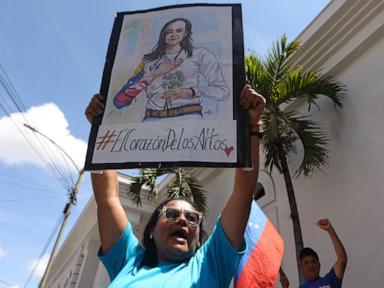
The physical return of opposition figure María Corina Machado to Venezuela did not instantly unlock the democratic future her supporters had spent months marching for. Instead, it plunged an already fragile political transition into a tense standoff against an interim government that prefers economic stabilization over immediate balloting.
Street demonstrations across Caracas and other urban centers tell a story of profound public exhaustion. Months of chronic infrastructure failures, highlighted by blackouts lasting up to sixteen hours a day, have fused economic survival with political defiance. Citizens are no longer just protesting abstract electoral math; they are demanding functional basic services and a permanent exit from decades of institutional decay. Yet, the political machinery left behind following the dramatic removal of Nicolás Maduro has proven remarkably resilient under interim leadership.
The Architecture of the Interim Impasse
When international pressure and shifting geopolitical dynamics forced a fracture at the top of the Venezuelan state, many analysts predicted a swift transition back to civilian-led democratic rule. That prediction ignored the deeply entrenched networks holding state infrastructure together. Interim President Delcy Rodríguez and her administration have charted a pragmatic survival course, courting foreign investment and attempting to patch up the pulverized electrical grid while systematically kicking the question of a presidential election down the road.
For the opposition, this gradualist approach is an existential threat. Machado’s reappearance after months spent navigating clandestine networks and foreign exile was designed to short-circuit that bureaucratic delay. By stepping back onto Venezuelan soil, she forced the interim government's hand, compelling a public reaction from leaders who would rather negotiate economic adjustments quietly behind closed doors than face an energized electorate at the ballot box.
Yet, international allies have complicated the calculus. Foreign capitals that spent years backing the anti-Maduro movement now find themselves prioritizing regional security and energy markets. When pressed on timelines for a democratic vote, Western diplomats frequently pivot to institutional rehabilitation and economic relief. This divergence in priorities creates a dangerous vacuum. The street-level momentum driven by everyday citizens demanding a definite electoral roadmap risks crashing against the cold pragmatism of foreign capitals willing to tolerate an incomplete transition for the sake of stability.
Beyond the Headlines of Resistance
The popular narrative surrounding the Venezuelan street protests often paints a picture of uniform, spontaneous defiance. Spend time talking to local organizers in neighborhoods across Maracaibo or Valencia, however, and a more complex picture emerges. The mobilization is heavily decentralized, sustained by community networks that learned how to survive years of state surveillance and economic collapse.
These groups are navigating a dual crisis. On one hand, they face an administration that controls the levers of internal security and public administration. On the other, they must manage the immense weight of public expectations. When a population has endured years of hyperinflation, food scarcity, and systemic blackouts, political victory cannot remain a distant, symbolic goal. People need tangible proof that mobilization yields structural change, not merely a rotation of elites at the top.
The demand for a firm date for presidential elections is therefore a demand for finality. Without a strict timeline anchored in constitutional law, the current interim arrangement risks hardening into a permanent administrative state—one that maintains a softer diplomatic veneer than its predecessor while preserving the same structural insulation from public accountability.
As Machado and allied figures like Edmundo González attempt to channel public anger into organized political leverage, the friction within the governing apparatus will only intensify. The streets have made it clear that the chapter of single-party dominance is closed. Whether the architects of the current transition will allow a genuine democratic opening remains the central, unresolved question of Venezuela's fragile new era.
Machado supporters demand her return and presidential elections
This video captures street-level footage of the demonstrations in Venezuela surrounding the political opposition's demands for democratic elections and leadership return.