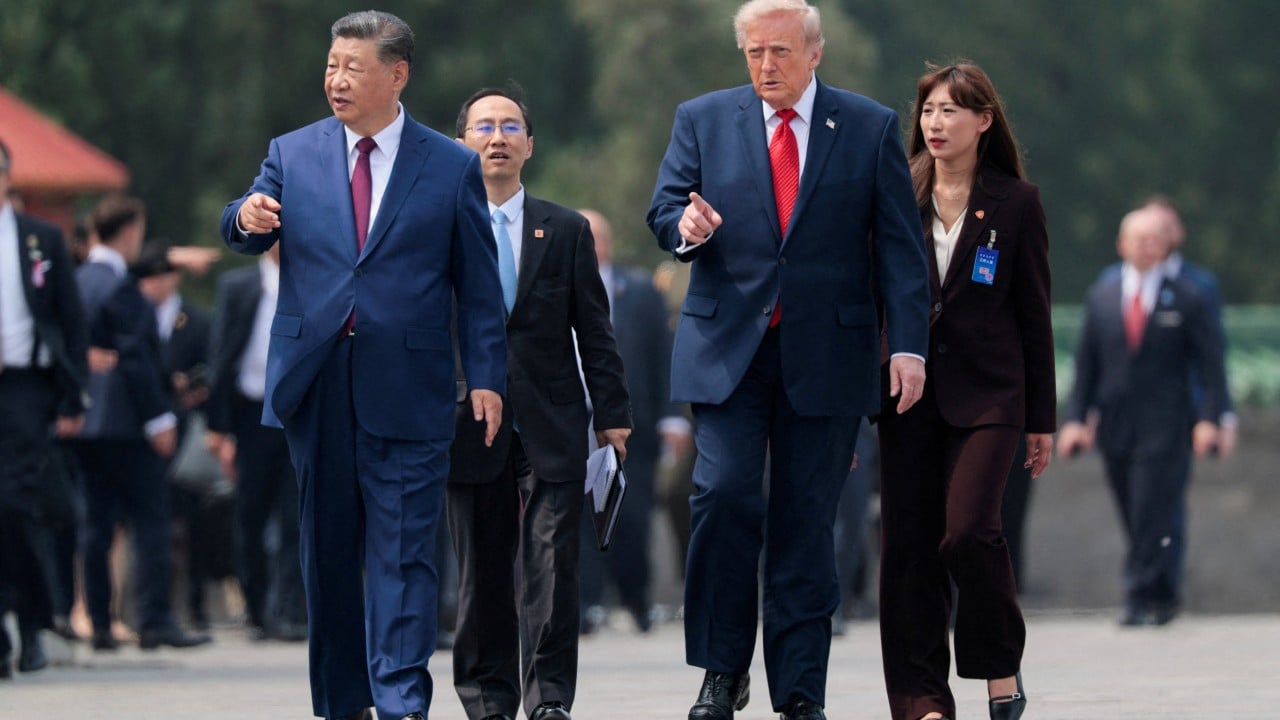
The decision to revoke press credentials and bar CNN, MSNOW, and Politico from the White House briefing room marks the most aggressive escalation in executive branch media management since the Nixon administration. Rather than a simple spat over tough questioning, the move represents a calculated restructuring of how political information reaches the American public. By stripping access from major legacy television networks and a premier Capitol Hill trade publication, the administration has effectively dismantled the traditional White House Correspondents' Association (WHCA) rotation system, replacing institutional gatekeepers with hand-picked digital outlets and partisan commentators.
To understand why this happened now, you have to look past the daily shouting matches in the James S. Brady Press Briefing Room. For decades, White House press operations operated on an uneasy truce. Presidents hated the coverage, reporters hated the spin, yet both sides needed the infrastructure. The administration needed the reach of broadcast television and wire services to project authority; the press needed proximity to verify claims and catch officials off-guard. That mutual dependency is dead.
The Mechanics of Modern Credentialing
Most readers assume the First Amendment guarantees a journalist the right to walk into the West Wing. It does not. The Secret Service and the White House Press Office control the physical perimeter, and access is technically a privilege granted under loosely defined security and space guidelines. Historically, administrations deferred to the WHCA to allocate the 49 coveted seats in the briefing room and manage the traveling press pool.
That deference was merely a norm, not a law.
When the press office moved to strip hard passes from reporters at CNN, MSNOW, and Politico, it bypassed the WHCA entirely. Officials cited space constraints, shifting audience metrics, and an alleged pattern of "bad-faith" reporting as the administrative justification. By framing the purge as an administrative reallocation of scarce real estate—giving seats to podcasters, Substack writers, and streaming hosts with massive direct-to-consumer followings—the White House created a bureaucratic shield designed to survive immediate judicial scrutiny.
Why These Three Targets Matter
The selection of CNN, MSNOW, and Politico was surgical. Each represents a distinct pillar of the traditional Washington information ecosystem.
- CNN remains the global baseline for breaking cable news. Even with fluctuating domestic ratings, its feed runs on screens in every embassy, congressional office, and airport terminal on earth. Removing CNN disrupts the real-time visual record of the presidency.
- MSNOW serves as the primary ideological counterweight in cable news, driving the daily narrative for progressive lawmakers and Democratic strategists. Cutting its physical access forces its anchors to rely on second-hand feeds and outside commentary rather than direct confrontation with administration officials.
- Politico is the indispensable bulletin board of the federal bureaucracy. While cable networks chase broad national audiences, Politico speaks directly to congressional staffers, lobbyists, and agency heads. Banning its reporters strikes at the internal nervous system of Washington, choking off the granular, palace-intrigue reporting that often triggers internal leaks and policy reversals.
Legal Precedent and the First Amendment Trap
Any news organization barred from the White House immediately reaches for the First Amendment and the Fifth Amendment's Due Process Clause. The legal roadmap here is well-worn, though full of potholes.
In 1977, the D.C. Circuit Court of Appeals ruled in Sherrill v. Knight that because the White House had opened its press facilities to the general journalistic public, it could not arbitrarily deny a press pass without a compelling reason, formal notice, and an opportunity for the journalist to respond. Decades later, during the first Trump term, federal judges relied on Sherrill to force the restoration of credentials for CNN's Jim Acosta and Playboy's Brian Karem.
Those earlier victories relied on a crucial vulnerability in the government's approach—the White House targeted individual reporters based on personal animus or specific behavioral disputes in the briefing room. That made it easy for judges to spot viewpoint discrimination.
The current strategy is far more sophisticated and infinitely harder to defeat in court. By targeting entire corporate outlets under the guise of "modernizing media representation" and "rebalancing platform diversity," the administration is forcing the courts to decide whether legacy conglomerates have a constitutional entitlement to front-row seats over independent digital creators. If the White House argues it has finite square footage and chooses to allocate seats based on contemporary audience reach rather than legacy prestige, federal judges become deeply reluctant to act as seating-chart arbitrators for the executive branch.
The Death of the Pool System
The real damage of this ban does not happen on camera during the afternoon briefing. It happens in the hallways, on Air Force One, and in the motorcade.
The White House press pool is a small, rotating group of journalists—print, radio, television, and still photographers—who travel everywhere the president goes. When the president boards Marine One, eats at a local diner, or meets a foreign head of state in a cramped bilateral room, the pool is there. Their job is not to scoop each other; it is to serve as the eyes and ears for the entire world, filing immediate pool reports distributed to thousands of newsrooms simultaneously.
Removing CNN, MSNOW, and Politico from the rotation fractures this collective safety net. When major investigative newsrooms are excluded from the pool, the remaining slots are filled by outlets that may lack the institutional resources, legal backing, or editorial independence to push back when a press aide tries to shut down questioning.
Consider a hypothetical scenario during a foreign summit. If a president makes an off-the-cuff remark about a treaty obligation while walking down a corridor, a veteran wire or cable reporter will immediately press for clarification and verify the translation with diplomatic sources. A compliant or under-resourced outlet sitting in that pool slot might simply transcribe the talking point and move on, leaving the public with an unchallenged, potentially inaccurate record of U.S. foreign policy.
Economics of the New Information Pipeline
Media executives in New York and Washington often complain about the death of norms, yet they rarely acknowledge how their own business models accelerated this crisis. For twenty years, legacy outlets treated White House access as a loss leader that conferred prestige, which they then monetized through cable carriage fees and corporate advertising.
The White House press team realized something the network executives were slow to accept. The distribution monopoly is over.
A president no longer needs a prime-time network broadcast or a front-page story in a Washington trade paper to reach eighty million voters. A clip posted directly to social media, paired with a ninety-minute appearance on a top-ranking podcast, generates higher engagement and zero editorial pushback. From a purely cold-blooded communications standpoint, granting physical real estate in the West Wing to hostile legacy networks offers the administration a terrible return on investment.
By expelling CNN, MSNOW, and Politico, the White House is starving those networks of the exclusive live video and direct-source reporting that justify their subscription fees and political influence. At the same time, the administration is rewarding a parallel media ecosystem with the exact visual credibility—standing in front of the West Wing pillars—that used to belong exclusively to the legacy press.
The Counter-Argument From Inside the West Wing
To understand the durability of this move, you have to take the administration's internal rationale seriously, even if you reject its conclusions. Strategists inside the White House argue that the old press corps was never an objective arbiter; it was an entrenched cartel protecting its own commercial interests.
From their perspective, the WHCA operated like a private club that locked out independent voices, regional broadcasters, and non-traditional journalists for decades. They point out that trust in corporate media sits near historic lows, and that millions of Americans view networks like CNN and MSNOW not as news gatherers, but as opposition political operations. In the eyes of West Wing aides, revoking those passes is not an attack on press freedom—it is an overdue correction that breaks up a corporate monopoly and democratizes access for creators who actually reflect the modern media diet of the country.
How Newsrooms Are Forced to Adapt
Banning a reporter from the grounds does not stop the reporting; it simply changes the plumbing. Experienced Washington bureau chiefs have spent years preparing for a post-access environment, and the playbook is already rolling out across the affected newsrooms.
- Shifting from Briefing Room to Bureaucracy. The briefing room has always been a theater of diminishing returns, where press secretaries read prepared statements and dodge follow-ups. Stripped of front-row seats, reporters from Politico and CNN are redirecting their energy toward mid-level agency officials, inspector general reports, Freedom of Information Act (FOIA) litigation, and Capitol Hill committees. The executive branch is massive; the White House press office cannot police every deputy assistant secretary at the Pentagon or the Treasury Department.
- Weaponizing the Secondary Market. Even without a hard pass, networks still pull the raw pool feed provided by broadcast partners who remain inside. Producers simply strip out the live commentary and analyze the footage from studios a few blocks away on K Street or Pennsylvania Avenue.
- Cultivating Encrypted Backchannels. Historically, White House aides leaked information to reporters they bumped into near the press room or outside the West Wing lobby. Without physical proximity, communication moves entirely to encrypted messaging apps. Ironically, this makes leak investigations much harder for the White House to conduct, because security officials can no longer use badge-swipe logs or physical surveillance in the upper press area to see which staffer is talking to which journalist.
The Risk of Solidarity Failure
The greatest threat to the Washington press corps right now is not the White House press office. It is the fragmentation of the media industry itself.
In previous decades, an attack on one major outlet triggered an immediate, unified response from competitors. When the Nixon administration tried to freeze out the Washington Post, rival papers shared their notes and pool reports to ensure the Post remained competitive. Today, the economic incentives point in the exact opposite direction.
Cable networks, digital startups, and legacy newspapers are fighting over a shrinking pool of advertising dollars and subscriber attention. When CNN, MSNOW, and Politico lose their seats, their direct competitors quietly benefit from reduced competition in the room and greater airtime during briefings. While media associations issue strongly worded press releases condemning the ban, few executives are willing to voluntarily surrender their own credentials or boycott White House events in solidarity.
Without collective leverage, the press corps cannot force the administration back to the bargaining table. Every outlet is left to negotiate its own survival, knowing that the price of admission is increasingly tied to how gently it handles the administration's narrative.
What Happens When the Pendulum Swings
Institutional norms in Washington rarely die all at once; they erode until someone realizes the guardrails are gone. By establishing the precedent that a president can unilaterally expel major news organizations based on editorial friction, this White House has handed a loaded weapon to every future administration.
A future Democratic president facing hostile coverage from conservative outlets will now have a ready-made blueprint and legal defense for clearing them out of the briefing room. They will cite space constraints, point to digital audience metrics, and argue that they are simply following the precedent set in 2026.
The briefing room will remain open, the cameras will keep rolling, and the podium will still bear the presidential seal, yet the function of the room will have permanently shifted from an arena of public accountability to a curated stage set.