The fluorescent lights in a municipal intake center hum at a frequency that rattles your teeth after three hours. I know this because I spent a winter sitting on those rigid plastic chairs, clutching a manila folder stuffed with birth certificates, bank statements, and eviction notices that smelled faintly of damp cardboard and cheap coffee.
Cold. That is the first thing you notice when the system fails you—not the temperature outside, though a Canadian February will strip the heat from your bones in four minutes flat, but the coldness of the bureaucracy. You are a file number. You are a line item on a municipal spreadsheet, bounced between a provincial health authority that says your problem is housing, a city housing agency that says your problem is addiction or unemployment, and a federal grant program that closed its application window six weeks ago.
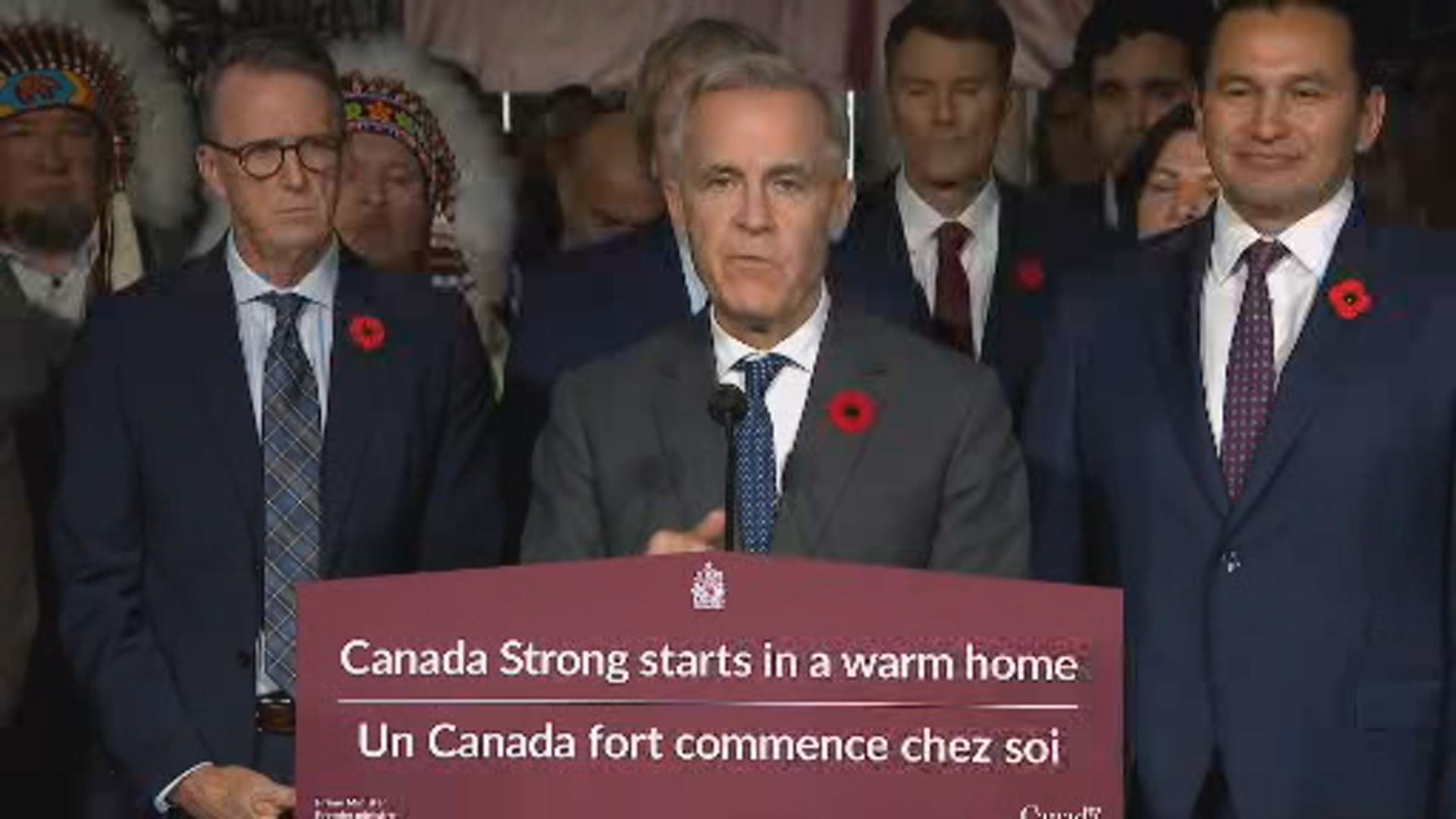
When Mark Carney stepped up to a podium to state that ending homelessness requires coordination, dedication, and funding, the headlines treated it like routine political boilerplate. Another leader. Another three-part slogan. For anyone who has never had to sleep with one eye open on a night bus, those words sound like wallpaper—beige, predictable, easily ignored.
They shouldn't be. Because buried inside that dry, three-word prescription is the exact diagnosis of why a wealthy G7 nation continues to watch its citizens freeze on steam grates.
The Myth of the Simple Fix
We love simple stories about poverty. We like to believe that homelessness is purely a lack of beds, or purely a failure of personal grit, or purely a drug crisis. If it is just a lack of beds, we build a shelter. If it is just a lack of money, we write a check.
Consider a hypothetical composite of dozens of people I met during my own brush with housing insecurity—let’s call him Arthur. Arthur is fifty-four, a former drywall installer from Hamilton whose lower back gave out after twenty-eight years of hauling sheetrock up unfinished stairwells.
Arthur didn't lose his apartment because he stopped wanting to work. He lost it because the gap between his workplace injury claim and his actual rent widened by four hundred dollars a month, every month, until his savings evaporated. Once he was out on the street, the stress triggered a dormant struggle with alcohol. Now, to get into supportive housing, Arthur needs to be sober. To get sober, he needs a stable place to sleep where his medication isn't stolen while he uses a public restroom.
Catch-22.
This is where the public conversation usually stalls out, trapped in an endless loop of finger-pointing between city halls, provincial legislatures, and Ottawa. When Carney argues that funding alone is a dead end without deep operational coordination, he is pointing directly at the chasm Arthur fell into. You can pour a billion dollars into bricks and mortar, and it will still fail if the health system, the municipal zoning board, and the social safety net refuse to speak the same language.
Why Money Without Plumbing Floods the Basement
Think of housing policy like the plumbing in an old Victorian house. For decades, governments have treated homelessness by turning up the water pressure—announcing splashy, one-time funding packages every election cycle—while ignoring the fact that the pipes between municipal, provincial, and federal jurisdictions are rusted shut and disconnected.
When the water gets turned on, it floods the basement and never reaches the third-floor tap.
The numbers back up this structural failure. Across Canada, emergency shelters operate at near-total capacity every single night, costing taxpayers roughly $130 to $200 per bed, per night, once you factor in security, emergency medical calls, and crisis staffing. Over a year, keeping one person in an emergency shelter or cycling them through hospital emergency rooms and detention centers costs the public purse upwards of $50,000 to $100,000.
Meanwhile, supportive housing—an actual apartment with an on-site social worker and medical check-ins—costs roughly $20,000 to $30,000 a year.
We are paying luxury hotel prices to keep human beings in misery.
Why? Because the money sits in separate silos. The hospital budget pays for the ambulance rides when someone gets frostbite. The justice budget pays for the police response when a business owner calls about someone sleeping in a doorway. The municipal budget pays for the shelter cot. Nobody owns the whole ledger, so nobody is incentivized to spend twenty thousand dollars today to save eighty thousand dollars tomorrow.
Carney, speaking through the lens of an economist who has spent his career looking at systemic risk, recognizes that this isn't just a moral stain; it is catastrophic capital allocation. You wouldn't run a mid-sized logistics company with three departments refusing to share inventory data, yet we run our social infrastructure that exact way and act surprised when people die in the cracks.
The Exhaustion of the Short-Term Promise
Then there is the second word in Carney’s triad: dedication.
In politics, dedication is usually measured in press releases. In the real world of housing first initiatives, dedication is measured in decades.
Back in the early 2000s, Finland faced a homelessness crisis that looked remarkably like what Toronto, Vancouver, and Montreal are experiencing right now. Instead of building more temporary shelters—which function like Band-Aids on a broken femur—the Finnish government made a radical, unglamorous commitment. They decided that a home is not a reward you earn after you fix your life; a home is the foundation you need before you can fix anything at all.
They called it Housing First. They converted old shelters into permanent apartments. They pooled national, municipal, and NGO funding into a single stream. And—here is the part Canadian politicians struggle with—they stuck with it across multiple election cycles, regardless of which party held power. Today, Finland is the only country in the European Union where homelessness is falling, dropping by more than forty percent over the last fifteen years.
Compare that to how we operate in North America. We launch a five-year pilot program. Two years in, a new mayor or premier gets elected, rebrands the initiative, freezes the zoning permits because a vocal neighborhood association complains about property values, and starves the non-profit operators of multi-year operational funding.
I remember talking to a frontline outreach worker in Ottawa named Sarah—not a hypothetical character, a real woman with dark circles permanently etched under her eyes—who told me she spent forty percent of her week writing grant renewals just to keep the heat on in her drop-in center. Forty percent. Imagine if a firefighter had to stop spraying water on a burning house every twenty minutes to fill out a funding application for the next tank. That is what lack of political dedication looks like on the ground. It turns healers into bureaucrats and leaves vulnerable people twisting in the wind every time a fiscal quarter ends.
What Happens When We Actually Build the Bridge
Critics often ask whether ending chronic homelessness is even mathematically possible in a market choked by high interest rates, labor shortages in construction, and soaring land costs. It is a fair question. When a one-bedroom apartment in a major Canadian city eats up sixty percent of a minimum-wage paycheck, the math feels rigged against the working poor.
Look at what happens, though, when the three gears—funding, coordination, and dedication—actually lock together.
In Medicine Hat, Alberta, a city of roughly 65,000 people, local leaders stopped treating homelessness as an unsolvable law of nature. They built a centralized intake system—a single digital ledger shared by police, hospitals, shelters, and landlords. Instead of forcing people like our hypothetical Arthur to retell their worst traumas to twelve different agencies, one caseworker tracked their progress from the first night on the street to the day they turned a key in a deadbolt.
They paired private market landlords with guaranteed rent supplements and rapid-response maintenance teams. If a tenant had a mental health crisis and damaged drywall, the city fixed it within forty-eight hours so the landlord wouldn't evict them.
By 2021, Medicine Hat reached functional zero chronic homelessness—meaning that anyone who lost their housing was placed into a permanent home within an average of ten days. Not ten months. Ten days.
Does Medicine Hat have the exact same scale of housing pressure as downtown Vancouver or Toronto? Of course not. Pretending a city of sixty-five thousand faces the same zoning bottlenecks as a metropolis of six million would be dishonest. Yet the underlying mechanics remain identical. Scale changes the volume of concrete you need to pour; it does not change the human requirement for stability, dignity, and a single point of accountability.
The Invisible Stakes of Doing Nothing
When we walk past an encampment in a city park, it is easy to view it as someone else’s tragedy. We pull our coats tighter, look down at our phones, and tell ourselves that the economy is complicated and housing markets take years to correct.
We miss the quiet erosion happening to the rest of us.
Every time a community normalizes human suffering on its sidewalks, it pays a hidden tax. It is paid in the burnout of paramedics who spend half their shifts reversing overdoses in alleyways instead of responding to heart attacks. It is paid in the hollowing out of downtown small businesses whose customers stay away because the streets feel chaotic and unsafe. It is paid in the quiet, gnawing anxiety of millions of renters who are one renoviction, one medical diagnosis, or one corporate layoff away from discovering just how thin the ice beneath their feet really is.
I got out of that fluorescent-lit intake center because a stubborn caseworker refused to accept a "no" from a provincial housing clerk, and because an uncle lent me enough money for a damage deposit on a basement studio with a leaky radiator. That was the margin between me writing this essay at a warm desk and me sleeping in a doorway. Luck. A relative with two thousand spare dollars. A bureaucrat who happened to care on a Tuesday afternoon.
A civilization should not run on luck.
Carney’s message—strip away the campaign-trail polish and the cautious phrasing of a central banker—is really an indictment of our collective excuses. We have the capital. We know the data. We have seen the blueprints work in Helsinki and Medicine Hat and Houston. What remains missing is the willingness to tear down the walls between our institutions and treat a roof over a citizen's head not as a charitable afterthought, but as the baseline architecture of a functioning country.
Somewhere tonight, a man with bad knees and a plastic bag full of paperwork is going to step out of a warming center into the biting wind, checking the sky to see if it will snow before morning, wondering which door he is allowed to knock on tomorrow.