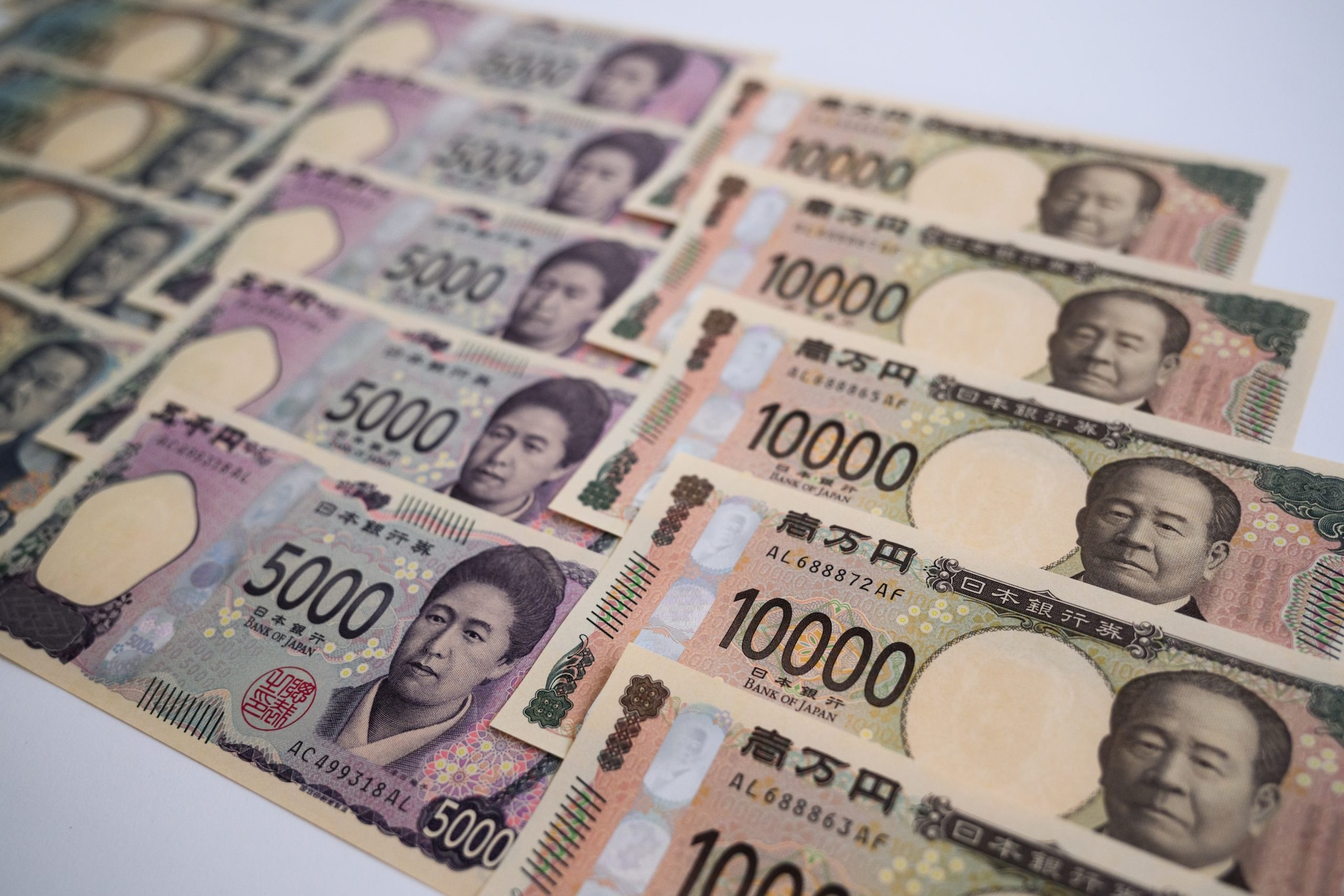
The fluorescent lights of the trading floor do not care about sunrise, but Masao did. For three decades, his morning routine in Tokyo had remained unchanged: a bitter cup of black canned coffee, a glance at the digital clock on the wall, and a deep, instinctual breath before the madness of the currency markets commenced. But lately, those mornings felt different. The air was heavier.
Every time Masao looked at his terminal, the numbers told a story of quiet, compounding desperation. The Japanese yen was sliding. Not a sudden, dramatic crash that triggers emergency sirens, but a slow, bleeding evaporation of value against the US dollar. To the average tourist landing at Haneda Airport with a pocketful of foreign currency, it looked like a paradise of cheap sushi and affordable luxury. To Masao, and to the millions of citizens trying to buy imported grain, fuel, and medicine, it felt like the walls were closing in.
When a nation's currency rots, everything it buys from the outside world gets more expensive. Japan imports nearly all of its oil. It imports more than half of its food. A weak currency is not just a line graph on a Bloomberg terminal; it is a direct tax on the dinner tables of Tokyo, Osaka, and Hokkaido.
The Bank of Japan and the Ministry of Finance were backed into a corner. They had a massive war chest, yes—over a trillion dollars in foreign exchange reserves. But most of that wealth was not sitting around as cash. It was locked up in the bedrock of global finance: United States Treasury bonds.
To save the yen, they needed dollars. To get dollars, they had to do something unthinkable to traditional market purists. They had to start quietly selling off their American debt.
The Weight of the Greenback
Currency intervention is an act of financial warfare, but it is fought in absolute silence.
To understand why Tokyo would contemplate liquidating its prize possessions, we have to look at the mechanics of the global financial see-saw. When the Federal Reserve in Washington raises interest rates to combat inflation, American bonds become incredibly attractive. Investors all over the world scramble to buy them. To do that, they must sell their local currencies and buy dollars.
Now look at Japan. For years, its central bank kept interest rates anchored below zero to fight off stagnation. If you keep your money in a Japanese bank, you earn nothing. If you move it across the Pacific, you get five percent.
The math is brutal. Money flows where it is treated best. Capital fled Japan in a massive, invisible tidal wave, pushing the dollar up and dragging the yen down to historic lows.
Imagine holding a bucket with a small hole in the bottom. You can keep pouring water in, or you can try to patch the leak. For months, Japanese officials used verbal warnings. They called the market movements "speculative." They promised they were watching with "a high sense of urgency."
Traders laughed. Words are free. The market wanted to see the color of their money.
Then came the sudden, violent shifts in the market. On days when volume was thin, the yen would suddenly spike three or four percent against the dollar in a matter of minutes. No press releases were issued. No official announcements were made. But everyone on the street knew the truth.
The central bank had stepped into the arena.
How to Move a Mountain Without Making a Sound
If you want to buy billions of dollars worth of your own currency to prop up its value, you cannot just show up at a retail bank counter. You need massive liquidity.
The most common theory circulating through the glass towers of Manhattan and the financial districts of Tokyo is that Japan did not just dip into its cash reserves. Analysts began tracking the Federal Reserve’s custody data—a massive ledger where foreign central banks park their US government debt. Suddenly, billions of dollars vanished from the account.
Think of it as a homeowner facing a sudden emergency. If your roof collapses, you do not sell your house; you dip into your savings account. But what happens when the savings account runs dry, and the rain is still pouring through the ceiling? You start selling the family silver.
For Japan, US Treasuries are the family silver. They are safe, reliable, and highly liquid. But selling them is a double-edged sword.
If Japan dumps too many US Treasuries at once, the price of those bonds crashes. When bond prices crash, American interest rates go up even higher. And remember the see-saw: higher American interest rates make the dollar stronger and the yen weaker.
It is a terrifying paradox. The very weapon Japan uses to fight the fire has the potential to feed the flames.
+-------------------------------------------------------------+
|               THE INTERVENTION PARADOX                       |
+-------------------------------------------------------------+
|  Japan sells US Treasuries to get USD                       |
|         │                                                   |
|         ▼                                                   |
|  Supply of US Treasuries floods the global market           |
|         │                                                   |
|         ▼                                                   |
|  Prices of US bonds drop -> US Interest Rates Spike         |
|         │                                                   |
|         ▼                                                   |
|  Higher US rates attract more capital to the US Dollar      |
|         │                                                   |
|         ▼                                                   |
|  The US Dollar strengthens, putting MORE pressure on the Yen|
+-------------------------------------------------------------+
This is why Masao watched his screen with white knuckles. Every intervention was a high-stakes poker game played in the dark. If the government blinked, the market would devour them. If they pushed too hard, they could destabilize the entire global financial ecosystem.
The Human Cost of a Number
Away from the trading desks, the reality of this abstract chess match plays out in ordinary ways.
Consider a small bakery owner in suburban Tokyo, someone we can call Yumi. She doesn't know what a Treasury bill is. She doesn't track the Federal Reserve's balance sheet. But she knows that the cost of Canadian flour has doubled. She knows that the electricity bill to run her industrial ovens has soared because the natural gas imported to power the city is priced in US dollars.
Yumi faces a choice that defines the modern Japanese economy: raise prices and risk losing the loyal neighbors who have supported her for a decade, or absorb the costs and watch her life's work slowly bleed into insolvency.
When a government intervenes in the currency market, they are trying to buy time for people like Yumi. They are trying to slow down the relentless march of inflation long enough for local wages to catch up, or for the American economy to cool down.
But time is an expensive luxury. The estimates of Japan's recent interventions run into the tens of billions of dollars for just a few days of work. That is an astronomical amount of national wealth spent not on building infrastructure, not on funding schools, and not on supporting an aging population, but simply on maintaining a statistical baseline.
The Limits of Sovereignty
There is a hard truth at the center of this narrative that many economists are hesitant to say out loud. No matter how many billions of dollars a country possesses, it cannot fight the fundamental laws of supply and demand forever.
Intervention is a painkiller, not a cure.
If the structural differences between two economies are vast, market forces will eventually win. Japan can sell its US debt, burn through its reserves, and surprise the market on a quiet holiday weekend. They can catch the speculators off guard and force a temporary rally.
But when the dust settles, the underlying reality remains. As long as global capital can earn significantly higher returns in Washington than in Tokyo, the gravity of the market will continue to pull the yen downward.
The real danger lies in the exhaustion of ammunition. What happens when the market realizes the vault is no longer bottomless?
Masao remembers the currency crises of the late 1990s. He remembers the feeling of panic when capital fled emerging markets like water through a sieve. Japan is not an emerging market; it is the world’s fourth-largest economy and a cornerstone of global stability. That is exactly why this quiet liquidation of US debt sends shivers down the spines of institutional investors.
If the world's largest creditor nation is forced to dismantle its holdings just to keep its currency afloat, the old assumptions about global financial stability no longer hold.
The sun finally climbed above the Tokyo skyline, casting long shadows across the empty coffee cans and cluttered desks of the trading floor. The yen had stabilized for the moment, holding its ground by a fraction of a percent. There were no cheers, no sighs of relief. Everyone knew this was merely an intermission. Somewhere in the deep, opaque machinery of the state, the decision had been made to sacrifice a piece of the future to survive the afternoon, leaving the world to wonder just how much silver remains in the vault.