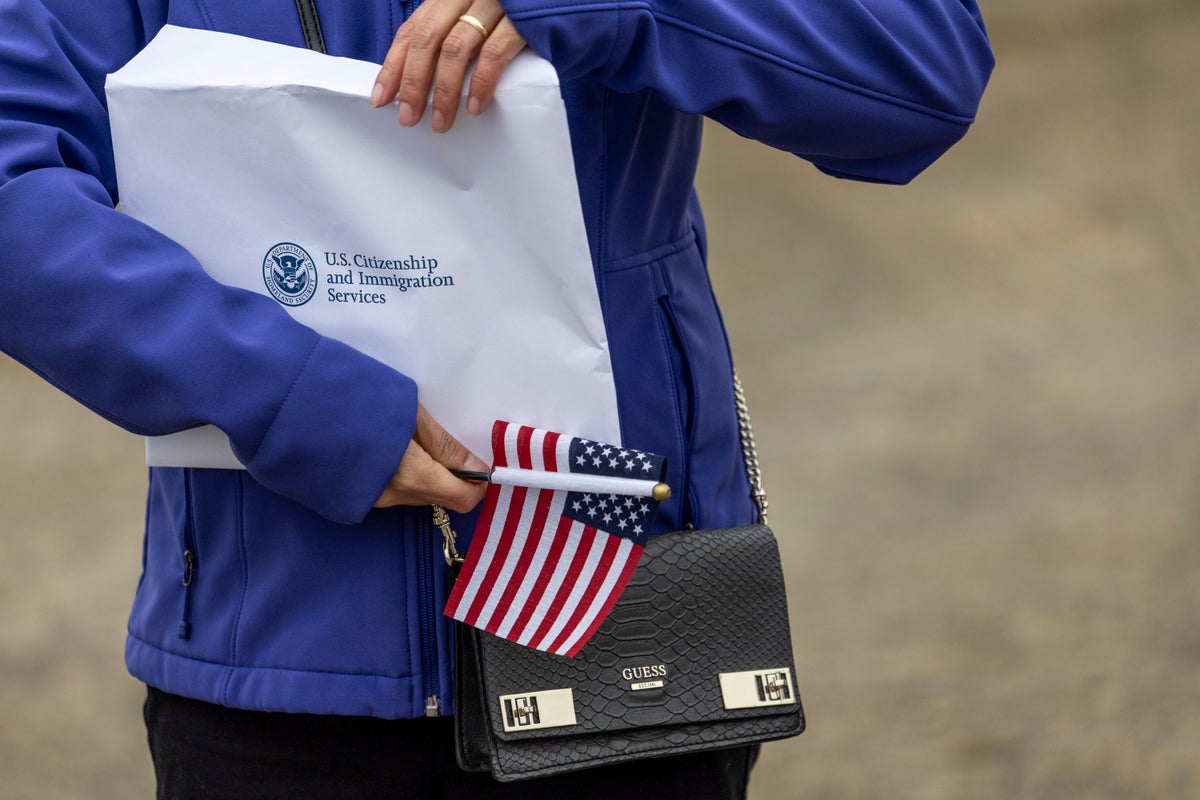
The waiting room smells of cheap disinfectant and old paper. Outside, rain drums a relentless rhythm against the tinted glass of the immigration law office. Inside, a mother sits clutching a manila folder so tightly her knuckles turn the color of chalk. Inside that folder lies three years of tax returns, four employment verification letters, and a quiet, terrifying question mark.
For millions seeking permanent residency, the dream of a green card has never been a simple administrative checklist. It is a psychological endurance test. And right now, the rules of that test are shifting under their feet.
New layers of scrutiny are descending upon green card applicants, focusing intensely on how they and their families interact with healthcare systems and social services. What used to be a straightforward calculation of income and sponsorship has evolved into an expansive, microscopic audit of survival. Every visit to a community health clinic, every emergency room visit during a midnight fever, every box of supplemental nutrition picked up during a lean winter—all of it is being pulled into the light.
To understand why this matters, we have to look past the dense legalese of federal registers and stare directly into the human cost.
The Anatomy of the Public Charge
Consider Elena, a hypothetical applicant whose story mirrors those crossing legal desks across the country. Elena arrived three years ago on a work visa, her skills in high demand. She pays her taxes on time. She works fifty hours a week. When her youngest daughter developed a severe case of bronchitis last winter, Elena did what any terrified parent would do: she took her to the local public hospital.
Weeks later, the bill arrived, far exceeding her monthly savings. To keep the household afloat, she briefly accepted a local utility assistance grant—a standard municipal program designed to keep lights on during freezing months.
Under the shifting tides of immigration policy, that assistance is no longer just a local safety net. It is a potential red flag.
The concept of the public charge has existed in American immigration law for over a century, originally designed to ensure that newcomers would not become primarily dependent on the government for subsistence. But the interpretation of dependency has mutated. Today, adjudicators look at an applicant's entire life ecosystem. They weigh health, family size, financial status, and the utilization of public health or social services in a holistic assessment—though without the corporate buzzwords, it is simply a rigid judgment of vulnerability.
If you are sick, you are penalized. If you seek help to feed your children during a crisis, you are questioned.
The Chilling Effect in Practice
The danger of this heightened scrutiny is not just found in formal denials. It lives in the shadows, inside the minds of people who desperately need medical care but choose to stay home.
Public health advocates have tracked a disturbing trend known as the chilling effect. When rumors or announcements of stricter healthcare and social service scrutiny ripple through immigrant communities, emergency room admissions drop among foreign-born residents. Families stop taking their children to immunization appointments. Pregnant women skip prenatal care.
They are making an impossible calculation. Do I risk my health today, or do I risk my future residency tomorrow?
This is where the policy disconnect becomes glaring. A government seeking self-sufficient residents inadvertently creates a public health hazard by punishing people for seeking basic preventive care. Untreated diabetes, unmanaged hypertension, and ignored infectious illnesses do not disappear because someone is afraid of a USCIS officer. They fester. They explode into emergency crises that cost the healthcare system exponentially more than a routine checkup ever would.
Immigration officials defend the changes as a return to fiscal responsibility. They argue that those who choose to build their lives in the United States should demonstrate the capacity to weather economic storms independently. Yet, the boundary between financial independence and sheer luck is razor-thin. One car accident, one unexpected layoff, or one global pandemic can shatter the finances of even the most diligent worker.
Reading Between the Lines of the Application
If you look closely at the modern green card application process, it resembles an archaeological dig. Adjudicators are trained to hunt for anomalies. A gap in insurance coverage suggests instability. A low credit score hints at a lack of integration. A history of utilizing state-funded health insurance programs—even when legally permitted or exempted—can be weaponized as evidence of future dependency.
Applicants are now forced to become forensic accountants of their own lives. They draft lengthy declarations explaining why they accepted a subsidized lunch program during a strike, or why they used a county health clinic before they secured private insurance. Every line item is scrutinized. Every moment of human frailty is weighed on a bureaucratic scale.
We are watching the redrawing of an invisible border. It is no longer just geographical, marked by razor wire and customs desks. It is financial, medical, and psychological. It separates those who can afford private insulation from life's random catastrophes and those who must rely on the fragile safety nets of civil society.
The silence in the waiting room is heavy. Elena looks down at her folder, adjusts her jacket, and prepares for her name to be called. She does not know what the officer will think of her daughter's medical bills, or how the state database will categorize the emergency assistance she received three winters ago. She only knows that her entire future, and the future of her children, rests on a ledger that refuses to account for being human.