Salt air tastes different when you know the sky above it is crowded with calculation.
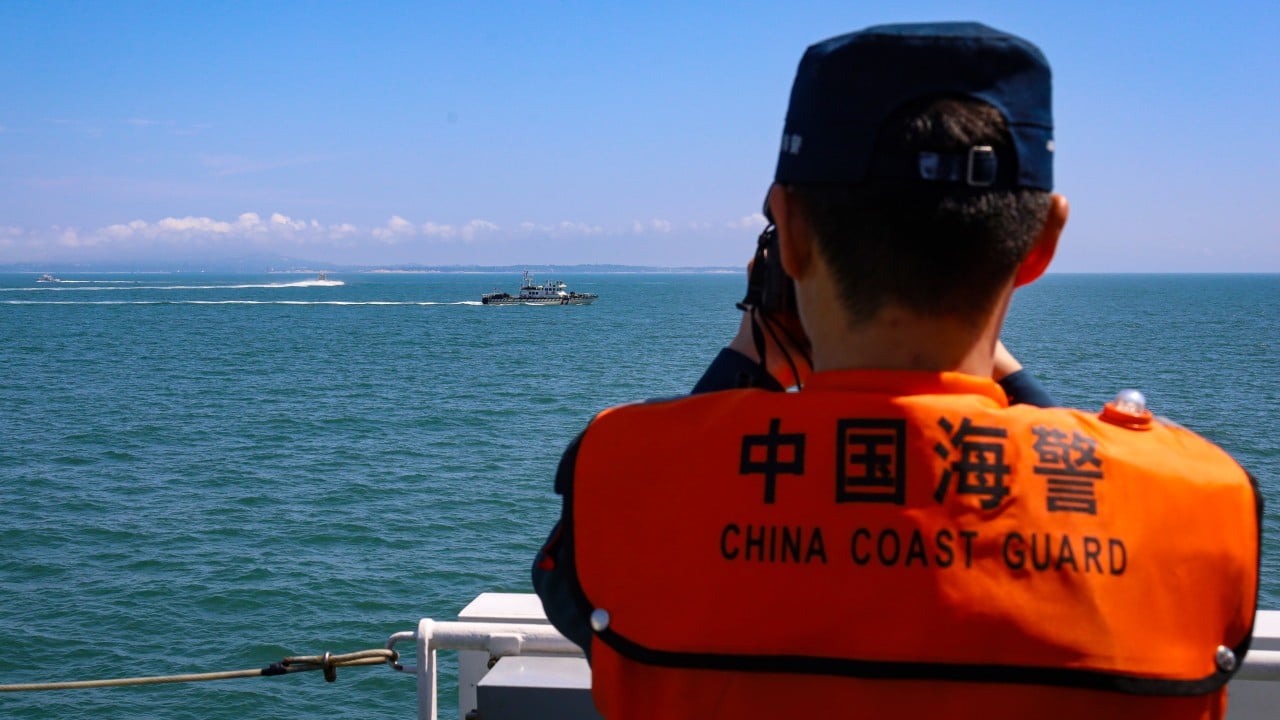
Stand on the northern tip of Jinmen, just a few miles off the coast of Fujian, and you can smell the coal smoke drifting across the strait. On a clear day, through a pair of salt-crusted binoculars, you can make out the towering cranes of Xiamen rising like metallic teeth against the mainland horizon. But it is what you cannot see—the low-slung hulls cutting through the gray swells, the silent sweeps of radar waves bouncing off the water, the meticulous cartography of an escalating pressure campaign—that defines the atmosphere here. Don't miss our recent article on this related article.
For the fishermen who pull mackerel from these contested channels, geopolitics is not a headline on a smartphone screen. It is a gray-hulled coastguard cutter bearing down on a wooden dingoy, its loudspeaker crackling with authoritative static in a dialect that sounds like home yet carries the weight of an empire.
Beijing is rewriting the map of the Taiwan Strait, and it is doing so without firing a single shot. To read more about the background of this, Associated Press offers an in-depth summary.
Consider the cadence of this campaign. It arrives not with the thunder of a naval barrage, but with the steady, bureaucratic accumulation of presence. Coastguard patrols once confined to distant mainland harbors now drift deliberately across the median line—that phantom boundary drawn decades ago in ink and unspoken agreements. Scientific survey vessels linger over underwater trenches, trailing sonar arrays that map the thermal layers of the ocean floor, charting paths for submarines that may one day hunt in these very currents.
This is gray-zone warfare. It is an insidious, grinding strategy designed to exhaust through repetition. To understand it, forget the grand theories of international relations and imagine Captain Lin, a hypothetical thirty-year veteran of a Taiwanese fisheries patrol vessel. Lin knows every sandbar, every unpredictable squall, every hidden reef between Penghu and the Matsu Islands. For decades, his job was simple: rescue lost sailors, enforce local maritime regulations, and nod respectfully to mainland vessels doing the same.
Today, Lin steers his vessel into a thickening fog, his knuckles white against the teak wheel, knowing the rules have shifted beneath his feet.
When a 4,000-ton mainland coastguard vessel cuts across his bow, dwarfing his patrol boat, it is not just an assertion of jurisdiction. It is a psychological test. Every time a survey ship drops its anchors in waters Taipei claims as its own, a silent question hangs in the humid air: Will you blink? Will you fire the first shot? Will you escalate and provide the pretext for a heavier hand?
The brilliance and the terror of this strategy lie in its ambiguity. By deploying law enforcement vessels rather than gray-water warships, Beijing wraps military coercion in the mundane language of domestic policing. They are merely enforcing order, they argue. They are merely conducting scientific research. They are protecting their fishermen.
Yet the data tells a different story. Tracking services show a staggering multiplication of patrols in the wake of diplomatic friction. Where there was once a polite distance between maritime authorities, there is now an aggressive intimacy. Ships shadow ships for days, engines humming at a low, vibrating drone that wears down the nerves of the crews trapped inside.
To watch this from the outside is to witness a slow-motion tightening of a noose made of paper and steel.
History is littered with the wrecks of nations that failed to recognize the danger of incrementalism. The Roman Empire did not fall in a single afternoon of barbarian fury; it eroded through a thousand localized concessions of border security. Territorial claims are rarely established by sudden conquest. They are established by habit. If a coastguard cutter patrols a specific stretch of ocean often enough, the patrol becomes a right. If a scientific survey ship maps a trench long enough, the trench becomes domestic property.
Taiwanese authorities find themselves trapped in a terrifyingly narrow corridor of choices. Respond too aggressively, and they risk handing Beijing the provocation it desires. Respond too passively, and they cede sovereignty a single nautical mile at a time. It is a calculus of exhaustion.
Out on the water, the diesel engines rumble on. The spray flies over the bow. A gull dips low over the crest of a wave, indifferent to the invisible lines that divide the sea.
We look to the horizon for the flash of lightning, forgetting that the flood begins with the steady, relentless rise of the tide. The patrols will continue tomorrow. The surveys will map deeper trenches. And the line in the water will continue to shift, inch by invisible inch, until the map we thought we knew has vanished beneath the surface.