At six in the morning, before the sun clears the Santa Monica Mountains and before the gates along Benedict Canyon begin their slow, hydraulic hum, the trucks arrive.
They do not look like heavy industrial machinery. To the casual observer jogging past manicured ficus hedges that rise twenty feet into the California sky, these vehicles blend into the scenery—white pickups, unmarked flatbeds, and the occasional boom truck parked discreetly behind a row of Italian cypresses. Yet behind those towering green walls, residential construction and estate maintenance in the 90210 zip code have quietly evolved into heavy civil engineering.
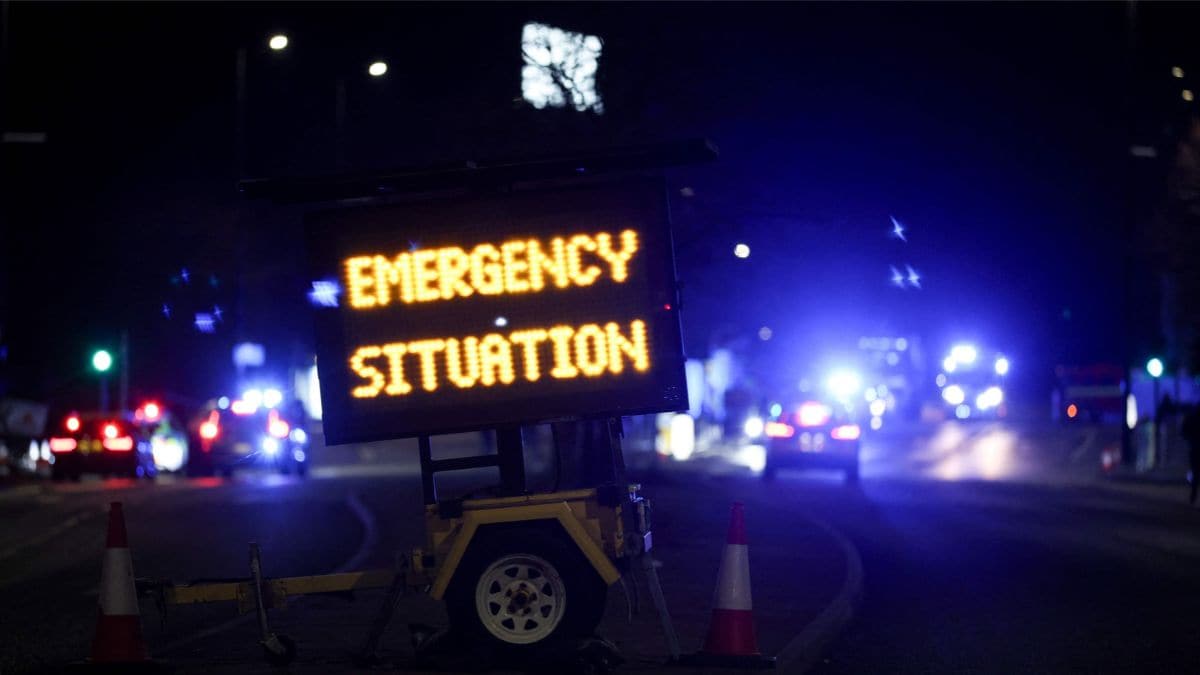
When a massive crane collapsed at a private residence in Beverly Hills, killing a landscaper on the job, the local news cycle processed the event with its usual brisk efficiency. A headline appeared. Traffic alerts warned drivers away from the canyon roads. A brief statement confirmed that the Los Angeles County Fire Department had responded to a fatal industrial accident involving heavy equipment. By the following afternoon, the digital current had already moved on to the next celebrity sighting or municipal zoning debate.
Stop. Look closer at what actually happened on that hillside.
A man who spent his days coaxing beauty out of stubborn soil was crushed by steel designed to build skyscrapers. That single, brutal contradiction exposes an uncomfortable truth about extreme luxury, suburban geography, and the invisible laborers who shoulder the physical risks of our aesthetic ambitions.
The Illusion of the Effortless Garden
To understand how a residential landscaping project ends in a fatal crane collapse, you first have to understand how modern wealth reshapes geography.
In much of Southern California, flat land ran out decades ago. Today, building or renovating an ultra-luxury estate means conquering vertical terrain—steep canyons, unstable decomposed granite slopes, and narrow, winding streets engineered for 1920s roadsters rather than modern transport rigs. When a homeowner decides that a hillside backyard needs a century-old olive tree flown in from Northern California, or a twenty-ton boulder positioned beside an infinity pool, nobody carries it up the driveway with a wheelbarrow.
They bring in a crane.
Consider a hypothetical scenario—a composite drawn from hundreds of real hillside permits across Los Angeles. Imagine a homeowner who buys a gated property overlooking the basin. The view is extraordinary, yet the yard feels bare. A celebrated landscape architect sketches a vision: mature Canary Island date palms, a sunken fire pit carved from monolithic limestone, and mature specimen trees that make the garden look as though it has stood untouched for eighty years.
Instant maturity. No waiting for saplings to grow.
To deliver that illusion, a mobile hydraulic crane must snake up a switchback road barely wider than its own wheelbase. The operator sets the outriggers—the steel legs that stabilize the machine—on a driveway engineered for Range Rovers, not forty tons of concentrated downward force. Beneath the decorative pavers lies fill dirt compacted twenty years ago, or perhaps a hillside retaining wall whose structural limits were never calculated for dynamic rotational loads.
Everything looks solid. Until the boom extends.
Physics Does Not Negotiate With Zip Codes
I have spent years reporting on workplace safety and watching how complex machines fail, and there is one rule that never bends: gravity cares nothing for property values.
When a crane lifts a multi-ton specimen tree or a pallet of architectural stone over a two-story roof, the machine becomes a giant lever. Think of holding a heavy suitcase straight out at arm's length. Close to your chest, the weight is manageable; extended three feet in front of you, that same suitcase pulls your entire torso forward, threatening to tip you onto your face. A crane operates on the exact same principle, governed by what engineers call the load moment—the weight of the object multiplied by its distance from the crane’s center of rotation.
In open commercial zones, setting up a crane involves soil compaction tests, engineered steel cribbing plates to distribute weight, clear exclusion zones, and certified signalpersons watching every inch of the swing radius. In tight residential neighborhoods, every single one of those safeguards faces friction.
The street is too narrow for full outrigger extension. Neighbors complain if heavy trucks block the road past noon. Subcontractors work on tight, overlapping schedules—pool builders, irrigation specialists, masonry crews, and landscapers all crowded onto a half-acre lot to meet a deadline before summer.
Here is where the danger becomes lethal: the assumption of routine.
According to data from the U.S. Bureau of Labor Statistics and the Occupational Safety and Health Administration (OSHA), crane-related fatalities kill dozens of workers across the country every year, with tipping and structural collapse ranking among the primary causes. Even more telling is who dies. In nearly half of all fatal crane incidents, the victim is not the operator sitting inside the reinforced cab. The victim is a ground worker—a rigger, a laborer, or, as in Beverly Hills, a landscaper standing below the arc of the boom, guiding a load into place with their bare hands.
Who Pays When the Ground Gives Way?
Let us return to the man who lost his life beneath that collapsed boom.
In the immediate aftermath of a fatal workplace accident, official reports inevitably use passive, sanitized language. A crane overturned. Equipment failed. An investigation is ongoing. Those phrases act like a heavy curtain, shielding the public from the chaotic, terrifying final seconds of a working person’s life.
A landscaper does not wake up at four in the morning expecting to die in an industrial structural failure. He wakes up thinking about soil pH, root balls, drip lines, and whether the morning traffic on the 405 will make him late for his crew’s briefing. Landscaping is intimate, tactile work. You kneel in the dirt. You prune branches by hand. You build things meant to grow and breathe.
Yet over the past twenty years, high-end residential landscaping has quietly merged with heavy construction. Modern outdoor living spaces feature cantilevered steel pergolas, outdoor kitchens clad in slabs of quartzite, mature trees weighing fifteen thousand pounds each, and subterranean root vaults that require deep excavation. The tools have scaled up to industrial proportions, while the safety culture on private residential sites often lags decades behind commercial high-rise standards.
Why does that gap exist?
Part of the answer lies in visibility. A sixty-story office tower rising in downtown Los Angeles sits under constant public scrutiny. Union stewards, municipal inspectors, and passing pedestrians see the cranes every day. A private estate behind a twelve-foot security wall in Beverly Hills is an island. Once the gates close, the site operates out of sight.
Another part lies in the fractured chain of responsibility. On a luxury residential remodel, the homeowner hires a general contractor or a landscape designer, who hires a tree broker, who hires a third-party crane company, which dispatches an operator for a four-hour window. Each party assumes someone else checked the ground bearing pressure beneath the asphalt. Each crew assumes the crane operator knows the soil conditions. Meanwhile, the landscapers on the ground—often immigrant workers whose livelihoods depend on staying agreeable, fast, and invisible—step underneath a suspended load because that is where the tree needs to go.
Nobody intends for a tragedy to happen. Everyone is simply trying to finish the job before the sun goes down.
The Human Cost Behind the Hedge
It is easy to feel detached when reading about an accident in one of the wealthiest enclaves on earth. Wealth creates an aura of invulnerability; we subconsciously assume that where money flows freely, every precaution must have been purchased.
That assumption is completely backward.
Money can buy rare botanical specimens shipped across continents. It can buy custom hydraulic lifts, Italian marble, and round-the-clock private security. What money cannot buy on a tight deadline is time—the slow, unglamorous hours required to test hillside soil stability, engineer proper shoring, or halt an entire operation when wind gusts pick up through a canyon pass.
Imagine the family waiting at home miles away from the manicured lawns of Beverly Hills—perhaps in Van Nuys, Pacoima, or South Los Angeles. To them, the 90210 zip code was not a symbol of glamour; it was simply the destination at the end of a long commute, the place where honest sweat paid for rent, groceries, and school shoes. When a crane collapses in a place like that, the contrast is almost unbearable. The surrounding estates remain pristine. The fountains keep circulating clear water. Inside the neighboring homes, life continues behind triple-pane glass, insulated from the sirens echoing off the canyon walls.
Out on the driveway, beneath twisted lattice steel and hydraulic fluid soaking into decorative stone, a family’s entire future has just been erased.
What Needs to Change Before the Next Boom Rises
When Cal/OSHA investigators step onto a site like this, they look for specific mechanical and procedural failures. Did an outrigger sink into uncompacted soil? Was the crane overloaded beyond its rated chart for that specific boom angle? Did a hydraulic line rupture, or did a wire rope snap?
Those technical answers matter enormously for accountability, insurance claims, and potential citations. Yet even if every bolt on that crane met factory specifications, the broader systemic problem remains untouched.
Residential hillside construction and landscaping in California—and in every affluent mountain or coastal enclave across the country—require a fundamental shift in how we treat heavy machinery outside commercial zones.
First, ground-bearing verification cannot remain optional on residential lots. Before any mobile crane exceeding a baseline tonnage sets an outrigger on a private driveway or hillside pad, a certified geotechnical or structural sign-off should be mandatory, not left to a visual glance by a driver on a tight schedule. Asphalt hides voids; decorative pavers hide uncompacted fill.
Second, the exclusion zone must be sacred. No ground worker—not a rigger, not a foreman, and certainly not a landscaper guiding a root ball—should ever stand inside the fall radius of a suspended load or a boom under tension. Taglines exist so workers can guide loads from a safe distance. Enforcing that rule slows a job down by twenty minutes. Ignoring it costs lives.
Third, transparency must reach behind the privacy wall. High-end homeowners and their estate managers rarely set out to put workers in danger; most are horrified when an accident occurs on their property. Yet delegating everything to a chain of subcontractors without demanding verified safety credentials creates plausible deniability where accountability should live.
The Quiet After the Sirens
Weeks after a fatal accident, the wreckage is cleared. A new crew arrives to repair the damaged driveway, replace the crushed shrubbery, and finish planting the trees. Within a season, the roots take hold. The leaves fill out. The garden looks lush, serene, and timeless—as if nothing violent had ever disturbed the afternoon calm.
Passersby slow their cars to admire the hedge, never guessing what happened thirty feet behind it.
The next time you walk past an immaculate estate and marvel at a full-grown tree standing impossibly green against a dry California hillside, pause for a second and look at the ground beneath it. Nothing that heavy arrives by magic. Someone rigged the cables, someone watched the angles, and someone stood in the shadow of the steel so the view could look effortless.