The sky over Lahore does not turn gray. It turns the color of an old bruise, a heavy, metallic yellow that swallows the morning sun before it ever clears the rooftops of Gulberg.
You taste it first. Before you even step off the cool marble of your bedroom floor, there is a faint, acrid tang at the back of your throat, like burnt plastic mixed with damp ash. If you have lived through a Punjab winter recently, you know the ritual. You reach for your phone, not to check messages from family, but to look at a tiny, glowing number that dictates whether your children are allowed to walk to the gate.
- Sometimes, on the mornings when the wind dies completely, the sensor maxes out past 1,000.
To understand what those numbers mean, consider a hypothetical morning for Tariq, a sixty-two-year-old retired schoolteacher living near Mall Road. Tariq is a composite of thousands of men in Punjab right now, and his routine mirrors a quiet, city-wide surrender. At 6:30 AM, Tariq stands by his window. Ordinarily, this is the hour he walks three kilometers in Jilani Park, trading jokes with neighbors and buying warm chai from a roadside stall. Today, he stays inside. When he exhales, his chest gives a faint, dry rattle—a sound that never existed in his lungs ten years ago. He seals the gaps under his front door with damp towels, switches on a humming white box in the corner of his living room, and watches the street vanish behind a wall of chemical fog.
Suffocation.
That is the word the dry news reports refuse to print, preferring sterile terms like "hazardous air quality" and "particulate matter concentration." Yet when multiple cities across Pakistan’s Punjab province—Lahore, Multan, Faisalabad, Gujranwala—cross into the hazardous zone on the Air Quality Index, they are not simply experiencing bad weather. They are enduring a slow-motion public health emergency that alters the biology of everyone who inhales it.
What Actually Happens When the Air Turns Toxic
Most people hear "PM2.5" and picture dust. They assume a wet handkerchief over the nose or a quick splash of water on the face will wash the problem away. That misunderstanding is lethal.
Think of a single strand of human hair. Now split that strand lengthwise into thirty equal pieces. A single PM2.5 particle—fine particulate matter measuring 2.5 micrometers or less in diameter—is smaller than one of those microscopic slivers. Because these particles are so impossibly tiny, the biological defenses of the human body fail completely. The tiny hairs in your nose cannot trap them. The mucus in your throat cannot catch them.
Instead, when you take a breath in Multan or Lahore during peak smog season, those particles plunge straight past your windpipe, bury themselves deep inside the delicate air sacs of your lungs, and slip directly through the tissue barrier into your bloodstream. Once inside your blood, they travel everywhere. They trigger systemic inflammation, thicken blood vessels, strain the heart, and cross the blood-brain barrier.
Global health research, including extensive tracking by the Energy Policy Institute at the University of Chicago, points to a sobering reality: sustained exposure to these pollution levels shaves years—sometimes up to seven years in the worst-affected districts of Punjab—off the average human life expectancy. Every winter, living in central Punjab carries the respiratory equivalent of smoking more than a pack of cigarettes a day, except infants, pregnant women, and asthma patients have no choice in the matter.
Why does this happen with such terrifying clockwork every October and November? The answer lies in a cruel collision of geography, economics, and seasonal physics.
Punjab sits in the vast, flat Indo-Gangetic Plain, cradled to the north by the towering wall of the Himalayas. During the summer, warm air rises, carrying pollutants high into the atmosphere where winds disperse them. When autumn cools the earth, that natural ventilation system shuts down. A meteorological phenomenon known as a thermal inversion takes over. A layer of warm air acts like a heavy glass lid over the cold air trapped near the ground.
Nothing escapes. Everything generated beneath that lid stays beneath that lid.
The Anatomy of a Man-Made Trap
When the lid slams shut, Punjab becomes a sealed chamber filling with smoke from four distinct, relentless engines.
First, there is the sheer volume of urban movement. Millions of aging motorcycles, rickshaws, and diesel trucks choke the arteries of Lahore and Faisalabad every day, burning low-grade fuel that pours sulfur dioxide, nitrogen oxides, and unburned carbon into the stagnant air.
Second, there is the industrial ring. Thousands of brick kilns, steel re-rolling mills, and textile factories dot the outskirts of Punjab’s major cities. While government crackdowns have forced many brick kilns to adopt cleaner "zig-zag" firing technology, countless unregulated furnaces still burn rubber tires, industrial waste, and cheap coal under the cover of darkness.
Third, there is the construction dust—the endless, unwatered excavation of roads, flyovers, and housing societies that turns every passing gust of wind into a cloud of silica and cement.
Fourth, and most hotly debated, is the agricultural burn. Across the borderlands of both Pakistani and Indian Punjab, millions of farmers face a brutal twenty-day window between harvesting rice paddy and planting winter wheat. Without affordable access to specialized machinery that mulches leftover rice stalks into the soil, setting fire to the fields remains the fastest, cheapest way to clear the land. Thousands of crop fires flare simultaneously across the plains, sending towering plumes of smoke drifting westward on slow autumn breezes, straight into the thermal trap hovering over Lahore.
It is easy to point fingers from an air-conditioned room. Politicians blame neighboring farmers across the border; urban residents blame rural agriculturalists; industrialists blame weak infrastructure. Meanwhile, the smoke does not check passports, and it does not care who started the fire.
The Quiet Class War Inside Every Breath
Spend a week in Lahore during a "smog lockdown," and you quickly realize that air is no longer a shared public resource. It has become a luxury commodity, strictly rationed by income.
Consider what happens next when the provincial government declares a health emergency, shutting down primary schools, banning outdoor construction, and ordering markets to close by 8:00 PM.
In affluent neighborhoods like Defence or Model Town, families retreat indoors. High-end HEPA air purifiers—machines costing anywhere from forty thousand to over a hundred thousand rupees—whir quietly in bedrooms, scrubbing the indoor air down to safe double digits. Cars have their windows rolled up, cabin filters switched to recirculation mode. When a child develops a persistent cough, a pediatrician is a phone call away.
Now walk three kilometers away to a bustling vegetable market or a roadside brickyard.
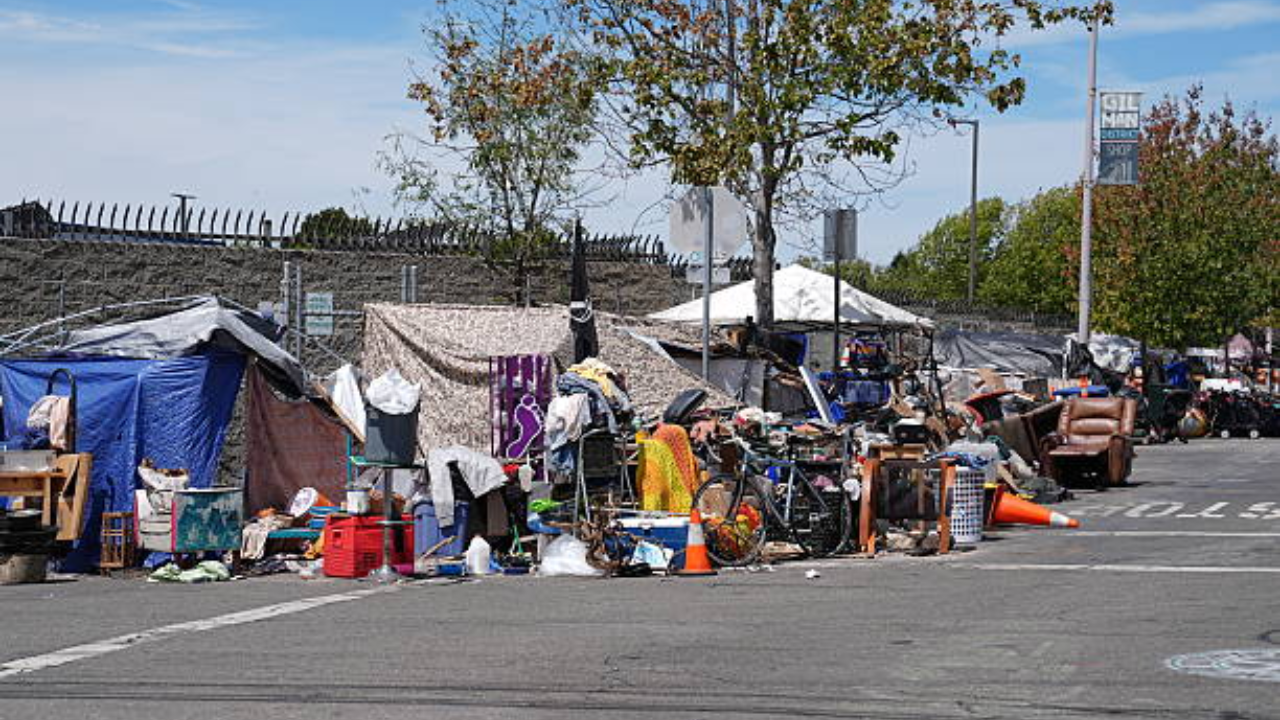
For a daily-wage laborer pushing a wooden cart, a brick-kiln worker, or a traffic warden standing at a congested intersection for ten hours straight, there is no working from home. There is no HEPA filter. Even a proper N95 respirator—the only mask capable of blocking PM2.5 particles, unlike the flimsy blue surgical masks that let fine poison pass right through the gaps—costs money that buys bread for dinner.
I remember standing near Liberty Chowk one November evening when visibility had dropped to barely fifty meters. Streetlights hung in the gloom like pale, dying moons. A young delivery rider pulled up beside my car, lifted his helmet visor, and wiped dark, greasy soot from under his eyes with the back of his sleeve. His eyes were bloodshot, watering constantly from the chemical sting in the air. When I asked how he managed twelve-hour shifts in this weather, he gave a tired, breathless laugh. "If I stay home to save my lungs," he said, adjusting his scarf over his mouth, "my children starve by Friday. Which death do you want me to choose?"
That is the moral core of Punjab’s smog crisis. It is not merely an environmental failure; it is an invisible tax paid in lung tissue by the people who can least afford to get sick. Pediatric wards in government hospitals like Mayo Hospital and Services Hospital overflow every winter with toddlers gasping for air, diagnosed with acute bronchiolitis and severe asthma attacks. Elderly patients with weakened hearts suffer fatal spikes in blood pressure and strokes triggered directly by surges in particulate density.
The numbers on the evening news flatten this suffering into statistics. Behind every spike on the graph is a mother sitting awake all night beside a wheezing child, counting breaths until dawn.
Why Band-Aid Solutions Keep Failing
For years, the official response to Punjab’s winter crisis followed a predictable, reactive script. Every November, authorities expressed shock at the toxic haze. They closed schools for a few days, sprayed water on major thoroughfares to settle surface dust, imposed temporary bans on crop burning, and even experimented with cloud seeding to trigger artificial rain.
Cloud seeding makes for dramatic headlines, yet meteorologists know its limits. You cannot squeeze rain out of a bone-dry sky; artificial rain requires specific moisture-heavy cloud formations that rarely exist during the driest weeks of Punjab’s autumn. Water sprinklers dry up within an hour under the afternoon sun. Closing schools protects children from morning commutes, yet millions of homes lack air filtration, meaning indoor air quality often mirrors the poison outside.
These measures are the equivalent of putting a cold compress on a patient suffering from internal bleeding. They soothe public panic for forty-eight hours while leaving the underlying disease untouched.
Real change requires confronting the structural habits that fuel the smoke year-round, long before the October winds die down. It means shifting the conversation from seasonal panic to permanent engineering.
Look at what actually works when cities decide they refuse to choke:
- Transforming Fuel and Transit: Until electric buses replace diesel fleets and strict emissions testing removes smoke-belching vehicles from the streets, urban traffic will remain a primary poison pump. Subsidizing electric two-wheelers for delivery riders and commuters attacks emissions directly at street level.
- Paying Farmers Not to Burn: Threatening impoverished farmers with fines and arrests fails every single year because desperation always beats fear of the law. Providing subsidized Happy Seeders—tractor attachments that cut rice stubble and sow wheat seeds simultaneously without burning—alongside direct cash incentives for residue management turns farmers into allies rather than scapegoats.
- Enforcing Industrial Accountability: Real-time, continuous emissions monitoring on factories and brick kilns, backed by satellite tracking of heat signatures, removes the human element of local bribery and selective enforcement.
- Regional Diplomacy Over Shared Air: Because the Indo-Gangetic Plain is a single geographic bowl, air pollution in Lahore and New Delhi is inextricably linked. Joint scientific task forces and shared agricultural technology across borders are not political favors; they are mutual survival mechanisms.
Living Under a Heavy Sky
There is a strange psychological grief that settles over a city when its sky disappears.
In Punjab, winter used to be the season everyone waited for. After months of blistering forty-five-degree summer heat, November brought crisp mornings, bright golden sunlight, roasted peanuts sold on street corners, and families gathering on rooftops to fly kites or drink tea. Poetry was written about Lahore’s winters. Songs celebrated the cool breeze blowing off the Ravi River.
Today, the arrival of cool weather triggers dread. Parents check air quality apps with the same anxiety people in hurricane zones reserve for storm trackers. Outdoor sports vanish. Parks sit empty, swings rusting quietly in the damp mist. A generation of children in Lahore, Multan, and Gujranwala is growing up believing that a winter sky is supposed to look like dirty wool, and that burning eyes are simply a normal part of walking to school.
Yet despair is a luxury Punjab cannot afford, precisely because this crisis is entirely human-made. Unlike an earthquake or a tsunami, there is nothing mysterious about where the smoke comes from. Every single source—every tailpipe, every kiln, every burning field—was built by human hands, which means human hands can dismantle, redesign, and replace them.
Late one night in Lahore, after a rare, unexpected winter downpour finally washed the particulate matter out of the atmosphere, the city briefly remembered itself. Around midnight, the AQI plummeted from 550 down to 45.
People walked out onto their balconies just to stand there. Neighbors called out to one another across darkened streets. For the first time in six weeks, you could see the stars overhead, sharp and cold against a truly black sky. A father across the street lifted his four-year-old daughter onto his shoulders, pointed upward, and held her there in silence while she breathed in the clean, cold air as if drinking cold water after days in the desert.