Imagine standing in the middle of a dusty wheat field in southern Alberta. The wind is howling. The ground is dry. It feels like the furthest place from an ocean you could possibly find.
But look down.
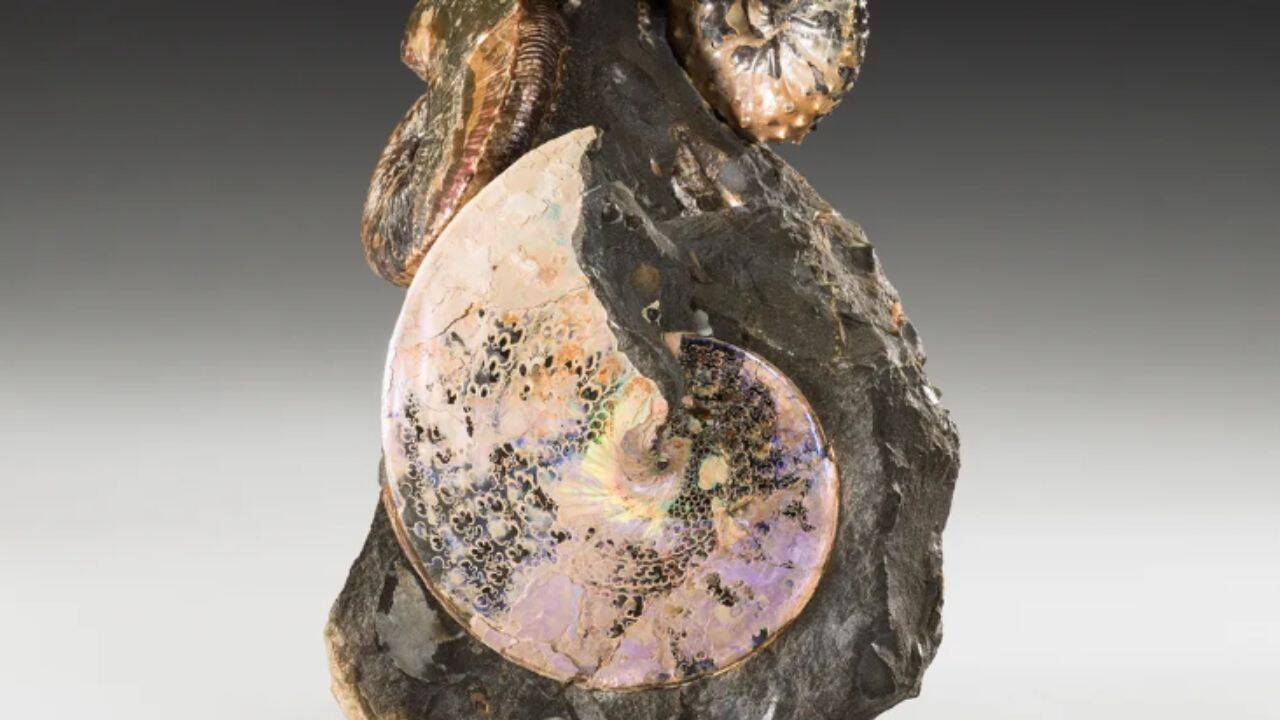
If you know where to dig, you might find the fossilized shell of a 70-million-year-old marine predator that glows with the intensity of a neon rainbow.
These aren't ordinary fossils. They are ammolite, one of the rarest gemstones on Earth. They are the physical remains of ammonites, ancient coiled mollusks that ruled a massive, forgotten ocean.
Seventy million years ago, North America did not look like it does today. A vast, warm body of water called the Western Interior Seaway cut the continent clean in half, stretching from the Arctic Ocean all the way to the Gulf of Mexico. This is the story of how that lost ocean created a geological masterpiece, and how you can still touch its shimmering remnants today.
The Ocean That Divided a Continent
We often think of continents as permanent, solid blocks of rock. They aren't. During the Late Cretaceous period, high sea levels and tectonic activity literally tore North America apart.
To the west lay Laramidia, a mountainous strip of land where dinosaurs like Triceratops and Tyrannosaurus rex roamed. To the east lay Appalachia, a lower, greener terrain. In between them was a shallow, muddy sea. It was thousands of miles long but surprisingly shallow, averaging only a few hundred feet deep in many areas.
This warm, nutrient-rich seaway was teeming with life. Giant marine reptiles like Mosasaurus hunted in the shallows. Enormous predatory fish cruised the depths. But the true rulers of this water column were the ammonites.
These creatures looked like a cross between a modern nautilus and a squid. They lived inside coiled, chambered shells, using gas to control their buoyancy. When they died, they sank to the muddy bottom of the seaway.
Most shells in the fossil record decay or turn into dull gray stone. But in a very specific patch of the Great Plains, something miraculous happened.
How a Dead Mollusk Turns Into a Rainbow
To understand why these fossils shimmer like precious opals, you have to look at the chemistry of the Cretaceous ocean.
Ammonite shells were made of aragonite. This is the same mineral that gives pearls their lustrous shine. Usually, geological pressure and heat convert aragonite into calcite, which is dull and opaque.
But the conditions in what we now call the Bearpaw Shale formation were perfect.
As the Rocky Mountains began to rise to the west, they shed massive amounts of fine volcanic ash and sediment into the eastern seaway. This sediment quickly buried the dead ammonites in a heavy, oxygen-free blanket of clay. The mud sealed the shells away from the air, water, and acidic fluids that would normally destroy them.
The physics behind the color is spectacular.
Over millions of years, the shells were subjected to intense pressure from the shifting earth. The aragonite didn't degrade. Instead, it was compressed into microscopic, overlapping layers. When light hits these layers, it bounces off the different levels. This is called thin-film interference. It is the exact same optical phenomenon that makes soap bubbles or oil slicks look colorful.
Because the layers of aragonite vary in thickness, they filter the light into different colors.
- Red and Green: These are the most common colors. The layers that produce them are thicker and more resilient to geological stress.
- Blue and Violet: These colors are incredibly rare. The layers that produce them are impossibly thin. If the earth shifted even slightly too hard over the last 70 million years, these fragile layers were crushed, destroying the blue light forever.
The result of this perfect geological recipe is ammolite. It is one of the few organic gemstones recognized by the World Jewellery Confederation, sharing a category with pearl, amber, and coral.
The Sacred Buffalo Stones of the Plains
Long before modern geologists started mapping the Bearpaw Shale, the Indigenous peoples of the Great Plains knew about these shimmering rocks.
To the Blackfoot Confederacy, these colorful fossil fragments are known as Iniskim, or buffalo stones. They hold deep spiritual significance and are central to oral traditions that span thousands of years.
According to one famous Blackfoot oral history, during a winter of terrible famine, a woman was out searching for firewood. She heard a beautiful, melodic song coming from a cave. When she investigated, she found a colorful, shimmering stone wrapped in buffalo hair.
The stone spoke to her. It told her to take it back to her camp and perform a specific ceremony. If she did, the buffalo herds would return, and her people would survive the winter.
She did as the stone instructed. The next morning, a massive herd of buffalo appeared on the horizon, saving the tribe from starvation.
Ever since, the Blackfoot have carried Iniskim as powerful amulets for luck, protection, and successful hunting. Even today, the relationship between Indigenous communities and this shimmering stone remains deeply respectful and sacred.
Where the Best Fossils Hide
You can't find high-quality ammolite just anywhere. While ammonites lived all over the world, the specific gem-grade ammolite is almost entirely confined to a single geological zone.
This zone is the Bearpaw Formation, which runs along the St. Mary River in southern Alberta, Canada, and extends slightly into northern Montana.
Mining this material is hard, muddy, and dangerous work. The Bearpaw Shale is notoriously unstable. When it rains, the clay turns into a slick, heavy paste that can trap heavy machinery. When it dries, it bakes into rock-hard dirt.
Large-scale mining is highly regulated. Companies like Korite operate massive open-pit mines in Alberta, carefully digging through layers of shale to find the fragile shells. Workers use heavy excavators to move tons of dirt, but the final extraction is always done by hand with small picks and brushes.
A single, intact Placenticeras ammonite shell can measure up to three feet across. Finding one fully intact with its original iridescent sheen is like winning the lottery. Most specimens are found in fragments, which are then carefully stabilized and cut into gemstones for high-end jewelry.
Spotting Real Ammolite vs. Fakes
Because ammolite is so rare and valuable, the market is flooded with imitations. If you are looking to buy a piece of this ancient sea, you need to know what you are looking at.
Real ammolite is graded based on several factors:
- Color Range: A grade 'A' stone might only show one or two colors, usually red and green. A grade 'AAA' stone will display a full spectrum of colors, including the rare blues and purples, from every angle.
- Rotation: High-quality ammolite changes color dramatically as you rotate it. If the color stays exactly the same no matter how you tilt the stone, it might be a synthetic imitation.
- Matrix: Look at the back of the stone. Real ammolite is usually attached to its dark shale backing.
Because the gem layer is incredibly thin—often less than a millimeter thick—most jewelry pieces are sold as doublets or triplets. This means the fragile ammolite is backed by a stronger material like slate and topped with a protective cap of clear quartz or spinel. This makes the stone durable enough to wear without scratching.
How to Experience the Ancient Seaway Yourself
You don't have to be a commercial miner to appreciate this ancient history. The region that once sat at the bottom of the Western Interior Seaway is now one of the best road-trip destinations in North America.
Visit the Royal Tyrrell Museum
Located in Drumheller, Alberta, this is one of the premier paleontology museums in the world. Their "Alberta Barons" exhibit features spectacular, fully intact iridescent ammonites that look more like alien artifacts than prehistoric shells. You can stand inches away from specimens that still glow with the exact colors they had 70 million years ago.
Explore Dinosaur Provincial Park
Just a couple of hours away from Drumheller, this UNESCO World Heritage Site offers a surreal landscape of badlands. While you aren't allowed to collect fossils here, you can take guided hikes to active dig sites and see how the ancient rivers washed dinosaur bones into the same coastal regions where the ammonites lived.
Understand the Local Rules
If you are traveling through Alberta or Montana and fancy yourself a rockhound, be incredibly careful. In Alberta, all fossils found in the province are the property of the government. You can look, but you cannot dig, alter, or remove fossils from their natural state. If you find something spectacular on the surface, you are encouraged to take a photo, record the GPS coordinates, and report it to the Royal Tyrrell Museum.
For those looking to buy a piece of history legally, stick to reputable local shops in Calgary, Banff, or Drumheller that provide certificates of authenticity. Buying directly from authorized dealers ensures the stone was mined ethically and that local paleontological laws were fully respected. It is a tangible piece of a lost ocean, preserved in stone, waiting to tell its 70-million-year-old story on your desk or around your neck.