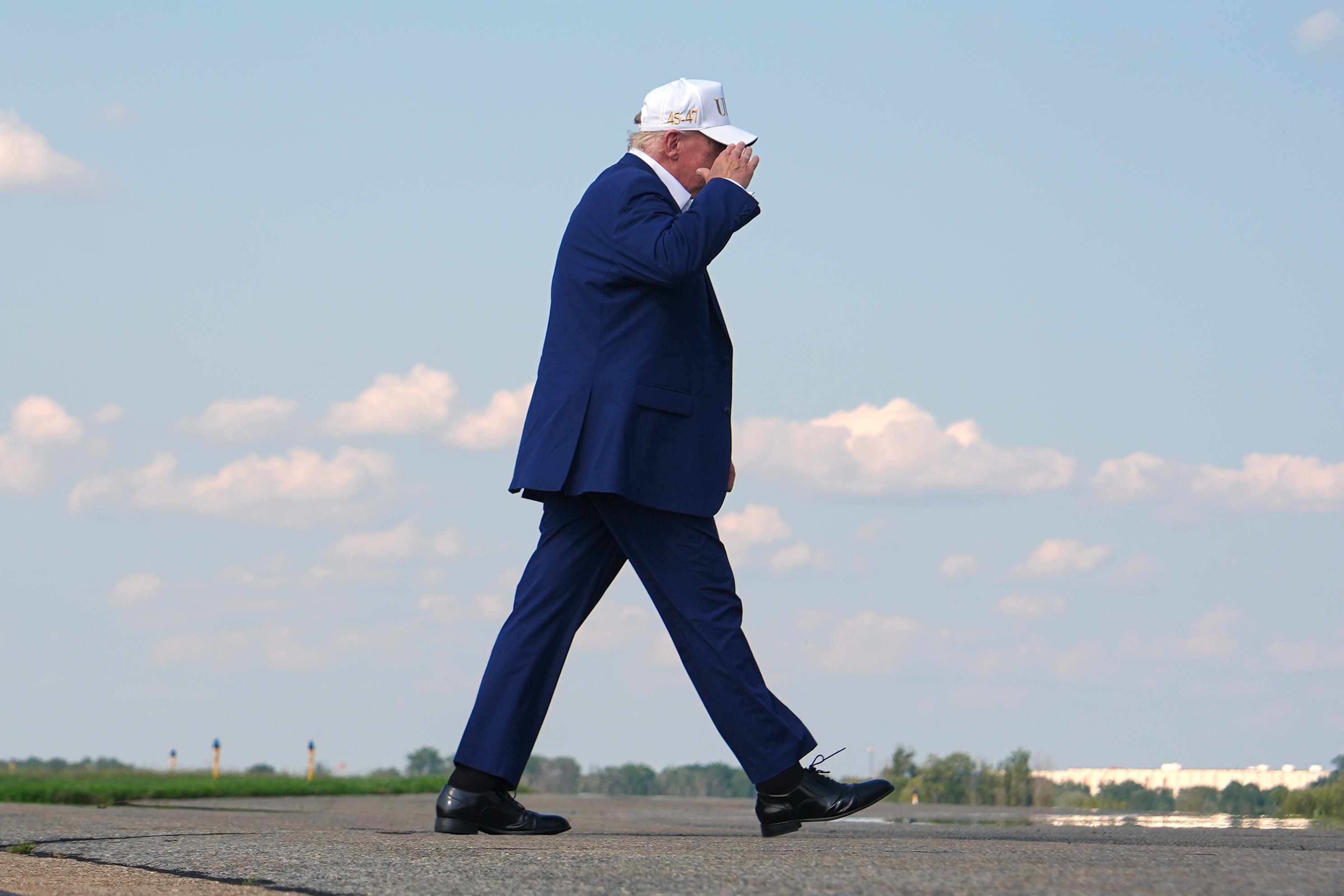
The ink on the transition papers had barely dried when the reports began to whisper through the corridors of Washington. History moves in loops, but sometimes it snaps back so violently that the sound alone alters the room. Donald Trump wanted a clean slate. He wanted the grand deal, the signature on the gold-plated podium, the quiet rooms where adversaries become partners through sheer force of transactional will. He wanted to end the war without firing a shot.
Instead, the calendar turned. The diplomatic overtures sputtered against the immovable stone walls of Tehran. The alternative paths—the whispered backchannels, the cautious economic carrots, the diplomatic handshakes meant to alter fifty years of accumulated venom—all fizzled into the damp air of reality.
And so, the ledger opened once more to the oldest page in the book. Sanctions.
To understand what happens next, you have to smell the air inside a Tehran bazaar when the currency exchange rate flickers on a battered television screen. I remember standing near the edge of a market years ago, watching a merchant trace his thumb over the edge of a worn banknote as if it were fragile glass. Every tightening of a trade restriction, every stroke of a pen three thousand miles away in the Treasury Department, translates directly into the price of a loaf of bread in a neighborhood that has never seen an American flag.
Sanctions are rarely spoken of in the language of human pulse rates. They are written in sterile white papers, stuffed with acronyms like OFAC and descriptions of shipping registries, maritime insurance blocks, and SWIFT code exclusions. Bureaucrats call them tools of statecraft. They sound clean. They sound like adjustments on a mixing board, a mere turn of a dial to lower the volume of a hostile economy.
They are not dials. They are heavy iron doors, slowly swinging shut.
When the first administration pursued maximum pressure years ago, the theory was simple, almost mathematical. Isolate the regime from the global banking system, choke off the oil revenue that feeds the machinery of state security, and watch the public demand a change in direction. The math worked on a whiteboard. But human systems are notoriously stubborn. They adapt, they twist, they find dark alleys. Smugglers become national heroes. Informal networks of shadow tankers slip through the Persian Gulf under the cover of night, turning off their transponders to ghost their way across the water with cargo nobody is supposed to see.
Now, facing the quiet collapse of alternative diplomatic strategies, the clock has rolled backward. The pivot is not born of fresh inspiration. It is born of exhaustion. When grand bargains fail, leaders reach for the weapon they know.
Consider what happens when a superpower runs out of middle ground.
On one side lies the high-stakes gamble of military escalation—a descent into a regional firestorm that nobody in their right mind wants to chronicle. On the other lies total diplomatic retreat, an admission of defeat that runs counter to every political instinct in Washington. That leaves the grey zone. The economic tourniquet.
The strategy relies on a cold calculus. If you squeeze the oil exports hard enough, the government in Iran will eventually have to choose between funding its regional proxies—militias stretching from Lebanon to Yemen—and keeping its own domestic lights on. It is a cruel trade-off by design. The architects of these policies know who suffers first. It is rarely the men sitting in the high-security compounds of the Islamic Revolutionary Guard Corps. It is the teacher in Isfahan, the nurse in Shiraz, the young engineer trying to code his way out of an inflation rate that devours his salary before it hits his account.
We pretend that economic warfare is bloodless. It is not. It is merely delayed.
In the quiet offices of foreign ministries across Europe, diplomats watch this pivot with a mixture of dread and resignation. They know the rhythm. They spent years trying to preserve a nuclear deal that dissolved under the weight of mistrust, and now they watch the architecture of containment being rebuilt brick by heavy brick. They understand that every time Washington cuts another financial artery, Tehran responds by accelerating the very activities the sanctions were designed to halt. It is a closed loop of defiance. You tighten the screws; they shorten the breakout time for uranium enrichment. You squeeze the currency; they dig deeper into their underground bunkers.
There is a profound irony in the repetition. We watch leaders trapped in the amber of their own past decisions, dusting off old playbooks because the blank pages of innovation look too terrifying to write upon.
A strategy does not fail all at once. It frays at the edges. A phone call goes unreturned. A special envoy quietly packs his briefcase. A memo circulates in the West Wing noting that the talks have reached an impasse. And then, the announcement. A new round of designations. Names added to a blacklist. Oil tankers flagged. Banks cut off from the pulse of global commerce.
The public sees the headline for ten seconds. A brief blurb on a morning broadcast. Trump pivots back to sanctions.
Beneath that headline lies the quiet desperation of a superpower grasping for leverage in a world that has grown too fractured to coerce easily. The old tools still make a loud noise when they drop, but the walls they hit are thicker than they used to be. Tehran has had years to practice living in the basement of the global economy. They have built an entire parallel architecture of survival, trading with regional partners who learned long ago how to ignore the edicts flowing from Western capitals.
So the tourniquet tightens. The numbers on the trade sheets drop. The currency slides another notch toward the abyss.
And somewhere in the dark waters of the Gulf, a tanker slips past the horizon with its lights out, carrying a cargo of contested oil, while the men on the bridge watch the radar screen and wait to see who blinks first in a game where nobody remembers the rules anymore.