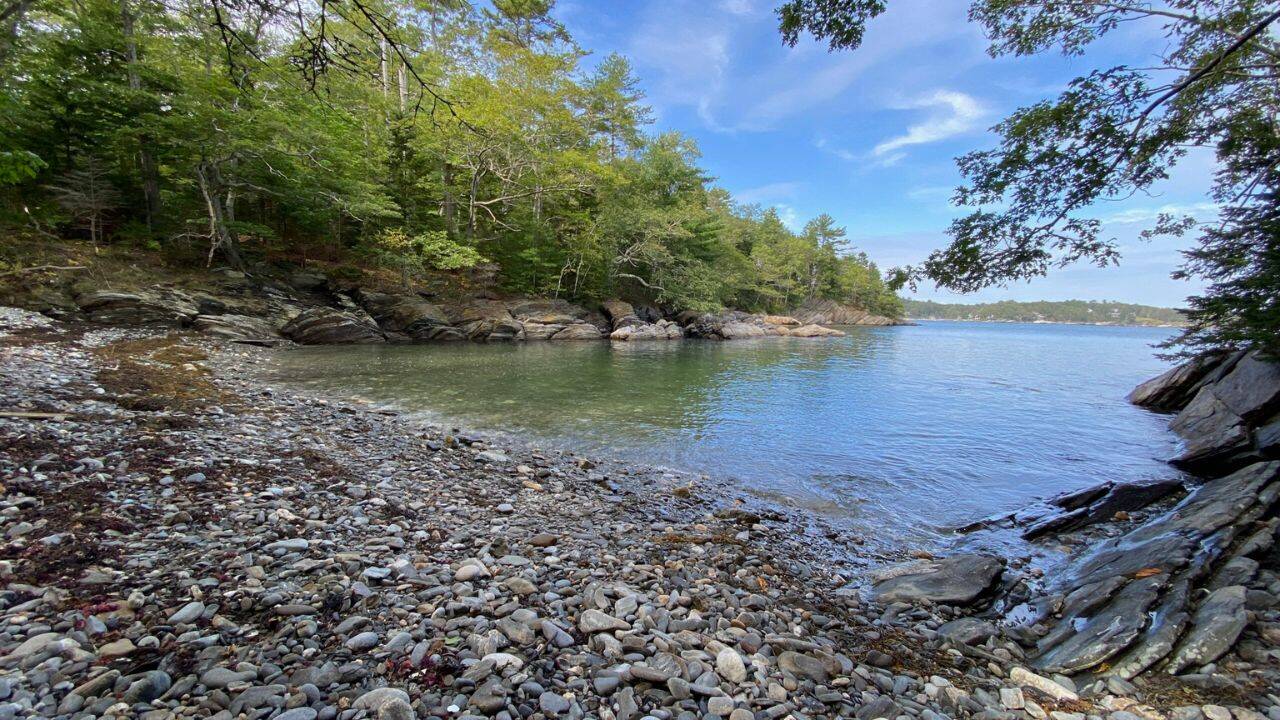
In 1964, a twenty-seven-year-old individual acquired a remote, unhabitable landmass off the coast of Maine and sustained total physical isolation for over two decades, converting the property into a protected ecological habitat by 1986. This narrative is frequently framed as a romantic flight from societal friction. That framing ignores the rigorous economic, logistical, and behavioral constraints required to execute such a project. Survival without municipal infrastructure is an exercise in resource management, energy budgeting, and risk mitigation.
Evaluating this undertaking requires stripping away sentimental narratives and examining the mechanics of extreme self-reliance. Solitude at this scale is not a passive state; it is an active operational system with distinct inputs, constraints, and long-term consequences. Meanwhile, you can read similar stories here: Status Anxiety is Killing Your Real Friendships.
The Resource Allocation Framework of Total Isolation
Sustaining human life outside an established supply chain demands strict adherence to thermodynamic and logistical realities. The primary constraint of island habitation is the decoupling from municipal distribution networks. Every calorie consumed, every watt of energy utilized, and every unit of waste generated must be accounted for within a closed-loop local environment.
[External Supply Chain] ---> (Severed via Island Acquisition) ---> [Closed-Loop Local Optimization]
                                                                      |--> Caloric Acquisition
                                                                      |--> Thermal Energy Budget
                                                                      |--> Waste Management Matrix
The Caloric and Thermal Baselines
Human metabolic requirements set a hard floor on daily operations. In a cold-weather maritime climate, baseline caloric expenditure increases significantly due to manual labor and thermal regulation. Without access to commercial agriculture or grocery logistics, food acquisition relies on three mechanisms: To understand the complete picture, check out the detailed analysis by ELLE.
- Stored provisions brought in during infrequent transit windows.
- Foraged or harvested marine resources, subject to seasonal availability and tidal cycles.
- Preserved goods requiring significant upfront energy investments to process and store.
Thermal energy follows a parallel constraint. Heating a shelter through a New England winter requires corded firewood, which necessitates high-output physical labor months in advance. The energy cost of harvesting, splitting, seasoning, and stacking wood creates a direct feedback loop: poor planning in July results in systemic hypothermic risk in January.
The Infrastructure Deficit
An abandoned property inherently lacks functional capital assets. Water extraction, waste sanitation, and structural reinforcement must be engineered from scratch using minimal tools. Without heavy machinery, the human body functions as the sole engine for structural modification. This creates a high risk of repetitive strain injuries or acute trauma, which carry catastrophic weight when emergency medical services are inaccessible.
The decision to remain in such an environment for twenty-two years indicates a high tolerance for operational friction. Every daily task—fetching water, securing shelter, maintaining heat—takes exponentially more time than it would in an integrated society. The opportunity cost of this friction is the elimination of surplus time, replacing leisure with survival maintenance.
The Behavioral Economics of Solitude
Psychological endurance under conditions of prolonged isolation is governed by cognitive load theory and sensory deprivation thresholds. Most human behavioral models assume continuous social feedback loops for error correction and emotional regulation. Removing those loops forces a psychological restructuring.
Cognitive Adaptation and Routine Optimization
When social stimuli are eliminated, the human brain reallocates processing capacity toward environmental monitoring. Weather patterns, structural integrity, wildlife behavior, and bodily sensations become the primary focus of daily awareness.
To prevent cognitive degradation, successful isolation requires rigid behavioral structures. Routine replaces social obligation. The establishment of fixed schedules for labor, sustenance, and rest acts as an artificial stabilizer against the psychological entropy of an unstructured environment.
Risk Asymmetry
Living alone shifts the risk asymmetry profile dramatically. In a standard urban environment, minor mistakes carry low penalties due to redundancy systems (hospitals, emergency services, insurance). In complete isolation, compound errors are fatal.
- A slip while cutting firewood leads to an untreated hemorrhage.
- A structural failure in a roof compromises the thermal envelope during a blizzard.
- Contaminated water induces debilitating gastrointestinal failure without pharmaceutical recourse.
Consequently, behavioral patterns shift toward hyper-conservatism. Actions are evaluated not by their potential reward, but by their potential worst-case failure mode. Risk tolerance drops to near zero for high-consequence tasks.
Ecological Succession and Land Conversion
The transformation of a privately owned island into a wildlife sanctuary represents a deliberate shift from human-dominated utility to natural ecosystem recovery. Understanding this transition requires examining how human presence either accelerates or arrests ecological succession.
The Human Footprint as a Disturbance Factor
Initially, any human habitation introduces artificial disturbances: clearing vegetation, constructing shelter, generating localized waste, and altering predator-prey dynamics through presence alone. However, low-impact, low-density habitation often exerts a far smaller ecological footprint than commercial exploitation or industrial tourism.
Over a twenty-two-year period, the physical footprint remained static. There was no modular expansion, no commercial logging, and no introduction of invasive infrastructure. By maintaining a steady-state footprint rather than a growth-oriented footprint, the human element functioned as a neutral observer rather than an extractive agent.
Mechanisms of Habitat Restoration
When human activity ceases or becomes entirely passive, ecological succession accelerates based on regional climax community trajectories. In the temperate maritime climate of Maine, this process follows predictable stages:
- Pioneer Species Colonization: Grasses, herbaceous plants, and opportunistic shrubs reclaim cleared zones.
- Woody Plant Establishment: Fast-growing deciduous trees shade out low-growth ground cover, stabilizing topsoil.
- Climax Forest Maturation: Long-lived conifers and mature hardwoods establish a stable canopy, providing nesting grounds and foraging territory for migratory and resident fauna.
The eventual designation of the island as a wildlife sanctuary formalized what had already occurred organically: the cessation of human intervention allowed the local carrying capacity for avian and marine mammal populations to rebound to baseline levels.
Strategic Realities of Complete Self-Reliance
The romanticization of dropping out of society obscures the harsh operational metrics required to sustain such an existence. True self-reliance is rarely an act of liberation; it is an exchange of societal complexity for ecological and physical labor complexity.
The individual who inhabited the Maine island did not escape work; they changed employers. Instead of serving an economic market, they served the immediate physical demands of the environment. The return on investment for this labor was not financial capital, but spatial autonomy and environmental preservation.
Future attempts to replicate this model face compounding regulatory hurdles, environmental restrictions, and climate-driven shifts in maritime weather stability. Modern land management laws rarely permit unregulated, long-term squatter habitation or unmonitored structural construction on ecologically sensitive coastal islands. The window for unstructured, individual isolation of this magnitude has closed, replaced by strict conservation frameworks and state-monitored oversight.