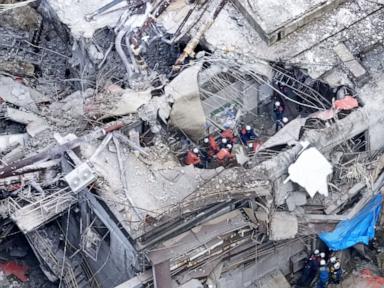
The ground does not care about building codes, emergency protocols, or economic forecasts. When an earthquake strikes southwestern Japan, tearing through communities and driving the death toll to 18, it exposes the raw fragility of modern human settlement. Rescue workers continue to comb through piles of pulverised concrete and splintered timber, racing against rain, aftershocks, and the ticking clock of survival. Yet, treating this disaster as a mere act of geological malice misses the point. Behind every collapsed roof and trapped family lies a compounding chain of infrastructural, demographic, and systemic failures that require a hard, unblinking look.
The Anatomy of a Regional Disaster
Seismic events do not happen in a vacuum. Japan possesses some of the most stringent construction engineering standards on Earth, a fact frequently cited by international observers after any major tremor. Traditional timber-framed houses, while possessing aesthetic and historical value, struggle against violent lateral acceleration when decades of material degradation go unaddressed. In many rural and semi-urban pockets of southwestern Japan, an aging population means property owners lack the physical capacity or financial capital to retrofit legacy structures.
Engineering reality dictates that concrete and steel fatigue over time. When a major fault line releases pent-up energy, older residential zones bear the brunt of the destruction. Modern skyscrapers in Tokyo or Osaka command headlines for swaying safely during high-magnitude events, but rural communities miles away from metropolitan funding streams face a starkly different survival curve.
Emergency response in mountainous or coastal terrain presents an entirely separate obstacle. Landslides triggered by initial tremors routinely sever narrow arterial roads, turning rescue operations into a logistical nightmare. Heavy machinery cannot clear debris if the bridge leading to the valley has buckled under shear stress. First responders find themselves hamstruned by geography long before they ever reach the hardest-hit neighbourhoods.
Demographics Meet Geology
A profound demographic shift underpins the current crisis. Japan faces a super-aging society, with rural prefectures experiencing population decline far more rapidly than major economic hubs. When an earthquake flattens homes in these regions, the victims are disproportionately elderly residents who live alone or in isolated households.
- Mobility barriers: Evacuation warnings mean little if an individual cannot walk unassisted to a designated shelter.
- Communication gaps: Emergency alert systems rely heavily on digital infrastructure that older citizens may struggle to navigate or monitor continuously.
- Post-disaster isolation: Medical infrastructure strains instantly under mass casualty events, leaving chronic care patients stranded without electricity or medication.
Emergency services operate on standardized triage models, but these protocols assume a workforce and population distribution that no longer exists in rural Japan. Municipal governments face severe budget deficits, forcing them to consolidate fire stations and police outposts. When disaster strikes, the immediate response radius expands dramatically, costing precious minutes that separate survival from tragedy.
Beyond the Immediate Aftermath
Media coverage inevitably shifts away once the initial rescue phase concludes and the grim tally of casualties stabilizes. The real crisis then begins for the survivors. Temporary housing units take months to construct, leaving displaced families in gymnasium shelters with minimal privacy or sanitary control. Psychological trauma settles in silently, compounding the physical injuries sustained during the initial collapse.
Rebuilding cannot simply mean duplicating what stood before. Urban planners must confront the reality of shifting fault lines and escalating weather patterns that frequently accompany seismic events, including heavy seasonal rains that trigger secondary mudslides. Soil liquefaction maps require complete revision based on recent data, restricting future residential construction in high-risk zones regardless of local property ownership claims.
Insurance structures also fail to protect vulnerable homeowners adequately. Standard earthquake coverage in Japan remains voluntary and notoriously expensive, leaving many rural residents underinsured or entirely exposed to total financial ruin. Without state-backed reinsurance mechanisms that reflect actual regional risk rather than generalized national averages, recovery becomes an impossible hurdle for working-class families.
The ground will shake again. The question is whether institutions will adapt before the next fault line gives way.