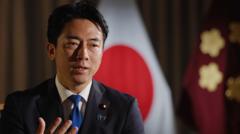
The defense establishment loves a simple narrative. For decades, Tokyo adhered to a strict pacifist doctrine, spending a neat 1% of its GDP on the Self-Defense Forces. Now, faced with a rising China, an aggressive Russia, and a volatile North Korea, the conventional wisdom insists that Japan must double its defense spending to 2% of GDP, acquire counterstrike capabilities, and transform into a muscular regional anchor. Defense Minister Shinjiro Koizumi sells this to global media as a "critical" deterrent to prevent war.
It is a comforting bedtime story for hawks. It is also dangerously wrong.
This massive military buildup does not deter conflict. It invites it. By rapidly abandoning its unique post-war security posture, Japan is actively validating the encirclement fears of its neighbors, accelerating a regional arms race, and trapping itself in an escalation spiral where a single miscalculation leads to catastrophic conflict. Tokyo is buying the illusion of security at the cost of actual stability.
The Deterrence Myth: Why Muscle-Flexing Invites the Fist
The fundamental flaw in Japan’s current strategy is a failure to understand the security dilemma. In international relations, actions taken by a state to increase its security—such as buying long-range missiles or expanding military alliances—are almost always interpreted by its rivals as offensive threats.
The consensus view claims that a stronger Japanese military makes Beijing think twice before moving on Taiwan or the Senkaku Islands. But look at the actual mechanics of East Asian geopolitics. China does not view Japan’s military expansion in a vacuum. It views it through the lens of history and the present reality of the US-Japan alliance.
When Tokyo acquires Tomahawk cruise missiles capable of striking targets deep inside Chinese or North Korean territory, Beijing does not think, “We should be more peaceful.” They think, “The historical aggressor is rearming under the wing of our primary global rival.”
Traditional Deterrence Logic:
Japan Arming -> Higher Cost for Aggressor -> Peace

The Reality of the Security Dilemma:
Japan Arming -> Rival Fears Preemptive Strike -> Rival Arms Faster -> Higher Risk of War
I have spent years analyzing regional security frameworks, and the blind spot among defense bureaucrats is always the same: they assume the adversary is the only one capable of feeling threatened. When you spend billions to build a sword while claiming it is only a shield, your neighbor builds a bigger shield and a sharper sword. We are not watching the creation of a stable deterrence; we are watching the construction of a powder keg.
Dismantling the "People Also Ask" Assumptions
To understand how skewed the public conversation around this topic has become, look at the questions driving mainstream debate. The premises themselves are rotten.
"Is Japan allowed to have an army?"
This question misses the point entirely. Legally, Article 9 of the Japanese Constitution still technically outlaws war as a sovereign right and bans the maintenance of land, sea, and air forces. Yet, the Self-Defense Forces (SDF) possess some of the most technologically advanced naval and air assets on the planet.
The issue is not what Japan is "allowed" to do; it is how Tokyo has used constitutional reinterpretation to bypass democratic oversight. By functionally erasing the line between defense and offense, the government has degraded its greatest diplomatic asset: its credible commitment to non-aggression. Once you lose the ability to credibly promise you won't strike, your ability to deter an attack plummets.
"Will a stronger Japan prevent a war over Taiwan?"
The brutal honesty? No. It makes Japan an immediate target.
If conflict erupts in the Taiwan Strait, American forces will rely heavily on bases in Okinawa and mainland Japan. By actively integrating its command structure with the Pentagon and purchasing offensive counterstrike weapons, Japan ensures that in any Taiwan contingency, Chinese planners will feel compelled to strike Japanese bases first to neutralize American logistics. Japan's buildup does not prevent a war; it guarantees that Japan is dragged into the first island chain's meat grinder on day one.
The Economic Suicide of the 2% GDP Target
The defense establishment speaks of spending 2% of GDP on the military as if it is a magic metric handed down by divinity. It is arbitrary, and for Japan, it is economically ruinous.
Japan is buried under a mountain of public debt that exceeds 260% of its GDP—the highest in the developed world. Simultaneously, the country faces a brutal demographic collapse, with a rapidly aging population and a shrinking workforce.
Every yen funneled into a Tomahawk missile or an Aegis Ashore system is a yen stolen from:
- Subsidizing childcare to reverse the demographic death spiral.
- Fixing a strained healthcare system.
- Investing in domestic tech innovation to keep the economy competitive.
Japan's Real Crises vs. Military Spending Allocation:
[Demographic Collapse] <--- Defunded
[Economic Stagnation]  <--- Defunded
[Debt Servicing]       <--- Compounded
[Defense Budget]       <--- Doubled to 2% GDP
You cannot build a sustainable defense apparatus on top of a rotting socioeconomic foundation. A nation with empty factories and abandoned villages cannot sustain a prolonged conflict, no matter how many advanced fighter jets it buys from Washington. Tokyo is prioritizing hardware over the very society the hardware is supposed to protect.
The Hidden Trap: Total Dependency on Washington
The ultimate irony of Japan’s military surge is that it does not buy independence. It deepens a dangerous dependency on the United States.
Tokyo’s procurement strategy is heavily weighted toward American equipment. Buying off-the-shelf US tech means Japan’s operational capability is tethered to Washington's supply chains, software updates, and political whims. If a future US administration decides to pivot away from East Asia or demands extortionate protection fees, Japan is left holding highly complex weapons systems it cannot independently maintain or operate effectively in a sovereign vacuum.
Furthermore, this alignment forces Japan into America’s global geopolitical agenda. It strips Tokyo of diplomatic flexibility. Instead of acting as a mediator or a stabilizing economic hub in Asia, Japan is pigeonholing itself as the northern tip of an American containment wall against China.
The Alternative: Radical Pacifism as Aggressive Diplomacy
The counter-intuitive truth that defense ministers refuse to acknowledge is that Japan was safer when it was militarily restrained.
True security for an island nation with zero natural resources and a declining population does not come from trying to out-gun a superpower like China. It comes from making yourself indispensable to everyone and threatening to no one.
We must acknowledge the risks of this contrarian path. Yes, relying heavily on non-military deterrence leaves you vulnerable if a completely irrational actor decides to launch a suicidal invasion. But international relations are based on calculated interests, not pure madness. China’s primary goals are economic dominance and regional regime survival. A heavily armed, hostile Japan gives Beijing’s hawks a perfect enemy to rally domestic support around. A non-threatening, economically vital Japan removes that pretext.
Instead of matching China missile for missile, Japan should pursue a strategy of asymmetric diplomatic leverage:
- Weaponize Economic Interdependence: Make the Chinese economy so reliant on Japanese semiconductor materials, precision machinery, and green technology that a war with Japan would trigger domestic economic collapse for Beijing.
- Strategic Defensive Insularity: If military spending must exist, focus exclusively on highly defensive, low-cost denial capabilities—like sea mines, mobile anti-ship batteries, and cyber defense. Drop the expensive, provocative long-range strike platforms.
- Strategic Neutrality on Taiwan: Signal clearly to both Washington and Beijing that Japanese territory will not be used as a launchpad for offensive operations unless Japan itself is directly attacked.
Stop playing a game of military chicken you cannot win. The defense minister wants you to believe that more weapons equal more peace. History shows it just makes the eventual explosion bigger. Turn off the military spending tap, reinvest in the domestic economy, and remember that Japan's greatest strategic shield was never a missile defense system—it was the credible promise that it would never start a fight.


